The Lower Esophageal Sphincter; An Important Muscle You Didn’t Know You Had.

August 14, 2014

Gastroesophageal Reflux Disease (GERD), a risk factor of esophageal cancer, is also known as “acid reflux disease” or “chronic heartburn.”  GERD occurs when stomach acids flow backwards into the esophagus.

The culprit?  Your lower esophageal sphincter (LES).  

The LES is a ring of muscle that open to allow food and drink to pass into the stomach from the mouth.

A normal functioning LES then closes to keep those contents inside the stomach to allow for digestion. When the LES is damaged, it becomes weak and relaxes, allowing stomach acids and contents to flow back up into the esophagus. This “reflux” symptom is known as heartburn.

While not all GERD sufferers experience this symptom (heartburn), people who do suffer from heartburn more than twice a week should speak with their doctor.

It has not been clearly established what causes the LES to become damaged. However, doctors have indicated that pressure on the midsection caused by obesity, frequently eating large meals and hiatal hernia can damage this important muscle.

Overtime, the reflux of stomach acids damages the lining of the esophageal wall and can cause the cells to become abnormal and potentially lead to esophageal cancer.  This change in the cells, which line the lower part of the esophageal wall, is known as Barrett’s esophagus, a sometimes precancerous condition. However, Barrett’s esophagus isn’t the only precursor to esophageal cancer.

There are no standard or routine screenings to detect esophageal cancer in its earlier stages, when the tumors can be better treated. Unfortunately, symptoms such as difficulty swallowing and food getting stuck typically appear once the cancer has spread. When esophageal cancer is diagnosed at later stages, there is a poor survival rate, as treatment options are limited and mostly used to treat cancer symptoms, not towards curing the cancer. Stage IV has a survival rate of only 3.8%. The earlier esophageal cancer is detected, the better chances for survival.

It is imperative that patients suffering from chronic and frequent heartburn be proactive and talk to their doctor. For some, lifestyle changes can help to alleviate GERD symptoms. Others may need to take medications (Please read the label on the bottle! Most medications are recommended to be taken no longer than for 8 to 12 weeks.) Some patients may be candidates for nonsurgical, less invasive options to treat GERD.

It is extremely important that patients speak to with their doctor about tests to screen for esophageal cancer.   Remember, early detection saves lives!  Feel free to share this information with your family and friends. We’ve included social media buttons below to make sharing simple.

Donations are what fuel awareness programs and research projects working to find a cure for esophageal cancer.  All donations are tax-deductible and can be made online.

Click here to make a one-time or recurring donation.  Thank you in advance for joining us in this mission to save lives and find a cure!


Sources:
Cancer.gov
Cancer.org
RefluxMD.com
 
 
The Salgi Esophageal Cancer Research Foundation is a 501 (c) (3) non profit organization as recognized by the Internal Revenue Service.

Content found on Salgi.org is for informational purposes only. The Content is not intended to be a substitute for professional medical advice, diagnosis, or treatment. Seek the advice of your physician or other qualified health provider with any questions you may have regarding a medical condition.


What does a dozen eggs and esophageal cancer have in common?

July 31, 2014

The answer is twelve.  A dozen medical research groups from across the United States have requested funding for their research projects specifically dedicated to esophageal cancer.

Research funding for esophageal cancer is crucial to saving lives and finding a cure.  Unfortunately, esophageal cancer research is extremely underfunded, both from private funders and the government.

The National Cancer Institute decreased funding for research of esophageal cancer by 15% in 2012. Esophageal cancer now receives a mere $28.0 million out of NCI’s total $5.07 billion budget. That is approximately half of one percent.

While The American Cancer Society reports that they currently fund 1,165 cancer research projects, only 8 of those research projects are related to esophageal cancer.

Diagnosis of esophageal cancer is skyrocketing, with over a 600% increase in the past decades, making esophageal adenocarcinoma the fastest growing cancer in the United States. In order to reduce these incidences of esophageal cancer, we aim to fund research projects whose emphasis is to prevent esophageal cancer and to discover innovative screening tests to detect esophageal cancer in its earliest stages, when the tumors are more treatable.

Esophageal cancer is also amongst the deadliest of cancers, with a five year survival rate of only 17.85%. In order to combat these dismal survival rates, we work to fund research that will improve current treatment options.

The survival rate for Stage IV esophageal cancer is only 3.8%. Unfortunately, at later stages, esophageal cancer can be treated but rarely cured.  Patients diagnosed with advanced esophageal cancer often have widespread cancer at the time of diagnosis and cannot be cured with surgery.  Treatment options are usually to relieve symptoms caused by the cancer and to improve quality of life.

While the ultimate goal is to prevent 100% of any diagnosis of esophageal cancer through prevention and early detection, right now there is a drastic need to discover treatment options which have the potential of curing metastatic (advanced) esophageal cancer.

Our mission is to fund research projects to save lives and find a cure. One day, esophageal cancer will be history. Any donation will help make a difference. It is through small developments which generate knowledge that guides the way to significant advances and breakthroughs.

To make a 100% tax-deductible donation to life-saving esophageal cancer research projects, please click here.

If you would like to host a fundraiser benefiting esophageal cancer research, please contact us here.


Sources:
cancer.gov
surgery.ucsf.edu
cancer.org 
texasoncology.com
 
 
The Salgi Esophageal Cancer Research Foundation is a 501 (c) (3) non profit organization as recognized by the Internal Revenue Service.

Content found on Salgi.org is for informational purposes only. The Content is not intended to be a substitute for professional medical advice, diagnosis, or treatment. Seek the advice of your physician or other qualified health provider with any questions you may have regarding a medical condition.


Don’t Ignore Frequent Heartburn!

July 29, 2014

Millions of Americans suffer from heartburn each year.  Unfortunately, many of those Americans are experiencing chronic heartburn, which occurs more than twice a week.   Heartburn is one of the most common symptoms of Gastroesophageal Reflux Disease.  This disease is known more commonly as GERD and is a major risk factor for esophageal cancer.

Heartburn is often ignored, disregarded and poorly managed.  Many heartburn suffers try to self-medicate through the use of antacids or acid reducing medications.  Typically, these medications do not work long-term for those whose heartburn symptoms caused by GERD.

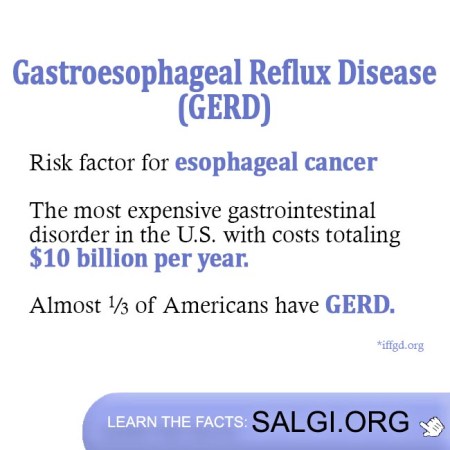
GERD affects almost 1/3 of all Americans and is the most expensive gastrointestinal disorder in the United States, with direct and indirect costs totaling approximately $10 billion dollars each year.   

The National Cancer Institute defines GERD as the backward flow of stomach acid contents into the esophagus (the tube that connects the mouth to the stomach).   It is also known as esophageal reflux and gastric reflux.

This back flow is caused by a weakened lower esophageal sphincter, which is a ring of muscle that opens and closes the opening between the esophagus and the stomach.  The LES can’t contain the stomach contents from entering back up into the esophagus.

Overtime, this reflux of stomach acids damages the lining of the esophageal wall and can cause the cells to become abnormal and potentially lead to esophageal cancer.   This change in the cells, which line the lower part of the esophageal wall, is known as Barrett’s esophagus, a sometimes precancerous condition.

Taking medications, whether they are over-the-counter or prescribed by a doctor, does not repair the LES.   These medications only treat the symptoms of the disease while the damage can continue to occur.  Also, these medications are intended for temporary relief and are not to be taken for an extended period of time.

As we mentioned, GERD is one of the risks associated with esophageal cancer, along with other factors, such as being overweight or Barrett’s esophagus.   Having one of these risk factors does not mean that cancer will result.  However, having one of these risk factors and not being proactive can significantly further the risk of esophageal cancer.

The earlier esophageal cancer is detected, the better.  Unfortunately, there are currently no standard or routine screenings to detect esophageal cancer in its earliest stages.

It is imperative that patients suffering from chronic and frequent heartburn to be proactive.   Talk to your doctor about lifestyle changes to help reduce GERD symptoms.  Also, discuss the various tests used to detect esophageal cancer.  Click here for more information regarding methods used to detect esophageal cancer.

Visit us on Facebook and tell us if you or someone you know suffers from chronic heartburn. We’re here to help! Facebook.com/SalgiFoundation 

Almost one-third of Americans have Gastroesophageal Reflux Disease GERD heartburn chronic acid reflux. which is the most expensive gastrointestinal disorder in the United States US USA U.S. with direct and indirect costs totaling, $10 billion per year.

Sources:
refluxmd.com 
cancer.gov
iffgd.org 
 
 
The Salgi Esophageal Cancer Research Foundation is a 501 (c) (3) non profit organization as recognized by the Internal Revenue Service.

Content found on Salgi.org is for informational purposes only. The Content is not intended to be a substitute for professional medical advice, diagnosis, or treatment. Seek the advice of your physician or other qualified health provider with any questions you may have regarding a medical condition.


The Salgi Foundation receives legislative grant from the State of Rhode Island

June 30, 2014

We are excited to announce that we’ve received a legislative grant from the State of Rhode Island, which was obtained through the suggestion of Rhode Island Representative Patricia Serpa. The grant will allow the our charity to raise awareness, encourage early detection and to fund research of esophageal cancer.

The Salgi Esophageal Cancer Research Foundation was founded on November 21, 2011, in memory of our President’s father, who passed away from esophageal cancer. In less than three years, 12 medical research facilities from across the United States have sought funding for their research of esophageal cancer.

President of The Salgi Foundation said “esophageal cancer research is extremely underfunded and does not receive the research money it deserves from the government or other charities.”

In fact, the National Cancer Institute (NCI) decreased its investment in research of esophageal cancer by 15% in 2012; esophageal cancer receives a mere $28.0 million out of NCI’s total $5.07 billion budget; that’s approximately half of one percent.

While The American Cancer Society currently funds 1,165 cancer research projects, only 8 of those funded projects are for esophageal cancer research.

Esophageal cancer diagnosis has increased over 600% in the past decades. “We feel this can be attributed to three things: a lack of public knowledge of the risk factors associated with esophageal cancer (such as chronic heartburn), absolutely no standard or routine screenings to detect esophageal cancer in its earliest stages, when it can be treated and this major lack of research funding.”

“The Salgi Esophageal Cancer Research Foundation is very close to issuing our own grant for esophageal research” but stresses the importance of support. “As a nonprofit, we rely on the generosity of the public and our community to support this mission and, most importantly, get these research facilities the funding they deserve.”

“We are very thankful to Representative Serpa for all of her support,” our President continued, “since the very beginning, she believed in this mission and in our abilities to fulfill these goals.” Representative Serpa has also worked with The Salgi Foundation to have April proclaimed Esophageal Cancer Awareness month in Rhode Island for the past three years.

For more information or to make a tax-deductible donation, please visit: salgi.org/donate 

esophageal cancer, esophageal cancer ri, esophagus cancer, cancer of the esophagus, cancer ri, ri cancer, ri esophageal cancer, cancer treatment, cancer ri treatment, esophageal cancer treatment, esophageal cancer treatment ri, rhode island cancer, cancer rhode island, nonprofit, non profit ri, ri nonprofit, ri non-profit, esophageal non profit, esophagus, barret esophagus, barret esophagus ri, esophagus ri, ri esophagus, esophageal cancer rhode island, gerd, GERD ri, ri gerd, GERD treatment, GERD, GERD help, heartburn, heartburn ri, heartburn treatment, treatment heartburn, acid reflux, acid reflux ri, acid reflux treatment, acid reflux help, ri acid reflux, esophageal cancer, esophageal cancer ri, ri cancer, cancer ri, cancer rhode island, esophageal cancer rhode island, rhode island esophageal cancer, heartburn, acid reflux, gerd, reflux, gerd reflux, acid, pain in chest, doctor ri, gi doctor ri, gastroenterologist ri, ri gastroenterologist, ri health, health ri, esophageal cancer awareness, esophageal cancer treatment, esophageal cancer diagnosis, esophageal cancer research, esophageal cancer donate, esophageal cancer funding, esophageal cancer fund, esophageal cancer funds, esophageal cancer , esophageal cancer awareness, esophageal cancer nonprofit, esophageal cancer events, esophageal cancer rhode island, esophageal cancer new england, esophageal cancer Massachusetts, esophageal cancer screening, esophageal cancer detection, esophageal cancer signs, esophageal cancer symptoms, esophageal cancer diagnosis, esophageal cancer doctors, esophageal cancer doctors in ri, esophageal cancer doctor ri, esophageal cancer symptom, esophageal cancer heartburn, heartburn can cause cancer, cancer heartburn, heartburn cancer, esophageal cancer salgi, esophageal cancer rates, esophageal cancer death, esophageal cancer death rate, esophageal cancer survivors, esophageal cancer survivor, esophageal cancer survivorship, esophageal cancer surviving, esophageal cancer groups, esophageal cancer organizations, esophageal cancer teams, esophageal cancer board, esophageal cancer charity, esophageal cancer nonprofit, esophageal cancer money for research, Networking RI, cancer ri, esophageal cancer, cancer in ri, networking event ri, cancer charity, cancer research, cancer charity ri, cancer research ri, esophageal cancer awareness, esophageal cancer awareness ri, esophageal cancer research ri, esophageal cancer research, esophageal cancer prevention, esophageal cancer prevention ri, esophageal cancer cure, esophageal cancer, in hopes of a cure, networking cancer, cocktails in hopes of a cure, cocktails, Esophageal Cancer Walk/Run, Cancer Walk, Cancer Walk RI, Walk RI, Run RI, Rhode Island Walk, Rhode Island Cancer, Cancer Walks in RI, Cancer Run in RI, Run for charity, Run in RI, cancer run, cancer walk, cancer walk ri, cancer run ri, esophageal cancer, cancer of the esophagus, cancer, esophageal cancer ri, cancer of esophagus, ri cancer, cancer awareness, cancer research, cancer prevention, ri cancer research, ri cancer prevention, ri cancer treatment, ri cancer charity, charity ri, charity, cancer, treat esophageal cancer, treat cancer, treatment of esophageal cancer, treatment of esophageal cancer ri, acid reflux, heartburn can cause cancer, heartburn ri, acid reflux ri, heartburn, heartburn remedy, heartburn remedies, acid reflux remedies, charity run ri, charity walk ri, run for cancer esophageal cancer, esophageal cancer ri, ri cancer, cancer ri, cancer rhode island, esophageal cancer rhode island, rhode island esophageal cancer, heartburn, acid reflux, gerd, reflux, gerd reflux, acid, pain in chest, doctor ri, gi doctor ri, gastroenterologist ri, ri gastroenterologist, ri health, health ri, esophageal cancer awareness, esophageal cancer treatment, esophageal cancer diagnosis, esophageal cancer research, esophageal cancer donate, esophageal cancer funding, esophageal cancer fund, esophageal cancer funds, esophageal cancer , esophageal cancer awareness, esophageal cancer nonprofit, esophageal cancer events, esophageal cancer rhode island, esophageal cancer new england, esophageal cancer Massachusetts, esophageal cancer screening, esophageal cancer detection, esophageal cancer signs, esophageal cancer symptoms, esophageal cancer diagnosis, esophageal cancer doctors, esophageal cancer doctors in ri, esophageal cancer doctor ri, esophageal cancer symptom, esophageal cancer heartburn, heartburn can cause cancer, cancer heartburn, heartburn cancer, esophageal cancer salgi, esophageal cancer rates, esophageal cancer death, esophageal cancer death rate, esophageal cancer survivors, esophageal cancer survivor, esophageal cancer survivorship, esophageal cancer surviving, esophageal cancer groups, esophageal cancer organizations, esophageal cancer teams, esophageal cancer board, esophageal cancer charity, esophageal cancer nonprofit, esophageal cancer money for research, the salgi foundation, the salgi esophageal cancer research foundation, salgi, salgi foundation, salgi esophageal, salgi esophageal cancer, salgi esophageal cancer research, salgi esophageal cancer research foundation, salgi esophageal foundation, foundation salgi, esophageal cancer awareness salgi, esophageal cancer awareness salgi ri, ri esophageal cancer awareness salgi, ri salgi esophageal cancer, salgi esophageal cancer awareness ri salgi, salgi treatment esophageal cancer, salgi treatment esophageal cancer awareness, salgi treatment esophageal cancer awareness ri, Esophageal Cancer Walk/Run, Cancer Walk, Cancer Walk RI, Walk RI, Run RI, Rhode Island Walk, Rhode Island Cancer, Cancer Walks in RI, Cancer Run in RI, Run for charity, Run in RI, cancer run, cancer walk, cancer walk ri, cancer run ri, esophageal cancer, cancer of the esophagus, cancer, esophageal cancer ri, cancer of esophagus, ri cancer, cancer awareness, cancer research, cancer prevention, ri cancer research, ri cancer prevention, ri cancer treatment, ri cancer charity, charity ri, charity, cancer, treat esophageal cancer, treat cancer, treatment of esophageal cancer, treatment of esophageal cancer ri, acid reflux, heartburn can cause cancer, heartburn ri, acid reflux ri, heartburn, heartburn remedy, heartburn remedies, acid reflux remedies, charity run ri, charity walk ri, run for cancer

Photo: RI Representatives.  Rhode Island Representative Patricia Serpa, second from left, welcomes guests from The Salgi Esophageal Cancer Research Foundation to the House of Representatives on April 9, 2014 to witness the proclamation naming April ‘Esophageal Cancer Awareness Month’ in the State of Rhode Island.  Joining Rep. Serpa from left are President, Vice President and Secretary.


What Role Does The Esophagus Play In The Digestive System?

May 29, 2014

Today, May 29, 2014, is World Digestive Health Day!   As advocates of esophageal health and the prevention of esophageal cancer; we find it very important to increase awareness and education of the important role that the esophagus plays in the digestive system.

The esophagus is the first conduit in the digestive tube  and plays a simple yet significant part in the human digestive system. When we swallow, food or liquids are pushed from the mouth into a muscular tube, the esophagus and into the stomach.

The lower esophageal sphincter is located at the base of the esophagus and is responsible for controlling the passage of food and liquid between the esophagus and stomach.  The LES is a ring-shaped muscle which relaxes to allow food and liquid into the stomach.  Once the food and liquid pass through the relaxed sphincter, it closes back up, thus keeping the food and liquid in the stomach.

Problems arise when the LES weakens and does not close properly.  When this happens, stomach contents escape the stomach and flow back up into the esophagus.  This backflow of stomach content is called reflux.  For those who experience reflux symptoms (heartburn included) more than twice a week may have Gastroesophageal Reflux Disease (GERD).

Over time, the back-flow of stomach contents and acids irritate the esophagus and can cause serious damage to the esophagus, including esophageal cancer.

Join us in raising awareness of the importance of esophageal health today and everyday!

Like and share with us on Facebook and follow and re-tweet us on Twitter!  You can find links to our other social media sites below.

esophageal cancer, esophageal cancer ri, esophagus cancer, cancer of the esophagus, cancer ri, ri cancer, ri esophageal cancer, cancer treatment, cancer ri treatment, esophageal cancer treatment, esophageal cancer treatment ri, rhode island cancer, cancer rhode island, nonprofit, non profit ri, ri nonprofit, ri non-profit, esophageal non profit, esophagus, barret esophagus, barret esophagus ri, esophagus ri, ri esophagus, esophageal cancer rhode island, gerd, GERD ri, ri gerd, GERD treatment, GERD, GERD help, heartburn, heartburn ri, heartburn treatment, treatment heartburn, acid reflux, acid reflux ri, acid reflux treatment, acid reflux help, ri acid reflux, heartburn can cause cancer, salgi, salgi esophagal cancer research foundation, esophageal cancer salgi, esophageal cancer ri, esophageal cancer salgi foundation, salgi foundation, heartburn, acid reflux esophageal cancer, esophageal cancer ri, esophagus cancer, cancer of the esophagus, cancer ri, ri cancer, ri esophageal cancer, cancer treatment, cancer ri treatment, esophageal cancer treatment, esophageal cancer treatment ri, rhode island cancer, cancer rhode island, nonprofit, non profit ri, ri nonprofit, ri non-profit, esophageal non profit, esophagus, barret esophagus, barret esophagus ri, esophagus ri, ri esophagus, esophageal cancer rhode island, gerd, GERD ri, ri gerd, GERD treatment, GERD, GERD help, heartburn, heartburn ri, heartburn treatment, treatment heartburn, acid reflux, acid reflux ri, acid reflux treatment, acid reflux help, ri acid reflux, heartburn can cause cancer, salgi, salgi esophagal cancer research foundation, esophageal cancer salgi, esophageal cancer ri, esophageal cancer salgi foundation, salgi foundation, heartburn, acid reflux esophageal cancer, esophageal cancer ri, esophagus cancer, cancer of the esophagus, cancer ri, ri cancer, ri esophageal cancer, cancer treatment, cancer ri treatment, esophageal cancer treatment, esophageal cancer treatment ri, rhode island cancer, cancer rhode island, nonprofit, non profit ri, ri nonprofit, ri non-profit, esophageal non profit, esophagus, barret esophagus, barret esophagus ri, esophagus ri, ri esophagus, esophageal cancer rhode island, gerd, GERD ri, ri gerd, GERD treatment, GERD, GERD help, heartburn, heartburn ri, heartburn treatment, treatment heartburn, acid reflux, acid reflux ri, acid reflux treatment, acid reflux help, ri acid reflux, heartburn can cause cancer, salgi, salgi esophagal cancer research foundation, esophageal cancer salgi, esophageal cancer ri, esophageal cancer salgi foundation, salgi foundation, heartburn, acid reflux esophageal cancer, esophageal cancer ri, esophagus cancer, cancer of the esophagus, cancer ri, ri cancer, ri esophageal cancer, cancer treatment, cancer ri treatment, esophageal cancer treatment, esophageal cancer treatment ri, rhode island cancer, cancer rhode island, nonprofit, non profit ri, ri nonprofit, ri non-profit, esophageal non profit, esophagus, barret esophagus, barret esophagus ri, esophagus ri, ri esophagus, esophageal cancer rhode island, gerd, GERD ri, ri gerd, GERD treatment, GERD, GERD help, heartburn, heartburn ri, heartburn treatment, treatment heartburn, acid reflux, acid reflux ri, acid reflux treatment, acid reflux help, ri acid reflux, heartburn can cause cancer, salgi, salgi esophagal cancer research foundation, esophageal cancer salgi, esophageal cancer ri, esophageal cancer salgi foundation, salgi foundation, heartburn, acid reflux esophageal cancer, esophageal cancer ri, esophagus cancer, cancer of the esophagus, cancer ri, ri cancer, ri esophageal cancer, cancer treatment, cancer ri treatment, esophageal cancer treatment, esophageal cancer treatment ri, rhode island cancer, cancer rhode island, nonprofit, non profit ri, ri nonprofit, ri non-profit, esophageal non profit, esophagus, barret esophagus, barret esophagus ri, esophagus ri, ri esophagus, esophageal cancer rhode island, gerd, GERD ri, ri gerd, GERD treatment, GERD, GERD help, heartburn, heartburn ri, heartburn treatment, treatment heartburn, acid reflux, acid reflux ri, acid reflux treatment, acid reflux help, ri acid reflux, heartburn can cause cancer, salgi, salgi esophagal cancer research foundation, esophageal cancer salgi, esophageal cancer ri, esophageal cancer salgi foundation, salgi foundation, heartburn, acid reflux


esophageal cancer, esophageal cancer ri, esophagus cancer, cancer of the esophagus, cancer ri, ri cancer, ri esophageal cancer, cancer treatment, cancer ri treatment, esophageal cancer treatment, esophageal cancer treatment ri, rhode island cancer, cancer rhode island, nonprofit, non profit ri, ri nonprofit, ri non-profit, esophageal non profit, esophagus, barret esophagus, barret esophagus ri, esophagus ri, ri esophagus, esophageal cancer rhode island, gerd, GERD ri, ri gerd, GERD treatment, GERD, GERD help, heartburn, heartburn ri, heartburn treatment, treatment heartburn, acid reflux, acid reflux ri, acid reflux treatment, acid reflux help, ri acid reflux, esophageal cancer, esophageal cancer ri, ri cancer, cancer ri, cancer rhode island, esophageal cancer rhode island, rhode island esophageal cancer, heartburn, acid reflux, gerd, reflux, gerd reflux, acid, pain in chest, doctor ri, gi doctor ri, gastroenterologist ri, ri gastroenterologist, ri health, health ri, esophageal cancer awareness, esophageal cancer treatment, esophageal cancer diagnosis, esophageal cancer research, esophageal cancer donate, esophageal cancer funding, esophageal cancer fund, esophageal cancer funds, esophageal cancer , esophageal cancer awareness, esophageal cancer nonprofit, esophageal cancer events, esophageal cancer rhode island, esophageal cancer new england, esophageal cancer Massachusetts, esophageal cancer screening, esophageal cancer detection, esophageal cancer signs, esophageal cancer symptoms, esophageal cancer diagnosis, esophageal cancer doctors, esophageal cancer doctors in ri, esophageal cancer doctor ri, esophageal cancer symptom, esophageal cancer heartburn, heartburn can cause cancer, cancer heartburn, heartburn cancer, esophageal cancer salgi, esophageal cancer rates, esophageal cancer death, esophageal cancer death rate, esophageal cancer survivors, esophageal cancer survivor, esophageal cancer survivorship, esophageal cancer surviving, esophageal cancer groups, esophageal cancer organizations, esophageal cancer teams, esophageal cancer board, esophageal cancer charity, esophageal cancer nonprofit, esophageal cancer money for research, Networking RI, cancer ri, esophageal cancer, cancer in ri, networking event ri, cancer charity, cancer research, cancer charity ri, cancer research ri, esophageal cancer awareness, esophageal cancer awareness ri, esophageal cancer research ri, esophageal cancer research, esophageal cancer prevention, esophageal cancer prevention ri, esophageal cancer cure, esophageal cancer, in hopes of a cure, networking cancer, cocktails in hopes of a cure, cocktails, Esophageal Cancer Walk/Run, Cancer Walk, Cancer Walk RI, Walk RI, Run RI, Rhode Island Walk, Rhode Island Cancer, Cancer Walks in RI, Cancer Run in RI, Run for charity, Run in RI, cancer run, cancer walk, cancer walk ri, cancer run ri, esophageal cancer, cancer of the esophagus, cancer, esophageal cancer ri, cancer of esophagus, ri cancer, cancer awareness, cancer research, cancer prevention, ri cancer research, ri cancer prevention, ri cancer treatment, ri cancer charity, charity ri, charity, cancer, treat esophageal cancer, treat cancer, treatment of esophageal cancer, treatment of esophageal cancer ri, acid reflux, heartburn can cause cancer, heartburn ri, acid reflux ri, heartburn, heartburn remedy, heartburn remedies, acid reflux remedies, charity run ri, charity walk ri, run for cancer esophageal cancer, esophageal cancer ri, ri cancer, cancer ri, cancer rhode island, esophageal cancer rhode island, rhode island esophageal cancer, heartburn, acid reflux, gerd, reflux, gerd reflux, acid, pain in chest, doctor ri, gi doctor ri, gastroenterologist ri, ri gastroenterologist, ri health, health ri, esophageal cancer awareness, esophageal cancer treatment, esophageal cancer diagnosis, esophageal cancer research, esophageal cancer donate, esophageal cancer funding, esophageal cancer fund, esophageal cancer funds, esophageal cancer , esophageal cancer awareness, esophageal cancer nonprofit, esophageal cancer events, esophageal cancer rhode island, esophageal cancer new england, esophageal cancer Massachusetts, esophageal cancer screening, esophageal cancer detection, esophageal cancer signs, esophageal cancer symptoms, esophageal cancer diagnosis, esophageal cancer doctors, esophageal cancer doctors in ri, esophageal cancer doctor ri, esophageal cancer symptom, esophageal cancer heartburn, heartburn can cause cancer, cancer heartburn, heartburn cancer, esophageal cancer salgi, esophageal cancer rates, esophageal cancer death, esophageal cancer death rate, esophageal cancer survivors, esophageal cancer survivor, esophageal cancer survivorship, esophageal cancer surviving, esophageal cancer groups, esophageal cancer organizations, esophageal cancer teams, esophageal cancer board, esophageal cancer charity, esophageal cancer nonprofit, esophageal cancer money for research, the salgi foundation, the salgi esophageal cancer research foundation, salgi, salgi foundation, salgi esophageal, salgi esophageal cancer, salgi esophageal cancer research, salgi esophageal cancer research foundation, salgi esophageal foundation, foundation salgi, esophageal cancer awareness salgi, esophageal cancer awareness salgi ri, ri esophageal cancer awareness salgi, ri salgi esophageal cancer, salgi esophageal cancer awareness ri salgi, salgi treatment esophageal cancer, salgi treatment esophageal cancer awareness, salgi treatment esophageal cancer awareness ri, Esophageal Cancer Walk/Run, Cancer Walk, Cancer Walk RI, Walk RI, Run RI, Rhode Island Walk, Rhode Island Cancer, Cancer Walks in RI, Cancer Run in RI, Run for charity, Run in RI, cancer run, cancer walk, cancer walk ri, cancer run ri, esophageal cancer, cancer of the esophagus, cancer, esophageal cancer ri, cancer of esophagus, ri cancer, cancer awareness, cancer research, cancer prevention, ri cancer research, ri cancer prevention, ri cancer treatment, ri cancer charity, charity ri, charity, cancer, treat esophageal cancer, treat cancer, treatment of esophageal cancer, treatment of esophageal cancer ri, acid reflux, heartburn can cause cancer, heartburn ri, acid reflux ri, heartburn, heartburn remedy, heartburn remedies, acid reflux remedies, charity run ri, charity walk ri, run for cancer
 
 
Sources:
University of Maryland Medical Center
Nat’l Institute of Diabetes & Digestive & Kidney Diseases (NIDDK), Nat’l Institutes of Health (NIH)
 
The Salgi Esophageal Cancer Research Foundation is a 501 (c) (3) non profit organization as recognized by the Internal Revenue Service.

Content found on Salgi.org is for informational purposes only. The Content is not intended to be a substitute for professional medical advice, diagnosis, or treatment. Seek the advice of your physician or other qualified health provider with any questions you may have regarding a medical condition.


Oncology Report: “GERD may increase heart attack risk.”

May 13, 2014

The United States National Library of Medicine defines GERD as “a condition in which the stomach contents (food or liquid) leak backwards from the stomach into the esophagus (the tube from the mouth to the stomach).” This occurs when the lower esophageal sphincter (LES), the muscle between the esophagus and stomach, becomes damaged or weakened.

If not properly treated, long-term sufferers of GERD can develop serious medical conditions which include chronic cough or hoarseness, esophagitis, bleeding, scarring or ulcers of the esophagus and Barrett’s esophagus, an abnormal change in the lining of the esophagus that can potentially raise the risk of developing esophageal cancer.

But now, GERD  has now been found to have the ability to increase the risk of having a heart attack.

To learn more and view Oncology Report’s video, click here.


The Salgi Esophageal Cancer Research Foundation is a 501 (c) (3) non profit organization as recognized by the Internal Revenue Service.

Content found on Salgi.org is for informational purposes only. The Content is not intended to be a substitute for professional medical advice, diagnosis, or treatment. Seek the advice of your physician or other qualified health provider with any questions you may have regarding a medical condition.


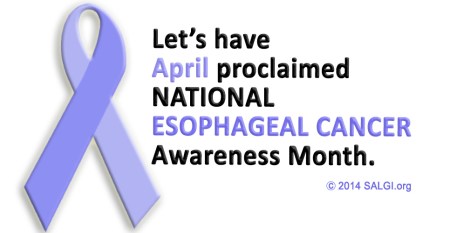
Let’s have April named ‘National Esophageal Cancer Awareness Month!’

April 28, 2014

We, The Salgi Esophageal Cancer Research Foundation started the petition: “President of the United States: Proclaim the Month of April to be ‘Esophageal Cancer Awareness Month’ in The United States of America” and need your help to get it off the ground.

Please take a moment to sign the petition now. Click here!

Here’s why it’s important:

Esophageal cancer has increased over 600% in the past decades, making it the fastest growing cancer in the United States.

Many do not realize that among other risk factors, obesity, chronic heartburn or Gastroesophageal Reflux Disease (GERD) and smoking can lead to esophageal damage and cancer.

Despite its rapid increase and poor prognosis, esophageal cancer research receives very little private or government funding.

In fact, the National Cancer Institute decreased its investment in research of esophageal cancer by 15% in 2012.

Esophageal cancer research receives a mere $28.0 million out of NCI’s total $5.07 billion budget; that’s approximately half of one percent.

However, approximately $1.3 billion dollars is spent on esophageal cancer treatment each year in the U.S.

While it is currently only the 18th most common cancer, Stage IV EAC only has a 3% survival rate.

Esophageal cancer shows low survival rates even in early stages: 21%-39%.

Esophageal cancer is a lethal diagnosis. Symptoms often arise too late, once the cancer has spread and becomes difficult if not impossible to treat.

Please, sign and share this petition! Click here!

APRIL is esophageal cancer awareness month every day is esophageal cancer awareness day periwinkle allperiwinkleverything health


The Salgi Esophageal Cancer Research Foundation is a 501 (c) (3) non profit organization as recognized by the Internal Revenue Service.

Content found on Salgi.org is for informational purposes only. The Content is not intended to be a substitute for professional medical advice, diagnosis, or treatment. Seek the advice of your physician or other qualified health provider with any questions you may have regarding a medical condition.


Did you miss our #EsophagealCancer Twitter Chat?

April 17, 2014

On Tuesday, April 8th, The Salgi Esophageal Cancer Research Foundation teamed up with medical experts from around the web to answer your important questions regarding prevention, detection, diagnosis, and treatment of esophageal cancer.  If you missed the chat, not to worry!  We’ve put together the complete transcript from the #EsophagealCancer Twitter chat.

This was the very first chat dedicated to #EsophagealCancer and we are very excited to share the important information that was discussed that day!  We will be hosting more Twitter Chats dedicated to esophageal cancer in the future, so if there is a question that was not answered, please contact us and let us know what you want answered at the next #EsophagealCancer Twitter Chat!

Question 1:

@SalgiFoundation: Q1. Explain the differences between esophageal adenocarcinoma and squamous cell carcinoma. #EsophagealCancer

Answers:

@RoswellPark: A1. Beside microscopic differences, adeno tends to be low down near the stomach while squamous arises in the upper portions #EsophagealCancer

@RoswellPark: A1. Squamous often occurs w/ irritation/ingestion of alcohol, tobacco, irritating foods & environmental factors #EsophagealCancer

@UCD_ChestHealth: A1. Adeno EsophagealCancer often occurs @ the bottom of esoph, caused by GERD. Squamous mid & top of esoph. Caused by smoking & alcohol.

@UCD_ChestHealth: A1. Squamous #EsophagealCancer can also be caused by chronic irritation problems like Achalasia and caustic injury

@UCD_ChestHealth: A1. Consumption of foods high in nitrates can also cause Squamous #EsophagealCancer

@RefluxMD: A1. Our Scientific Director, Dr. Para Chandrasoma, wrote a great article on this subject – refluxmd.com/learn/resource #EsophagealCancer

Question 2:

@SalgiFoundation: Q2. What are the risk factors associated with esophageal adenocarcinoma? #EsophagealCancer

Answers:

@RoswellPark: A2. Besides the other factors, the chronic irritation/changes of stomach juices cause adenocarcinomas over time #EsophagealCancer

@UCD_ChestHealth: A2. Acid reflux or GERD is a big risk factor for adenocarcinoma #EsophagealCancer. Causes Barrett’s which can degenerate into cancer

@UCD_ChestHealth: A2. Yes, food sits in esoph, and irritates lining > RT : Achalasia is a swallowing disorder? #EsophagealCancer

@UCD_ChestHealth: A2. Obesity also is a risk factor for Adeno #EsophagealCancer, mainly because obesity can lead to acid reflux

@UCD_ChestHealth: A2. Yes Barrett’s > low grade dysplasia > high grade > adenocarcinoma MT: Barrett’s esophagus is a precancerous condition? #EsophagealCancer

@UCD_ChestHealth: A2. Yes, leads to acid reflux > injury > Barrett’s RT : So, would a hiatal (sp?) hernia be a risk factor for #EsophagealCancer?

@AmerGastroAssn: A2. Overall diet, rather than specific foods, affect risk for #EsophagealCancer. More info: ow.ly/vzruO

@DanaFarber: A2.  Obesity, Barrett’s esophagus, smoking, and being male are all risk factors for #EsophagealCancer. bit.ly/1mUwWHf

@BrendonStilesMD: A2. Adeno. Some links with reflux disease and obesity. Probably some genetic factors that need to be better explored. #EsophagealCancer

@Aiims1742: A2. Risk factors include Barrett esophagus (most important) high BMI, alcohol smoking @SalgiFoundation#EsophagealCancer

Question 3:

@SalgiFoundation: Q3. What is Gastroesophageal Reflux Disease (GERD) and how is it related to esophageal cancer#EsophagealCancer

Answers:

@RoswellPark: A3. GERD is symptoms (heartburn) or damage caused by stomach juice spending too much time in the esophagus. #EsophagealCancer

@RoswellPark: A3. Over time, the acid juices can burn to produce a precancerous (Barrett’s) change or simply induce cancers directly. #EsophagealCancer

@UCD_ChestHealth: A3. GERD = gastroesophageal reflux disease, or spilling of acid from stomach to esoph. This leads > Barrett’s, which can cause #EsophagealCancer

@UCD_ChestHealth: A3. If one has GERD symptoms that do no respond to PPI after 4-8 weeks, they should get screening endoscopy per ACP. #EsophagealCancer

@AmerGastroAssn: A3. GERD = heartburn occurring when acid or other stomach contents back up in the esophagus. #EsophagealCancer ow.ly/vzsdO

@DanaFarberA3. GERD is backward flow of stomach acid contents into the esophagus – another risk factor for #EsophagealCancer. bit.ly/1mUwWHf

@BrendonStilesMD: A3. Reflux leads to chronic inflammation and injury, which may initiate/promote cancer growth. #EsophagealCancer

@BrendonStilesMD: A3. Important for people with GERD to be evaluated by GI doctors & considered for endoscopy, particularly with persistent sxs #EsophagealCancer

@BrendonStilesMD: A3. Q: @LungCancerFaces:  Do meds such as PPIs really lessen risk, or just treat symptoms? #EsophagealCancer

@BrendonStilesMD: A3. @SalgiFoundation @LungCancerFaces:  #EsophagealCancer Wish we knew. Some thought PPIs may even increase risk or mask symptoms.

Question 4:

@SalgiFoundation: Q4. Define Barrett’s Esophagus and explain how it is diagnosed. #EsophagealCancer

Answers:

@RoswellPark: A4. Barretts is damaged esophagus lining that gets recovered w/ a surface similar to the stomach #EsophagealCancer

@RoswellPark: A4. Treatment options for Barretts: goo.gl/ssF1Ft   #EsophagealCancer

@UCD_ChestHealth: A4: Barrett’s columnar epithelium w/ gobletcells (?) the esoph tries to look like intestine to protect itself from acid #EsophagealCancer

@UCD_ChestHealth: A4. Risk for adeno #EsophagealCancer is increased 30-125 fold for patients with Barrett’s metaplasia

@DanaFarber: A4. Barrett’s esophagus is a pre-cancerous or, in some cases, early form of #EsophagealCancer. bit.ly/1mUwWHf

@DanaFarberA4. Barrett’s esophagus often due to chronic inflamm from acid reflux & appears as abnormal cells lining the esophagus. #EsophagealCancer

@DanaFarberA4. If diagnosed, it’s important to treat Barrett’s esophagus to prevent the development of #EsophagealCancer.

@DanaFarberA4. Depending on form Barrett’s esophagus treatment may include medication, lifestyle changes, or radiofrequency ablation #EsophagealCancer

@DanaFarberA4. Q: @LungCancerFaces: @DanaFarber What is radiofrequency ablation?

@DanaFarber: A4. @LungCancerFaces: Great question! It’s a procedure that uses radio waves to heat and destroy abnormal cells.

@RefluxMD: A4. Quick overview by Dr. Chandrasoma of Barrett’s and diagnosis: refluxmd.com/connect/physic  #EsophagealCancer

@RefluxMD: A4. FYI – “If you’ve been diagnosed with Barrett’s” refluxmd.com/learn/resource  #EsophagealCancer

@BrendonStilesMD: A4. Barretts has to be diagnosed by endoscopic biopsy. Need to r/o dysplasia and cancer. Surveillance.

@Aiims1742: A4. Barrett esophagus is columnar epithelium with goblet cells within the tubular esophagus (sorry -GI Pathologist lingo) #EsophagealCancer

@Aiims1742: A4. Barrett esophagus shares many genetic alterations with esophageal cancer for example see Streppel, Maitra papers #EsophagealCancer

@Aiims1742: A4. GI Pathologists at MDAnderson and other places are looking for DYSPLASIA in biopsies of Barrett esophagus #EsophagealCancer

@Aiims1742: A4. patients with low grade Barrett dysplasia merit follow up, high grade need very close follow up or local ablation. #EsophagealCancer

Question 5:

@SalgiFoundation: Q5. Currently there are no standard/routine screening tests for EC, what are options to detect EC in early stages? #EsophagealCancer

Answers:

@RoswellPark: A5. Best option to detect EAC while curable/superficial is to find it w/ endoscopy. More on EUS: goo.gl/U6tI18#EsophagealCancer

@UCD_ChestHealth: A5. Everyone w/ Barrett’s should be in an endoscopic surveillance program ever 3 years

@UCD_ChestHealth: A5. Everyone with Barrett’s metaplasia should be in an endoscopic surveillance program at least every three years #EsophagealCancer

@UCD_ChestHealth: A5. Everyone should get a screening endoscopy if they have heartburn [GERD] + additional symptoms (e.g. trble swallowing) #EsophagealCancer

@UCD_ChestHealth: A5. Men over 50 with chronic GERD and additional risk factors should get screening endoscopy #EsophagealCancer

@LungCancerFaces: A5. Endoscopy is a breeze. Much easier than a colonoscopy. Don’t hesitate to do it if necessary. #EsophagealCancer

@AmerGastroAssn: A5. Researchers have developed markers to identify patients with BE at greatest risk for developing #EsophagealCancer http://agajournals.wordpress.com/2013/08/05/which-patients-with-barretts-esophagus-will-develop-esophageal-cancer/ 

@Aiims1742: A5. Most #EsophagealCancer  (adenocarcinoma) present with advanced dz while high grade Barrett or early EC do very well 

Question 6:

@SalgiFoundation: Q6. What are some warning signs associated with esophageal cancer#EsophagealCancer 

Answers:

@RoswellPark: A6. Difficulty with food because it “sticks” or causes pain during swallowing are the main symptoms of #EsophagealCancer 

@RoswellPark: A6. Unfortunately any symptom or sign means that the tumor has gotten quite large and is harder to treat. #EsophagealCancer 

@UCD_ChestHealth: A6. Difficulty swallowing. If your heart burn goes away for no reason, it may be a sign that Barrett’s has developed. #EsophagealCancer 

@UCD_ChestHealth: A6. Also black tarry stools, vomiting blood. Chronic anemia #EsophagealCancer 

@DanaFarberA6. The early stages of #EsophagealCancer  typically have no symptoms. As the disease advances, symptoms start to become more noticeable.

@DanaFarber: A6. Advanced #EsophagealCancer  symptoms include painful/difficult swallowing, weight loss, & regurgitation of food. bit.ly/1mUwWHf

@RefluxMD: A6. We recently spoke with a stage 4 cancer patient that only had uncontrolled burping after meals as a symptom. #EsophagealCancer 

@BrendonStilesMD: A6. Patients and physicians can’t ignore heartburn or difficulty swallowing. Low threshold for endoscopy.

Question 7:

@SalgiFoundation: Q7. What are methods of detection and diagnosis for esophageal cancer? #EsophagealCancer 

Answers:

@RoswellPark: A7. Tests like CT/PET Scans, ultrasound (on the endoscope), help to characterize the tumor & measure its spread #EsophagealCancer 

@UCD_ChestHealth: A7. Endoscopic screening and early detection can save lives bit.ly/YRUIDM#EsophagealCancer 

@UCD_ChestHealth: A7. Endoscopy goal standard for evaluation of potential #EsophagealCancer 

@AmerGastroAssn: A7. Patient brochure offers tips for preparing for an upper GI endoscopy: ow.ly/vzx6U#EsophagealCancer 

@DanaFarber: A7. Tests typically include chest X-rays, barium swallow, esophagoscopy, endoscopy, blood chemistry studies, CBC, or EUS. #EsophagealCancer 

@BrendonStilesMD: A7. EGD is a lot easier than colonoscopy. (And less messy and far to go!). More of an effort to find early.

@BrendonStilesMD: A7. Endoscopic biopsy. If cancer need endoscopic ultrasound to determine depth and bx nodes, CT, and PET.

Question 8:

@SalgiFoundation: Q8. When diagnosed with esophageal cancer what are available treatment options? #EsophagealCancer 

@SalgiFoundation: Q10. Stage IV survival rate is only 3%. What can be done to increase chances of survival? #EsophagealCancer 


The Salgi Esophageal Cancer Research Foundation is a 501 (c) (3) non profit organization as recognized by the Internal Revenue Service.

Content found on Salgi.org is for informational purposes only. The Content is not intended to be a substitute for professional medical advice, diagnosis, or treatment. Seek the advice of your physician or other qualified health provider with any questions you may have regarding a medical condition.


Obesity rate in children drops almost in half, report shows.

March 7, 2014

The Journal of American Medical Association recently reported that there has been a substantial decline in the obesity rate among children in the United States.  Obesity in children ages 2-5 dropped almost in half, 43% to be exact, in the past decade.

While there are no direct causes, researchers believe that the major decrease can be attributed to a number of different reasons.  From better choices at fast food restaurants to parents taking a more active role in what their children are consuming, the obesity rate in this group of children from 2-5 is at 8.4%.  That is quite a difference from the previous obesity rate of 13.9% in 2003-2004.

This is especially beneficial in regards to a lowered risk of esophageal cancer.  A study conducted in 2013 linked overweight and obese adolescents to “a more than two-fold increased risk of developing esophageal cancer later in life,”  Study author Dr. Zohar Levi of the Rabin Medical Center in Israel suggested that this risk could possibly be attributed to reoccurring “reflux that they have throughout their life.”

The New York Times reported the following:

“This is the first time we’ve seen any indication of any significant decrease in any group,” said Cynthia L. Ogden, a researcher for the Centers for Disease Control and Prevention, and the lead author of the report, which will be published in JAMA, The Journal of the American Medical Association, on Wednesday. “It was exciting.”

However, a third of US children and teens are still considered obese or overweight.  Odgen told the New York Times “Still, the lower obesity rates in the very young bode well for the future.”

For more information, please visit the following sources:

CNN.com 
BBC.com 
NYTimes.com 
AP.org
Health.com
 
 
The Salgi Esophageal Cancer Research Foundation is a 501 (c) (3) non profit organization as recognized by the Internal Revenue Service.

Content found on Salgi.org is for informational purposes only. The Content is not intended to be a substitute for professional medical advice, diagnosis, or treatment. Seek the advice of your physician or other qualified health provider with any questions you may have regarding a medical condition.


Eat your vegetables! Diet high in animal-based proteins linked to cancer, study shows.

March 5, 2014

Do you remember growing up and being told to “eat your vegetables”?  Well, new research suggests that those “veggie pushers” were onto something.  The Washington Post reports that researchers from the United States and Italy found that those whose diet was high in animal protein were four times more likely to die of cancer.  The same does not seem to show for plant-based protein sources.

Valter Longo, a University of Southern California gerontology professor and director of the school’s Longevity Institute believes that the majority of Americans are eating too much protein and are not choosing the right kind of protein.  This doesn’t come as a surprise since diets such as Atkins or Palseo, which encourage a protein rich diet have become very popular.  On the other hand, many plant-based protein sources contain some, but not all, essential amino acids.  Longo suggests maintaining a diet which consists of more plant-based proteins and to lower the daily intake of “animal-derived proteins.”

The growth hormone IGF-I has been shown to encourage the growth of both healthy and cancer cells.  This hormone is increased through the intake of protein.  Unfortunately, IGF-I levels typically decline after the age of 65 and attributes to the loss of muscle tone.  Since IGF-I is also responsible for the growth of healthy cells, a decrease in protein can be dangerous for those over 65.

Here are a list of plant-based foods that are high in protein:

Legumes (Soybeans, lentils, lupins, white beans, split peas, pintos, kidneys, black beans, navy beans and chickpeas.)

Leafy green vegetables (Bok choy, Romaine lettuce, escarole, kale and spinach.)

Root vegetables (Potato, sweet potato, parsnips, carrots and beets.)

Other vegetables (Peas, broccoli, asparagus, butternut squash, cauliflower.)

Since this post is intended for informational purposes only, the best way to maintain a well-balanced diet is to speak to a physician or a nutritionist.


For more information, please visit our sources: 

Washington Post
Forbes
Ehow.com
Foodmatters.tv 
 
The Salgi Esophageal Cancer Research Foundation is a 501 (c) (3) non profit organization as recognized by the Internal Revenue Service.

Content found on Salgi.org is for informational purposes only. The Content is not intended to be a substitute for professional medical advice, diagnosis, or treatment. Seek the advice of your physician or other qualified health provider with any questions you may have regarding a medical condition.