May 26, 2015
New research by scientists at the University of Maryland School of Medicine has found that esophageal cancer patients treated with proton therapy experienced significantly less toxic side effects than patients treated with older radiation therapies.
Working with colleagues at the Mayo Clinic in Rochester, Minnesota and the MD Anderson Cancer Center in Dallas, Texas, Michael Chuong, MD, an assistant professor of radiation oncology at the school, compared two kinds of X-ray radiation with proton therapy, an innovative, precise approach that targets tumors while minimizing harm to surrounding tissues.
The researchers looked at nearly 600 patients and found that proton therapy resulted in a significantly lower number of side effects, including nausea, blood abnormalities and loss of appetite. The results were presented on May 22 at the annual conference of the Particle Therapy Cooperative Group, held in San Diego.
“This evidence underscores the precision of proton therapy, and how it can really make a difference in cancer patients’ lives,” said Dr. Chuong.
Patients with esophageal cancer can suffer a range of side effects, including nausea, fatigue, lack of appetite, blood abnormalities and lung and heart problems. Proton therapy did not make a difference in all of these side effects, but had significant effects on several.
The results have particular relevance for the University of Maryland School of Medicine; this fall the school will open the Maryland Proton Treatment Center (MPTC). The center will provide one of the newest and highly precise forms of radiation therapy available, pencil beam scanning (PBS), which targets tumors while significantly decreasing radiation doses to healthy tissue. This technique can precisely direct radiation to the most difficult-to-reach tumors.
Proton therapy is just one of several new methods for treating cancer. Others include:
- Selective Internal Radiation Therapy, a precision modality for treating patients with particularly difficult-to-remove tumors involving the liver such as those from colorectal cancers;
- Gammapod, a new, high-precision, noninvasive method of treating early-stage breast cancer;
- Thermal Therapies, the use of “heat” in treating a broad spectrum of malignancies.
The treatment works well for many kinds of tumors, including those found in the brain, esophagus, lung, head and neck, prostate, liver, spinal cord and gastrointestinal system. It is also an important option for children with cancer and is expected to become an important option for some types of breast cancer. While most cancer patients are well served with today’s state-of-the-art radiation therapy technology, up to 30 percent are expected to have a greater benefit from the new form of targeted proton beam therapy.
This post is based on information provided by University of Maryland.
The Salgi Esophageal Cancer Research Foundation is a 501 (c) (3) non profit organization as recognized by the Internal Revenue Service.
Content found on Salgi.org is for informational purposes only. The Content is not intended to be a substitute for professional medical advice, diagnosis, or treatment. Seek the advice of your physician or other qualified health provider with any questions you may have regarding a medical condition.
 Leave a Comment » |
  The Salgi Foundation - Esophageal Cancer Awareness, Early Detection & Research | Tagged: acid, acid reflux, acid reflux disease, acid reflux drugs, acid reflux medication, awareness, barrett's, barrett's esophagus, cancer, Cancer Center, cancer of the esophagus, cancer research, cancer run, cancer therapy, cancer treatment, Cancer Treatments, cancer walk, charity, Chemo, Chemo radiation, Chemotherapy, Chemotherapy radiation, diet, disease, drugs, esophageal, esophageal cancer, esophageal cancer awareness, esophageal cancer charity, esophageal cancer nonprofit, esophageal cancer research, esophageal cancer research news, esophagus, esophagus cancer research, exercise, fit, fitness, food, gastroenterology, Gastroesophageal Reflux Disease, gerd, health, health news, healthy., heartburn, heartburn medication, heartburn sufferer, heartburn symptoms, lifestyle, Mayo Clinic, MD Anderson, MD Anderson Cancer Center, medication, medicine, news, nonprofit, nutrition, obesity, ppi, proton therapy, Radiation, Radiation therapy, reflux disease, research, research news, rhode island, ri, silent reflux, therapy, treatment for cancer, University of Maryland |
  Permalink
 Posted by salgiblogs
April 16, 2015
Portsmouth High School Senior Lanse Mitchell hosted a dodgeball tournament yesterday to help generate awareness of esophageal cancer, while raising money for The Salgi Esophageal Cancer Research Foundation.
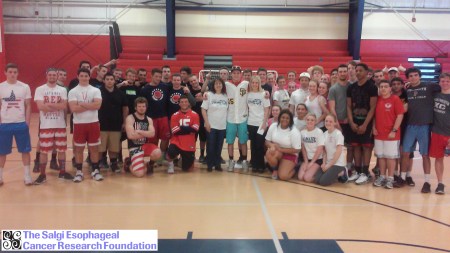
Lanse decided to host the dodgeball tournament to fulfill his Senior project requirement and wanted to make a difference by helping a local charity. President of The Salgi Esophageal Cancer Research Foundation was honored to have worked with Lanse on this project and both she and Vice President were invited to speak to the students about The Salgi Esophageal Cancer Research Foundation’s mission to raise awareness, encourage early detection and to fund research of esophageal cancer.

After months of preparation and planning, Lanse and a large group of students from Portsmouth High School played several rounds of dodgeball on what marked the mid-point of April, which is Esophageal Cancer Awareness Month. Please join us in thanking Lanse for a job well done!

If you would like to host a fundraiser to benefit The Salgi Esophageal Cancer Research Foundation, please click here to learn more!
The Salgi Esophageal Cancer Research Foundation is a 501 (c) (3) non profit organization as recognized by the Internal Revenue Service.
Content found on Salgi.org is for informational purposes only. The Content is not intended to be a substitute for professional medical advice, diagnosis, or treatment. Seek the advice of your physician or other qualified health provider with any questions you may have regarding a medical condition.
Leave a Comment » | The Salgi Foundation - Esophageal Cancer Awareness, Early Detection & Research | Tagged: acid, acid reflux, acid reflux disease, acid reflux drugs, acid reflux medication, awareness, barrett's, barrett's esophagus, cancer, cancer of the esophagus, cancer run, cancer walk, charity, diet, disease, drugs, esophageal, esophageal cancer, esophageal cancer awareness, esophageal cancer research, esophagus, exercise, fit, fitness, food, gastroenterology, Gastroesophageal Reflux Disease, gerd, health, health news, healthy., heartburn, heartburn medication, heartburn sufferer, heartburn symptoms, lifestyle, medication, news, nutrition, obesity, reflux disease, rhode island, ri, silent reflux | Permalink
Posted by salgiblogs
March 26, 2015
By Liz Janetschek | The ASCO Post. March 25, 2015, Volume 6, Issue 5
The information contained in this Clinical Trials Resource Guide includes actively recruiting observational, interventional, phase I, phase II, and phase III clinical studies for patients with newly diagnosed or recurrent esophageal cancer. All of the studies are listed on the National Institutes of Health website at ClinicalTrials.gov.
Read the full article, “Clinical Trials Actively Recruiting Patients With Esophageal Cancer,” The ASCO Post.
The Salgi Esophageal Cancer Research Foundation is a 501 (c) (3) non profit organization as recognized by the Internal Revenue Service.
Content found on Salgi.org is for informational purposes only. The Content is not intended to be a substitute for professional medical advice, diagnosis, or treatment. Seek the advice of your physician or other qualified health provider with any questions you may have regarding a medical condition.
Leave a Comment » | The Salgi Foundation - Esophageal Cancer Awareness, Early Detection & Research | Tagged: acid, acid reflux, acid reflux disease, acid reflux drugs, acid reflux medication, awareness, barrett's, barrett's esophagus, cancer, cancer awareness, cancer charity, cancer of the esophagus, cancer run, cancer walk, charity, clinical trials, diet, disease, drugs, esophageal, esophageal cancer, esophageal cancer awareness, esophageal cancer charity, esophageal cancer research, esophageal cancer research charity, esophagus, exercise, fit, fitness, food, gastroenterology, Gastroesophageal Reflux Disease, gerd, GI health, GI news, GI research, health, health news, healthy., heartburn, heartburn medication, heartburn sufferer, heartburn symptoms, lifestyle, medication, news, nonprofit, nutrition, obesity, ppi, reflux disease, research news, rhode island, ri, silent reflux | Permalink
Posted by salgiblogs
January 8, 2015
“EnteroTrack, LLC and the University of Colorado (CU) have executed an exclusive license agreement that will allow the company to develop and market a novel device to monitor inflammation of the gastrointestinal tract.
Diagnosing inflammatory conditions of the gastrointestinal tract such as eosinophilic esophagitis (EoE), severe gastroesophageal reflux (GERD), eosinophilic gastroenteritis (EGE), food allergic enteropathy (FAE), and inflammatory bowel disease (lBD) is often difficult, since blood tests and radio-imaging aren’t able to pinpoint the cause of inflammation. Ultimately, many patients must undergo endoscopy – use of an instrument to visualize the esophagus and collect samples for testing.
EnteroTrack LLC is developing a capsule that allows for simple, low-cost analysis of esophageal content. The capsule can help identify the presence of esophageal inflammation, leading to faster treatment. The capsule can also be used to monitor the effectiveness of treatment, and in the future may also be used to help diagnose esophageal diseases.
The company was formed as a result of a partnership between Glenn T. Furuta, M.D., a professor of pediatrics at the CU School of Medicine at the Anschutz Medical Campus and a pediatric gastroenterologist at Children’s Hospital Colorado; Robin Shandas, Ph.D., professor and chair of bioengineering at the University of Colorado Denver, College of Engineering and Applied Science; and Steven Ackerman, Ph.D., a professor of biochemistry at the University of Illinois College of Medicine at Chicago.
“This partnership represents the best aspect of academic medicine,” said Furuta. “We have been able to successfully collaborate in a multi-disciplinary fashion to develop and execute a plan that will ultimately improve the lives children and adults with gastrointestinal diseases.” Furuta developed the technology in collaboration with Ackerman; the duo then approached Shandas to move the idea from the university research lab into a commercial entity.
At that time, Children’s Hospital Colorado stepped in to provide seed funding to the company, supporting the innovative research of the researchers and recognizing the opportunity to positively impact the lives of children with inflammatory conditions of the gastrointestinal track.
“Given the increasing pressures to contain costs, there is clear rationale for innovative, cost-effective methods to monitor esophageal diseases,” said Shandas, who is acting as the company’s interim CEO. “This technology holds particular promise because it can reduce total patient care costs while keeping good margins. We hope to obtain FDA approval for the device in 2015.”
Source: University of Colorado (CU)
The Salgi Esophageal Cancer Research Foundation is a 501 (c) (3) non profit organization as recognized by the Internal Revenue Service.
Content found on Salgi.org is for informational purposes only. The Content is not intended to be a substitute for professional medical advice, diagnosis, or treatment. Seek the advice of your physician or other qualified health provider with any questions you may have regarding a medical condition.
Leave a Comment » | The Salgi Foundation - Esophageal Cancer Awareness, Early Detection & Research | Tagged: acid, acid reflux, acid reflux disease, acid reflux drugs, acid reflux medication, awareness, barrett's, barrett's esophagus, cancer, cancer of the esophagus, cancer risk, cancer run, cancer walk, charity, diet, disease, drugs, eosinophilic esophagitis, esophageal, esophageal cancer, esophageal cancer awareness, esophageal cancer research, esophageal diseases, esophagus, exercise, fit, fitness, food, gastroenterology, Gastroesophageal Reflux Disease, gastrointestinal tract, gerd, gerd awareness, health, health news, healthy., heartburn, heartburn medication, heartburn sufferer, heartburn symptoms, inflammatory bowel disease, inflammatory conditions, lifestyle, medication, news, nutrition, obesity, oesophageal cancer, ppi, prevention, proton pump inhibitors, reflux disease, rhode island, ri, silent reflux, University of Colorado | Permalink
Posted by salgiblogs
January 7, 2015
The Salgi Esophageal Cancer Research Foundation is a 501(c)(3) nonprofit charity established to raise awareness, encourage early detection and to fund research of esophageal cancer…in hopes of a cure.™
Established on November 21, 2011, in memory of The Salgi Esophageal Cancer Research Foundation’s President’s father who died of esophageal cancer, the charity has successfully achieved two out of their three core missions in less than five years; awareness and encouraging early detection.
Now, for the first time, The Salgi Esophageal Cancer Research Foundation will accomplish the third part of its mission by funding research of esophageal cancer.
“The Salgi Esophageal Cancer Research Foundation is excited to announce that our grant funding period is now open and will begin the process of receiving applications.”
Currently, esophageal cancer [adenocarcinoma] is the fastest growing cancer in the United States, according to the National Cancer Institute and is rapidly increasing in many other western countries.
Esophageal cancer has increased over 600% in past decades, which some experts say may be attributed to the rising number of people being affected by Gastroesophageal Reflux Disease, known more commonly as GERD or acid reflux disease. The most common symptom of GERD is heartburn, which affects billions of people each year.
Unfortunately, many are unaware that chronic heartburn can lead to esophageal cancer.
Also one of the deadliest cancers, symptoms of esophageal cancer, such as difficulty swallowing, do not typically appear until the cancer has spread and becomes much more difficult to treat. There are also no standard or routine screenings to detect esophageal cancer in its earlier stages.
Patients diagnosed with Stage IV esophageal cancer face a survival rate of 3.8%. The overall 5 year survival rate for esophageal cancer is only 17.5%.
Despite these facts, esophageal cancer is among a group of cancers that receive the least amount of medical research funding from the federal government.
In fact, the National Cancer Institute decreased funding for research of esophageal cancer by 15% in 2012. NCI invests a mere $28.0 million out of their total $5.07 billion budget for esophageal cancer. That is approximately half of one percent.
In 2014, while The American Cancer Society reported on their website that they currently fund 1,165 cancer research projects, but only 8 of those projects are for esophageal cancer research.
There is a dire need for funding for esophageal cancer research. The Salgi Esophageal Cancer Research Foundation welcomes applications from researchers who are working in the areas of prevention, early detection and treatment of esophageal cancer.
Researchers are invited to click here for more information on the Grant Application Process.
Those who wish to contribute to the Foundation’s esophageal cancer research efforts can click here to make a tax-deductible donation.
The Salgi Esophageal Cancer Research Foundation is a 501 (c) (3) non profit organization as recognized by the Internal Revenue Service.
Content found on Salgi.org is for informational purposes only. The Content is not intended to be a substitute for professional medical advice, diagnosis, or treatment. Seek the advice of your physician or other qualified health provider with any questions you may have regarding a medical condition.
Leave a Comment » | The Salgi Foundation - Esophageal Cancer Awareness, Early Detection & Research | Tagged: acid, acid reflux, acid reflux disease, acid reflux drugs, acid reflux medication, awareness, barrett's, barrett's esophagus, cancer, cancer of the esophagus, cancer risk, cancer run, cancer walk, charity, diet, disease, drugs, esophageal, esophageal cancer, esophageal cancer awareness, esophageal cancer research, esophagus, exercise, fit, fitness, food, gastroenterology, Gastroesophageal Reflux Disease, gerd, gerd awareness, health, health news, healthy., heartburn, heartburn medication, heartburn sufferer, heartburn symptoms, lifestyle, medication, news, nutrition, obesity, oesophageal cancer, ppi, prevention, proton pump inhibitors, reflux disease, rhode island, ri, silent reflux | Permalink
Posted by salgiblogs
January 6, 2015
“Low alcohol consumption and a plant-based diet, both healthy habits aligning with current cancer prevention guidelines, are associated with reducing the risk of obesity-related cancers, a New York University study shows. The findings appear in the journal Cancer Causes & Control.
“Our research aims to clarify associations between diet and physical activity in relation to cancer to encourage at-risk individuals to make lifestyle modifications that may reduce their risk of certain cancers,” said Nour Makarem, a nutrition doctoral student at NYU Steinhardt and the study’s lead author.
A third of cancers are estimated to be related to excess body fat, and are therefore considered preventable through lifestyle changes. Obesity-related cancers include cancers of the gastrointestinal tract, reproductive organs, urinary tract, blood, bone, spleen, and thyroid.
Obesity is considered a risk factor for esophageal cancer, the fastest growing cancer in the United States, according to the National Cancer Institute. Other risk factors for esophageal cancer include tobacco use, poor nutrition, excessive alcohol use and Gastroesophageal Reflux Disease (chronic acid reflux, heartburn being the most common symptom.)
In 1997, the World Cancer Research Fund and the American Institute for Cancer Research released cancer prevention guidelines advising on weight management, diet, and physical activity. These guidelines, updated in 2007, provide an integrated approach for establishing healthy habits that reduce cancer incidence.
In their study, Makarem and her colleagues sought to evaluate whether healthy behaviors aligning with the diet and physical activity cancer prevention guidelines are in fact associated with reduced risk for obesity-related cancers and the most common site-specific cancers (breast, prostate, and colorectal cancers).
The researchers analyzed medical and dietary data for 2,983 men and women who were part of the Framingham Heart Study, a 60-year population study tracking factors related to cardiovascular disease as well as cancer. Focusing on data from 1991 through 2008, they identified 480 obesity-related cancers among the participants.
In order to calculate the relationship between the cancer prevention recommendations and cancer incidence, the researchers created a seven-point score based on the recommendations for body fat, physical activity, foods that promote weight gain, plant foods, animal foods, alcohol consumption, and food preparation and processing.
After adjusting for other factors that could contribute to cancer risk, including age, smoking, and pre-existing conditions, the researchers found that the overall score, as a proxy for overall concordance to the guidelines, was not associated with obesity-related cancer risk. However, when score components were evaluated separately, two different measures emerged as strong predictors of cancer risk.
In the current study, adherence to alcohol recommendations – limiting alcoholic drinks to two for men and one for women a day – was protective against obesity-related cancers combined and against breast, prostate, and colorectal cancers. In addition, among participants who consume starchy vegetables, eating sufficient non-starchy plant foods (fruits, vegetables, and legumes) was associated with a lower risk of colorectal cancer.
“Based on the study’s results, dietary advice on preventing cancer should emphasize the importance of eating a plant-based diet and restricting alcohol consumption,” said Niyati Parekh, associate professor of nutrition and public health at NYU Steinhardt and the study’s senior author.”
This post is based on information provided by New York University.
The Salgi Esophageal Cancer Research Foundation is a 501 (c) (3) non profit organization as recognized by the Internal Revenue Service.
Content found on Salgi.org is for informational purposes only. The Content is not intended to be a substitute for professional medical advice, diagnosis, or treatment. Seek the advice of your physician or other qualified health provider with any questions you may have regarding a medical condition.
Leave a Comment » | The Salgi Foundation - Esophageal Cancer Awareness, Early Detection & Research | Tagged: acid, acid reflux, acid reflux disease, acid reflux drugs, acid reflux medication, awareness, barrett's, barrett's esophagus, cancer, cancer of the esophagus, cancer risk, cancer run, cancer walk, charity, colorectal cancer, diet, disease, drugs, esophageal, esophageal cancer, esophageal cancer awareness, esophageal cancer research, esophagus, exercise, fit, fitness, food, gastroenterology, Gastroesophageal Reflux Disease, gerd, gerd awareness, health, health news, healthy., heartburn, heartburn medication, heartburn sufferer, heartburn symptoms, lifestyle, Mayo Clinic, medication, New Year, New Year resolutions 2015, New Years Eve, New York University, news, nutrition, obesity, oesophageal cancer, ppi, prevention guidelines, proton pump inhibitors, reflux disease, rhode island, ri, silent reflux | Permalink
Posted by salgiblogs
December 31, 2014
It is officially the New Year and for many, that also means setting New Year resolutions. According to Reuters, “losing weight and getting fit and healthy are among the top five resolutions [made] every year.”
Unfortunately, many of these goals fade away and are never fulfilled. In fact, forty-five percent of Americans make New Year resolutions each year, but only eight percent succeed, according to a University of Scranton study published in the Journal of Clinical Psychology. While the odds are very much against the success of New Year resolutions, these goals are extremely important to our health, especially when it comes to esophageal cancer prevention.
Esophageal cancer is the fastest growing cancer in the United States, according to the National Cancer Institute. It has increased over 600% in the past decades and shows no signs of slowing down. As one of the deadliest cancers, esophageal cancer has an extremely poor 5-year survival rate of only 17.5%.
Some of the major risk factors associated with esophageal cancer are chronic heartburn (acid reflux), obesity, smoking and poor nutrition.
Losing weight, eating healthier, exercising and quitting tobacco use are all ways to help lower the risk of esophageal cancer, in addition to improving other aspects of overall health.
Below are five articles that we’ve chosen from throughout the web to help you create and, more importantly, stick to resolutions to improve your health. Whether you create these goals today, tomorrow or well after the New Year, we support and encourage you to improve your health!
What is on your New Year resolution list? Share them with us on Facebook!
Resources for New Year Resolution Success:
New Year’s resolutions- more procrastination than motivation, Reuters
Tips for making GERD diet and lifestyle changes that stick, RefluxMD
The Key To Setting Achievable Goals, Huffington Post
11 Simple Health Habits Worth Adopting Into Your Life, Cleveland Clinic
Why your healthier lifestyle should start today, Medical Daily
The Salgi Esophageal Cancer Research Foundation is a 501 (c) (3) non profit organization as recognized by the Internal Revenue Service.
Content found on Salgi.org is for informational purposes only. The Content is not intended to be a substitute for professional medical advice, diagnosis, or treatment. Seek the advice of your physician or other qualified health provider with any questions you may have regarding a medical condition.
Leave a Comment » | The Salgi Foundation - Esophageal Cancer Awareness, Early Detection & Research | Tagged: acid, acid reflux, acid reflux disease, acid reflux drugs, acid reflux medication, awareness, barrett's, barrett's esophagus, cancer, cancer of the esophagus, cancer run, cancer walk, charity, diet, disease, drugs, esophageal, esophageal cancer, esophageal cancer awareness, esophageal cancer research, esophagus, exercise, fit, fitness, food, gastroenterology, Gastroesophageal Reflux Disease, gerd, gerd awareness, health, health news, healthy., heartburn, heartburn medication, heartburn sufferer, heartburn symptoms, lifestyle, Mayo Clinic, medication, New Year, New Year resolutions 2015, New Years Eve, news, nutrition, obesity, oesophageal cancer, ppi, proton pump inhibitors, reflux disease, rhode island, ri, silent reflux | Permalink
Posted by salgiblogs
December 30, 2014
“Driven by obesity and acid reflux, adenocarcinoma of the esophagus has become the fastest rising cancer in white men in the United States, said experts from Baylor College of Medicine and University of Pennsylvania Perelman School of Medicine in a review article published in New England Journal of Medicine. The review summarizes the latest developments in the risk factors, pathogenesis, diagnosis and treatment of the two major types of esophageal cancer.
“It’s important to remember that the risk factors (obesity and acid reflux) are potentially modifiable,” said Dr. Hashem El-Serag, senior author of the review and chief of gastroenterology and hepatology at Baylor.
Esophageal cancer is [considered] rare in young individuals but increases with age, peaking at ages 70 to 80. The cancer is three to four times as common in men as it is in women, the authors stated.
However, esophageal cancer is the fastest growing cancer in the US, according to the National Cancer Institute. This also attributes to the increase in the number of men and women of all ages who have been diagnosed with cancer.
The review details how daily and weekly symptoms of acid reflux increase a person’s likelihood of developing this form of cancer. It also explains how abdominal obesity increases the risk of developing Barrett’s esophagus and cancer. Increased pressure causes the stomach to move upward, which can cause and exacerbate acid reflux symptoms.
Barrett’s esophagus, a precursor lesion to adenocarcinoma, can be detected through an endoscopy.
“People who are obese or have chronic acid reflux should consider having an endoscopy to be screened for Barrett’s or adenocarcinoma,” El-Serag stressed.
A technique called radiofrequency ablation can help prevent progression to cancer in those with Barrett’s esophagus who develop an abnormality called dysplasia.
“Radiofrequency ablation can be done endoscopically by a gastroenterologist,” El-Serag explained. “This reduces the risk of cancer and has proven safe and effective.”
He estimated that as many as 86 percent of dysplasia cases treated with radiofrequency do not go on to become cancer.”
The other author in this review is Anil K. Rustgi, chief of gastroenterology at University of Pennsylvania Perelman School of Medicine, Philadelphia.
SOURCE: Baylor College of Medicine
The Salgi Esophageal Cancer Research Foundation is a 501 (c) (3) non profit organization as recognized by the Internal Revenue Service.
Content found on Salgi.org is for informational purposes only. The Content is not intended to be a substitute for professional medical advice, diagnosis, or treatment. Seek the advice of your physician or other qualified health provider with any questions you may have regarding a medical condition.
1 Comment | The Salgi Foundation - Esophageal Cancer Awareness, Early Detection & Research | Tagged: acid, acid reflux, acid reflux disease, acid reflux drugs, acid reflux medication, awareness, barrett's, barrett's esophagus, Baylor College of Medicine, cancer, cancer of the esophagus, cancer run, cancer walk, charity, diet, disease, drugs, esophageal, esophageal cancer, esophageal cancer awareness, esophageal cancer research, esophagus, exercise, fit, fitness, food, gastroenterology, Gastroesophageal Reflux Disease, gerd, gerd awareness, health, health news, healthy., heartburn, heartburn medication, heartburn sufferer, heartburn symptoms, lifestyle, Mayo Clinic, medication, news, nutrition, obesity, oesophageal cancer, ppi, proton pump inhibitors, reflux disease, rhode island, ri, silent reflux | Permalink
Posted by salgiblogs
December 26, 2014
“A newly published, pathologist-blinded study in a porcine model, examines the histopathology changes after non-ablative radiofrequency (NARF) to smooth muscle as delivered by Stretta therapy for GERD and Secca therapy for fecal incontinence. Radiofrequency therapy is commonly thought of in terms of ablation, where tissue destruction occurs. In contrast, this study shows that this unique low power, low temperature non-ablative type of radiofrequency (NARF) improves the smooth-muscle sphincters of the GI tract, as well as the skeletal muscle of the external anal sphincter. The investigation confirms multiple mechanisms that may regenerate and improve the function of the treated sphincter muscles, offering symptom improvement for patients suffering from these debilitating disorders.
The study documented the following advantages of NARF in the presence of a compromised sphincter:
- Hypertrophy of both smooth and skeletal muscle fibers
- Smooth muscle size and muscle bundle increase
- Interstitial Cells of Cajal (ICCs) decrease
- Collagen I synthesis promotion, with an increase in the Collagen I/Collagen III ratio
- Fibrosis is diminished, due to a regression of excessive collagen deposition
- Similar effect on Type I and II fibers as reinervation (nerve regrowth)
Study senior author Dr. Steven Wexner, Director of the Digestive Disease Center and Chairman of the Department of Colorectal Surgery at Cleveland Clinic Florida, and a paid consultant for Mederi Therapeutics Inc., commented: “The results of this study should allow us to help patients with GERD and fecal incontinence, as the regeneration we see here clarifies the mechanism of action of radiofrequency treatment.”
The randomized study was performed on an animal model of fecal incontinence with three study arms: an experimental model of fecal incontinence with damage to the sphincter muscle, which remained untreated; a group with sphincter damage, treated with NARF; a control group without a damaged sphincter and without treatment. After 10 weeks the treated tissue was excised and preserved. The resulting H&E and trichrome slides were examined by two pathologists, who were blinded to the tissue sample origin.
Study principal author Dr. Mariana Berho, Director of the Pathology and Laboratory Medicine Center and of the Center for Research at Cleveland Clinic Florida and a paid consultant for Mederi Therapeutics Inc. explained: “The results of this animal model study are extremely valuable as they may reflect the changes that take place in the human lower esophageal sphincter as well as the internal anal sphincter after the administration of radiofrequency.”
This investigation concluded that non-ablative radiofrequency application appeared to induce profound morphological changes in the sphincter muscle that lead to an anatomical state reminiscent of the baseline sphincter structure. Further, the regeneration of muscle explains how NARF therapies, Stretta and Secca work to improve the symptoms that accompany GERD and fecal incontinence.”
For more information: www.stretta-therapy.com and www.secca-therapy.com.
SOURCE: Mederi Therapeutics Inc.
The Salgi Esophageal Cancer Research Foundation is a 501 (c) (3) non profit organization as recognized by the Internal Revenue Service.
Content found on Salgi.org is for informational purposes only. The Content is not intended to be a substitute for professional medical advice, diagnosis, or treatment. Seek the advice of your physician or other qualified health provider with any questions you may have regarding a medical condition.
Leave a Comment » | The Salgi Foundation - Esophageal Cancer Awareness, Early Detection & Research | Tagged: acid, acid reflux, acid reflux disease, acid reflux drugs, acid reflux medication, awareness, barrett's, barrett's esophagus, cancer, cancer of the esophagus, cancer run, cancer walk, charity, diet, disease, drugs, esophageal, esophageal cancer, esophageal cancer awareness, esophageal cancer research, esophagus, exercise, fit, fitness, food, gastroenterology, Gastroesophageal Reflux Disease, gerd, gerd awareness, health, health news, healthy., heartburn, heartburn medication, heartburn sufferer, heartburn symptoms, lifestyle, Mayo Clinic, medication, news, nutrition, obesity, oesophageal cancer, ppi, proton pump inhibitors, reflux disease, rhode island, ri, silent reflux, stretta | Permalink
Posted by salgiblogs
December 26, 2014
The American Gastroenterological Association (AGA) Center for GI Innovation and Technology is pleased to announce that the first two enrollees in the STAR Registry — which seeks to compare laparoscopic surgery to an incisionless procedure to treat gastroesophageal reflux disease (GERD) — have successfully undergone treatment.
“This is an important milestone in AGA’s endeavor to develop national observational registries to help bring new medical devices and treatments to physicians and their patients in an efficient, safe and meaningful way,” said Ashish Atreja, MD, MPH, chair of the registry oversight subcommittee of the AGA Center for GI Innovation and Technology. “With each patient, we will collect valuable data evaluating safety, efficacy and comparative outcomes. The goal of this registry is to provide the entire health-care system — patients, payors, purchasers and providers — with evidence to back future technology decisions.”
As a neutral objective broker, the AGA Center for GI Innovation and Technology has partnered with EndoGastric Solutions® to establish the STAR Registry (Laparoscopic Nissen Fundoplication (LNF) Surgery Versus Transoral Incisionless Fundoplication (TIF®):Anti-Reflux Treatment Registry). The STAR Registry will provide the first real-world data observing patient outcomes following laparoscopic surgery and transoral fundoplication with the EsophyX® device. Transoral fundoplication is an incisionless procedure that allows physicians to reshape the anti-reflux valve that prevents stomach acid and contents from flowing up into the esophagus. Both of the surgical procedures for GERD examined in the STAR Registry are performed with FDA-cleared devices and techniques.
The first two patients, who underwent incisionless fundoplication, were treated at:
- Lenox Hill Hospital in New York, NY, under the care of Anthony A. Starpoli, MD, and Gregory B. Haber, MD.
- SurgOne Foregut Institute in Englewood, CO, under the care of Reginald Bell, MD.
“GERD is a deceptively complex condition and the most commonly used treatment options may not adequately serve all patients,” said Dr. Starpoli, associate director of esophageal endotherapy at Lenox Hill Hospital. “I’m honored to support the collection of data that will be used to evaluate the durability and safety of this technology, which could provide a new evidence-based treatment option for patients suffering from GERD.”
“By participating in this national observational registry, we are collecting important data that will improve the future of GERD treatment,” said Dr. Bell, founder of SurgOne Foregut Institute. “As a physician, I’m thrilled to know that I will have access to long-term efficacy data about patients who choose surgical therapy for GERD, which is invaluable to patient care decisions.”
As with all patients enrolled in the registry, data from the first two patients will be collected from standard follow up appointments with the patients, and the registry staff will also check in with the patients every six months for approximately three years following the GERD procedure. Researchers will use this data to compare effectiveness, safety, post-operative side effects or post-procedure costs associated with episodes of care and any ensuing complications.
Source: American Gastroenterological Association
The Salgi Esophageal Cancer Research Foundation is a 501 (c) (3) non profit organization as recognized by the Internal Revenue Service.
Content found on Salgi.org is for informational purposes only. The Content is not intended to be a substitute for professional medical advice, diagnosis, or treatment. Seek the advice of your physician or other qualified health provider with any questions you may have regarding a medical condition.
Leave a Comment » | The Salgi Foundation - Esophageal Cancer Awareness, Early Detection & Research | Tagged: acid, acid reflux, acid reflux disease, acid reflux drugs, acid reflux medication, aga, American Gastroenterological Association, awareness, barrett's, barrett's esophagus, cancer, cancer of the esophagus, cancer run, cancer walk, charity, diet, disease, drugs, esophageal, esophageal cancer, esophageal cancer awareness, esophageal cancer research, esophagus, exercise, fit, fitness, food, gastro, gastroenterology, Gastroesophageal Reflux Disease, gerd, gerd awareness, health, health news, healthy., heartburn, heartburn medication, heartburn sufferer, heartburn symptoms, lifestyle, Mayo Clinic, medication, news, nutrition, obesity, oesophageal cancer, ppi, proton pump inhibitors, reflux disease, rhode island, ri, silent reflux, STAR Registry | Permalink
Posted by salgiblogs


 The Salgi Esophageal Cancer Research Foundation