October 2, 2014
The Lakeland Mirror, by: Austin Anderson. Sept. 25, 2014
On Sept. 15, Christopher Werner, assistant professor of instrumental music and director of bands [at Lakeland College in Wisconsin], returned from a four-month absence after a battle with early stage esophageal cancer.
Werner began feeling ill during the previous school year when he was unable to eat anything without feeling nauseous. He eventually made an appointment with his doctor.
X-rays were taken of his neck and the culprit was a large tumor lodged in his throat, blocking access to his stomach. The tumor was found malignant, and Werner had to undergo chemotherapy, radiation, and eventually surgery.
He was sent to St. Luke’s Hospital in Milwaukee where he was prepped for a six-hour surgery. The procedure involved cutting out the portion of esophagus that held the tumor and extending a part of the stomach lining to connect it with the throat.
“It was a very severe surgery,” said Werner. Without part of his esophagus, Werner’s voice became hoarse. He was hooked up to a machine that fed him but he still lost weight from chemotherapy. Werner remained in the hospital for one week after the surgery.
“It was scary,” said Werner. “I went through rapid weight loss.”
When he returned to Lakeland, he explained his condition to the concert band at the beginning of class on Sept. 15.
During Werner’s absence, the band still practiced music to be prepared for Werner’s return. Senior instrumental music and performance major Matt Troyer, as well as others, gave the band tips for improvement.
“It is a big relief to see him back,” said Troyer. “I can’t stress enough how pleased I am with Lakeland and how they handled my absence,” said Werner. “They have been just fantastic.”
According to Werner, his battle is not over yet. The chemotherapy side effects will remain for another year. He might have to go back to the hospital for more chemotherapy, but he hopes to get his voice back in time.
At the moment, Lakeland has given him a microphone and speaker to amplify his soft voice.
“I am super excited to have Dr. Werner back and to get this semester started for band,” said Justine Watson, senior studio and graphic art major. “He is an inspiration to many of us.”
_______________________________________
This article has been posted with the permission of The Lakeland Mirror, the student newspaper of Lakeland College in Wisconsin. “Werner conducts again during cancer battle” was written by: Austin Anderson, Staff Reporter on September 25, 2014. Anderson, a junior writing major and staff reporter at the newspaper, details the story of Christopher Werner’s, a professor and band director’s, battle with esophageal cancer.
Esophageal cancer is the fastest growing cancer in the United States and is also one of the deadliest. Unfortunately, esophageal cancer is often detected late, as there are no routine or standard screenings. However, when caught early, the chances of survival are much higher. signs and symptoms of esophageal cancer.
Mr. Werner’s story highlights the importance of early detection. It is our hope that it will also encourage others to be proactive about their health and provide inspiration to others fighting this cancer. Thank you to Christopher, Austin and Leah Ulatowski, Editor-in-Chief of the Mirror, for allowing us to reproduce this story!
Visit The Lakeland Mirror’s website, like them on Facebook and follow them on Twitter!
The Salgi Esophageal Cancer Research Foundation is a 501 (c) (3) non profit organization as recognized by the Internal Revenue Service.
Content found on Salgi.org is for informational purposes only. The Content is not intended to be a substitute for professional medical advice, diagnosis, or treatment. Seek the advice of your physician or other qualified health provider with any questions you may have regarding a medical condition.
 Leave a Comment » |
  The Salgi Foundation - Esophageal Cancer Awareness, Early Detection & Research | Tagged: acid, acid reflux, acid reflux disease, acid reflux drugs, acid reflux medication, awareness, barrett's, barrett's esophagus, cancer, cancer of the esophagus, cancer run, cancer walk, charity, diet, disease, drugs, esophageal, esophageal cancer, esophageal cancer awareness, esophageal cancer research, esophagus, exercise, fit, fitness, food, gastroenterology, Gastroesophageal Reflux Disease, gerd, health, health news, healthy., heartburn, heartburn medication, heartburn sufferer, heartburn symptoms, lifestyle, medication, news, nutrition, obesity, ppi, reflux disease, rhode island, ri, silent reflux |
  Permalink
 Posted by salgiblogs
September 26, 2014
Taller individuals are less likely to develop esophageal cancer [adenocarinoma] and it’s precursor, Barrett’s esophagus, according to a new study in Clinical Gastroenterology and Hepatology, the official clinical practice journal of the American Gastroenterological Association.
Esophageal cancer is the fastest growing cancer in the United States, with over a 600% increase in the past decades.
Esophageal cancer is also one of the most deadly of cancers, with an overall 5 year survival rate of only 17.5%. There are no standard or routine screenings to detect esophageal cancer in its earliest stages and symptoms often arise once the cancer has spread. Esophageal cancer is often diagnosed in later stages reflecting on the fact that Stage IV esophageal cancer has a survival rate of only 3.8%. With no known risk factors, research such as this is imperative to finding clues as to what causes this lethal disease.
“Individuals in the lowest quartile of height (under 5’7″ for men and 5’2″ for women) were roughly twice as likely as individuals in the highest quartile of height (taller than 6′ for men and 5’5″ for women) to have Barrett’s esophagus or esophageal cancer,” said Aaron P. Thrift, PhD, lead study author from the Public Health Sciences Division, Fred Hutchinson Cancer Research Center, Seattle, WA.
“Interestingly, the relationship between height and esophageal cancer is opposite from many other cancers — including colorectal, prostate and breast — where greater height is associated with an increased risk.”
Researchers conducted a large pooled analysis using data from 14 population-based epidemiologic studies within the International Barrett’s and Esophageal Adenocarcinoma Consortium (BEACON), including 1,000 cases of esophageal cancer and twice as many cases of Barrett’s esophagus, and twice as many controls.
The researchers conducted multiple analyses, including using Mendelian randomization (which incorporates genetic information with traditional approaches) to overcome issues of confounding and bias. The results from all analyses consistently demonstrated an inverse association between height and Barrett’s esophagus or esophageal cancer. There were no differences in these estimates based on sex, age, education, smoking, GERD symptoms or body mass index. Adjusting for abdominal obesity yielded similar results.
“The identification of risk factors, such as height, will allow us to create more sophisticated and accurate methods to quantify patient risk, which will hopefully be used in the future to decide who should undergo endoscopic screening for these conditions,” added Dr. Thrift.
The researchers report no obvious explanation for the association between short height and Barrett’s esophagus or esophageal cancer. Future studies investigating the potential causal mechanisms by which risk for Barrett’s esophagus or esophageal cancer might be influenced by height are justified.
Esophageal cancer incidence increased eight-fold in the U.S. from 1973 to 2008. Almost all cases arise from Barrett’s esophagus. Learn more about the management of Barrett’s esophagus in the American Gastroenterological Association medical position statement.
Source:
American Gastroenterological Association 1 Thrift, A. P., Risk of Esophageal Adenocarcinoma Decreases With Height, Based on Consortium Analysis and Confirmed by Mendelian Randomization. Clinical Gastroenterology and Hepatology 2014: 12(10): 1667-1676.e1
The Salgi Esophageal Cancer Research Foundation is a 501 (c) (3) non profit organization as recognized by the Internal Revenue Service.
Content found on Salgi.org is for informational purposes only. The Content is not intended to be a substitute for professional medical advice, diagnosis, or treatment. Seek the advice of your physician or other qualified health provider with any questions you may have regarding a medical condition.
Leave a Comment » | The Salgi Foundation - Esophageal Cancer Awareness, Early Detection & Research | Tagged: acid, acid reflux, acid reflux disease, acid reflux drugs, acid reflux medication, awareness, barrett's, barrett's esophagus, cancer, cancer of the esophagus, cancer run, cancer walk, charity, diet, disease, drugs, esophageal, esophageal cancer, esophageal cancer awareness, esophageal cancer research, esophagus, exercise, fit, fitness, food, gastroenterology, Gastroesophageal Reflux Disease, gerd, health, health news, healthy., heartburn, heartburn medication, heartburn sufferer, heartburn symptoms, lifestyle, medication, news, nutrition, obesity, ppi, reflux disease, rhode island, ri, silent reflux | Permalink
Posted by salgiblogs
September 25, 2014
New studies suggest that a screening method called “transnasal endoscopy” (TNE) has promise to become a more acceptable tool to detect Barrett’s esophagus (BE) than traditional esophagoscopy.
Just as its name suggests, during a transnasal endoscopy, a tool called an endoscope passes through the nose, whereas during a regular endoscopy, the tube passes through the mouth.
An endoscope is a small, ultra-thin, flexible tube with a camera on the end of it. It is used to view the back of the throat, esophagus and upper region of the stomach.
Unlike a regular endoscopy, TNE is performed without sedation and as stated in an article from Gastroenterology and Endoscopy News, although “patients who underwent sedated endoscopy reported less discomfort, unsedated TNE was generally well tolerated and approximately 80% of patients who underwent the procedure said they would be willing to do so again in the future.”
Not only is this already widespread method of endoscopy associated with shorter procedure times, it is portable! One study used a van (similar in size to a food truck), which was set up as a mobile research unit to examine the feasibility of screening with TNE.
So what’s behind the feasibility of this screening method? The answer: the development of smaller “screening” units which utilize disposable sheaths.
A sheath prevents contact between the endoscope and the patient. This does away with the need to sterilize the scope and increases the ability to “mobilize” the screening units.
So, will you find a “transnasal screening van” beside your favorite food truck? Although it would be quite convenient and possibly ironic if your heartburn is also triggered by your favorite food truck, the likelihood of routine TNE screenings isn’t very high.
GastroEndoNews.com also reported Joel Richter, MD, director of the Division of Digestive Diseases and Nutrition at the University of South Florida, in Tampa, as saying “most patients prefer to be put to sleep.” In addition, “Dr. Richter also noted that optimal biopsies, which are more consistently obtained with a conventional scope, are required for patients with BE.”
A second study, using the same data as the “portable TNE study”, concluded that “substantial rates of BE can be identified in patients with obesity whether or not they complain of symptoms of Gastroesophageal reflux (GERD)”†
Nicholas R. Crews, MD, a fellow in Mayo’s Division of Gastroenterology and Hepatology state in the same article that these findings: “directly challenges the established [GERD]-based screening paradigm for BE and provides strong rationale for using central obesity in Caucasian males, with or without [GERD], as a criterion for screening.”†
“Both new studies were presented by investigators at Mayo Clinic, in Rochester, Minn., at Digestive Disease Week 2014 (DDW). Prasad G. Iyer, MD, a consultant in the Barrett’s Esophagus Unit in the Division of Gastroenterology and Hepatology at Mayo, led the work.”†
To read more of Gastroenterology and Endoscopy News’s article, please visit: Transnasal Endoscopy To Go?
Sources:
Gastronterology Endoscopy News
Surgone Forgut Institute
The Physicinas Clinic
The Salgi Esophageal Cancer Research Foundation is a 501 (c) (3) non profit organization as recognized by the Internal Revenue Service.
Content found on Salgi.org is for informational purposes only. The Content is not intended to be a substitute for professional medical advice, diagnosis, or treatment. Seek the advice of your physician or other qualified health provider with any questions you may have regarding a medical condition.
Leave a Comment » | The Salgi Foundation - Esophageal Cancer Awareness, Early Detection & Research | Tagged: acid, acid reflux, acid reflux disease, acid reflux drugs, acid reflux medication, awareness, barrett's, barrett's esophagus, cancer, cancer of the esophagus, cancer run, cancer walk, charity, diet, disease, drugs, esophageal, esophageal cancer, esophageal cancer awareness, esophageal cancer research, esophagus, exercise, fit, fitness, food, gastroenterology, Gastroesophageal Reflux Disease, gerd, health, health news, healthy., heartburn, heartburn medication, heartburn sufferer, heartburn symptoms, lifestyle, news, nutrition, obesity, ppi, reflux disease, rhode island, ri, silent reflux | Permalink
Posted by salgiblogs
September 23, 2014
The American Association for Cancer Research (AACR) issued its latest Cancer Progress Report on September 16, 2014. The report suggests that “most cancer deaths – more than 50 percent – in the United States can be avoided.” The AACR report indicates that certain lifestyle choices and other avoidable factors contribute to more than 50 percent of cancer deaths.”
“Many of the greatest reductions in the morbidity and mortality of cancer have resulted from advances in cancer prevention and early detection. Yet more than 50 percent of the 580,350 cancer deaths expected to occur in the United States in 2013 will be related to preventable causes” the AACR report stated.
It is certainly true that one can lower their risk of developing cancer, including cancer of the esophagus. Unfortunately, not all esophageal cancer diagnosis can be prevented. In fact, researchers currently do not yet know exactly what causes most esophageal cancers. However, the AACR does outline several risk factors that can attribute to a decrease in the risk of developing esophageal cancer.
The AACR report states: “…most notable among these causes are tobacco use, obesity, poor diet, lack of physical activity…and failure to use or comply with interventions that treat or prevent infectious causes of cancer.”
The AACR report states, for instance, that “you are 50 percent less likely to develop mouth, throat, esophageal and bladder cancer five years after stopping smoking.”
In addition to smoking, the report indicates that “obesity increases risk for a growing number of cancers, most prominently the adenocarcinoma subtype of esophageal cancer” along with a number of other cancers.
Other known risk factors of esophageal cancer include Gastroesophageal Reflux Disease (GERD), which is also known as acid reflux disease (chronic heartburn), poor nutrition, excessive alcohol use and Barrett’s esophagus.
The report does highlight positive news regarding a significant decline in the number of cancer deaths since past decades. Charles L. Sawyers, M.D., AACR President and Margaret Foti, Ph.D., M.D.(h.c.), AACR Chief Executive Officer, credit scientific discoveries for a “decrease in the incidence of many of the more than 200 types of cancer, cures for a number of these diseases and higher quality and longer lives for many individuals whose cancers cannot yet be prevented or cured.”
Esophageal cancer, however, has not seen such decreases, cures or higher quality and longer life for those whose cancers cannot yet be prevented or cured.
As the fastest growing cancer in the United States, esophageal cancer has instead seen an increase of over 600% in the past decades. Esophageal cancer is also one of the most deadly of cancers, with an overall 5 year survival rate of only 17.5%.
What is worse is that there is no standard or routine screening to detect esophageal cancer in its earliest stages and symptoms often arise once the cancer has spread.
This contributes greatly to the fact that esophageal cancer, which has no known cure, is often diagnosed in later stages reflecting on the fact that Stage IV esophageal cancer has a survival rate of only 3.8%.
The culprit? A tremendous lack of public awareness regarding risk factors and symptoms, no standard or routine methods for early detection and very little government or private research funding allocated for esophageal cancer.
As we continue to rally efforts in favor of awareness, early detection and research for esophageal cancer, we urge you to join this mission. Educate yourself regarding risk factors and symptoms of esophageal cancer and tell everyone you know.
The more that people know about esophageal cancer, the better the chances of saving lives. Visit us on Facebook to help spread the message and invite your friends to “like” the page. To contribute directly to life-saving research projects, click here. Remember, only through awareness and precious research funding of esophageal cancer will we ever see a cure.
Sources:
American Association of Cancer Research (AACR)
American Cancer Society
Baptist Health South Florida
American Society of Clinical Oncology (ASCO)
National Cancer Institute (NIH)
The Salgi Esophageal Cancer Research Foundation is a 501 (c) (3) non profit organization as recognized by the Internal Revenue Service.
Content found on Salgi.org is for informational purposes only. The Content is not intended to be a substitute for professional medical advice, diagnosis, or treatment. Seek the advice of your physician or other qualified health provider with any questions you may have regarding a medical condition.
Leave a Comment » | The Salgi Foundation - Esophageal Cancer Awareness, Early Detection & Research | Tagged: acid, acid reflux, acid reflux disease, acid reflux drugs, acid reflux medication, awareness, barrett's, barrett's esophagus, cancer, cancer of the esophagus, cancer run, cancer walk, charity, diet, disease, drugs, esophageal, esophageal cancer, esophageal cancer awareness, esophageal cancer research, esophagus, exercise, fit, fitness, food, gastroenterology, Gastroesophageal Reflux Disease, gerd, health, health news, healthy., heartburn, heartburn medication, heartburn sufferer, heartburn symptoms, lifestyle, medication, news, nutrition, obesity, reflux disease, rhode island, ri, silent reflux | Permalink
Posted by salgiblogs
August 26, 2014
An alkaline diet, also known as an acid alkaline diet, resembles the diet of our hunter-gatherer ancestors. Consisting of mainly fresh fruit, vegetables, nuts and legumes, the alkaline diet typically only includes small amounts of meat and dairy products.
Our bodies digest, absorb and metalbolize the foods we eat and then release either an acid or an alkaline base into the bloodstream. A Western diet, which is high in processed foods and decreased amounts of fresh fruits and vegetables, is more acid producing. Alkaline supporters believe that our diets should reflect a pH level that is alkaline and to maintain a diet which is low in acid-producing foods. Many believe that an alkaline diet can help to lose weight, increase energy levels and reduce the risk of disease and some cancers.¹
It is important to note that there is no specific evidence supporting the use of an alkaline diet or alkaline supplements in cancer.
Bill Henderson first described a diet which he proposed may have the ability to treat cancer in his book “Cancer-Free: Your Guide to Gentle Non-Toxic Healing.” This diet is known as “The Bill Henderson Protocol” (BHP). The BHP recommends restriction of some foods (acid-producing) and including some supplements which will “counter the excess acidity he believes to be a contributing factor in the development of cancer.” Again, we stress that there is little supporting evidence that shows the effectiveness of these diets to treat or prevent cancer.
Professor Justin Stebbing, an oncologist at Bupa Cromwell Hospital stated in an article from the DailyMail that “data indicates that a diet high in fruit and vegetables can improve outcomes for cancer patients going through treatment.” ²
A German study was conducted in 2009 which studied the alkalizing effects of certain supplements. This preliminary research showed that alkalizing supplementation could be useful “if bodily pH does in fact play a role in cancer.” ³
There is no question that an alkaline diet has the ability to greatly benefit health as it stresses the consumption of fresh fruits, vegetables and plant-based foods while discouraging the consumption of processed foods, dairy and meat.
An alkaline diet has also shown to benefit some acid reflux sufferers. RefluxMD suggests that alkaline water could help reduce symtoms of acid reflux disease. “Our hypothesis was that since water has the potential to reduce acid reflux symptoms by a dilution effect, alkaline water (pH 9) might provide an additional benefit to GERD sufferers due to its alkaline nature.” (Twitter: @RefluxMD)
This is especially important considering Gastroesophageal Reflux Diesase (GERD) which, if not properly treated, can lead to an increased risk of Barrett’s Esophagus and esophageal cancer. (Read more: How is heartburn linked to esophageal cancer?)
Before making any changes to your health, it is important to consult your doctor. A nutritionist can also help guide you if you choose to go alkaline. To get your conversation started, take a look at Alkalife’s “Ultimate Acid-Alkaline Food and Drink Chart.” (Twitter: @Alkalife)
Sources:
Henderson B. Cancer-Free: Your Guide to Gentle Non-Toxic Healing. 2nd. Booklocker.com; Bangor, ME, USA: 2007.
Components of an Anticancer Diet: Dietary Recommendations, Restrictions and Supplements of the Bill Henderson Protocol Copyright © 2011 by Cynthia Mannion,* Stacey Page, Laurie Heilman Bell, and Marja Verhoef. ; licensee MDPI, Basel, Switzerland. http://www.ncbi.nlm.nih.gov/pmc/articles/PMC3257729
Konig D., Muser K., Dickhuth H.H., Berg A., Deibert P. Effect of a supplement rich in alkaline minerals on acid-base balance in humans.Nutr. J. 2009;8:23.
Brewer, A. Keith PhD, Cancer, Its Nature and a Proposed Treatment, 1997; Brewer Science Library; http://www.mwt.net/~drbrewer/brew_art.htm
The ultimate acid-alkaline food and drink chart Alkalife; http://alkalife.com
The results are in! Consider drinking alkaline water to relieve your heartburn symptoms!, RefluxMD.com http://www.refluxmd.com/learn/resources/2013-12-27/6607/results-are-consider-drinking-alkaline-water-relieve-your-heartburn
The Salgi Esophageal Cancer Research Foundation is a 501 (c) (3) non profit organization as recognized by the Internal Revenue Service.
Content found on Salgi.org is for informational purposes only. The Content is not intended to be a substitute for professional medical advice, diagnosis, or treatment. Seek the advice of your physician or other qualified health provider with any questions you may have regarding a medical condition.
Leave a Comment » | The Salgi Foundation - Esophageal Cancer Awareness, Early Detection & Research | Tagged: acid, acid reflux, acid reflux disease, acid reflux drugs, acid reflux medication, awareness, barrett's, barrett's esophagus, cancer, cancer of the esophagus, cancer run, cancer walk, charity, diet, disease, drugs, esophageal, esophageal cancer, esophageal cancer awareness, esophageal cancer research, esophagus, exercise, fit, fitness, food, gastroenterology, Gastroesophageal Reflux Disease, gerd, health, health news, healthy., heartburn, heartburn medication, heartburn sufferer, heartburn symptoms, lifestyle, medication, news, nutrition, obesity, ppi, reflux disease, rhode island, ri, silent reflux | Permalink
Posted by salgiblogs
August 22, 2014
Farmers markets are a wonderful way to find locally grown, nutritious and delicious foods. A healthy, well-balanced diet is especially important in preventing cancer and a long-list of other diseases. Ensuring that you and your family are eating nutritious foods can put you on the road to optimal and long-lasting health. Not to mention, a healthy diet can combat heartburn and other Gastroesophageal Reflux Symptoms.
We were excited to read RefluxMD’s recent article “Try the farmers market to improve your GERD diet” and want to share their expert advice with all of you! (Check them out on Facebook!)
Take advantage of your local farmers markets! It is also a great way to get the entire family involved and to teach your children the importance of nutrition and suppotitg your local community.
Since our home office is located in Rhode Island, here is a link to FarmFreshRI’s list of farmers markets in Rhode Island.
To find farmers markets in your area, ask your family or friends, visit your local library or search the web. Don’t underestimate the power of Google or Bing to find your local avenue to fresh, home-grown food!
Make sure to send us a picture of you at your local farmers market! Use the hashtag #SalgiFoundation on Facebook, Twitter or Instagram! Don’t forget to follow us, too!
The Salgi Esophageal Cancer Research Foundation is a 501 (c) (3) non profit organization as recognized by the Internal Revenue Service.
Content found on Salgi.org is for informational purposes only. The Content is not intended to be a substitute for professional medical advice, diagnosis, or treatment. Seek the advice of your physician or other qualified health provider with any questions you may have regarding a medical condition.
Leave a Comment » | The Salgi Foundation - Esophageal Cancer Awareness, Early Detection & Research | Tagged: acid, acid reflux, acid reflux disease, acid reflux drugs, acid reflux medication, awareness, barrett's, cancer, cancer of the esophagus, cancer run, cancer walk, children, childrens health, diet, disease, drugs, esophageal cancer, esophageal cancer awareness, esophageal cancer research, exercise, farmers market, fit, fitness, food, gastroenterology, Gastroesophageal Reflux Disease, gerd, health, health news, healthy foods, healthy living, healthy., heartburn, heartburn medication, heartburn sufferer, heartburn symptoms, lifestyle, local, nutrition, obesity, organic, ppi, reflux disease, rhode island, rhody, ri, silent reflux | Permalink
Posted by salgiblogs
August 14, 2014
Gastroesophageal Reflux Disease (GERD), a risk factor of esophageal cancer, is also known as “acid reflux disease” or “chronic heartburn.” GERD occurs when stomach acids flow backwards into the esophagus.
The culprit? Your lower esophageal sphincter (LES).
The LES is a ring of muscle that open to allow food and drink to pass into the stomach from the mouth.
A normal functioning LES then closes to keep those contents inside the stomach to allow for digestion. When the LES is damaged, it becomes weak and relaxes, allowing stomach acids and contents to flow back up into the esophagus. This “reflux” symptom is known as heartburn.
While not all GERD sufferers experience this symptom (heartburn), people who do suffer from heartburn more than twice a week should speak with their doctor.
It has not been clearly established what causes the LES to become damaged. However, doctors have indicated that pressure on the midsection caused by obesity, frequently eating large meals and hiatal hernia can damage this important muscle.
Overtime, the reflux of stomach acids damages the lining of the esophageal wall and can cause the cells to become abnormal and potentially lead to esophageal cancer. This change in the cells, which line the lower part of the esophageal wall, is known as Barrett’s esophagus, a sometimes precancerous condition. However, Barrett’s esophagus isn’t the only precursor to esophageal cancer.
There are no standard or routine screenings to detect esophageal cancer in its earlier stages, when the tumors can be better treated. Unfortunately, symptoms such as difficulty swallowing and food getting stuck typically appear once the cancer has spread. When esophageal cancer is diagnosed at later stages, there is a poor survival rate, as treatment options are limited and mostly used to treat cancer symptoms, not towards curing the cancer. Stage IV has a survival rate of only 3.8%. The earlier esophageal cancer is detected, the better chances for survival.
It is imperative that patients suffering from chronic and frequent heartburn be proactive and talk to their doctor. For some, lifestyle changes can help to alleviate GERD symptoms. Others may need to take medications (Please read the label on the bottle! Most medications are recommended to be taken no longer than for 8 to 12 weeks.) Some patients may be candidates for nonsurgical, less invasive options to treat GERD.
It is extremely important that patients speak to with their doctor about tests to screen for esophageal cancer. Remember, early detection saves lives! Feel free to share this information with your family and friends. We’ve included social media buttons below to make sharing simple.
Donations are what fuel awareness programs and research projects working to find a cure for esophageal cancer. All donations are tax-deductible and can be made online.
Click here to make a one-time or recurring donation. Thank you in advance for joining us in this mission to save lives and find a cure!
—
Sources:
Cancer.gov
Cancer.org
RefluxMD.com
The Salgi Esophageal Cancer Research Foundation is a 501 (c) (3) non profit organization as recognized by the Internal Revenue Service.
Content found on Salgi.org is for informational purposes only. The Content is not intended to be a substitute for professional medical advice, diagnosis, or treatment. Seek the advice of your physician or other qualified health provider with any questions you may have regarding a medical condition.
Leave a Comment » | The Salgi Foundation - Esophageal Cancer Awareness, Early Detection & Research | Tagged: acid, acid reflux, acid reflux disease, acid reflux drugs, acid reflux medication, awareness, barrett's, barrett's esophagus, cancer, cancer of the esophagus, cancer run, cancer walk, charity, diet, disease, donate, drugs, esophageal, esophageal cancer, esophageal cancer awareness, esophageal cancer research, esophagus, exercise, fit, fitness, food, gastroenterology, Gastroesophageal Reflux Disease, gerd, health, health news, healthy., heartburn, heartburn medication, heartburn sufferer, heartburn symptoms, lifestyle, medication, nutrition, obesity, ppi, reflux disease, rhode island, ri, silent reflux | Permalink
Posted by salgiblogs
July 31, 2014
The answer is twelve. A dozen medical research groups from across the United States have requested funding for their research projects specifically dedicated to esophageal cancer.
Research funding for esophageal cancer is crucial to saving lives and finding a cure. Unfortunately, esophageal cancer research is extremely underfunded, both from private funders and the government.
The National Cancer Institute decreased funding for research of esophageal cancer by 15% in 2012. Esophageal cancer now receives a mere $28.0 million out of NCI’s total $5.07 billion budget. That is approximately half of one percent.
While The American Cancer Society reports that they currently fund 1,165 cancer research projects, only 8 of those research projects are related to esophageal cancer.
Diagnosis of esophageal cancer is skyrocketing, with over a 600% increase in the past decades, making esophageal adenocarcinoma the fastest growing cancer in the United States. In order to reduce these incidences of esophageal cancer, we aim to fund research projects whose emphasis is to prevent esophageal cancer and to discover innovative screening tests to detect esophageal cancer in its earliest stages, when the tumors are more treatable.
Esophageal cancer is also amongst the deadliest of cancers, with a five year survival rate of only 17.85%. In order to combat these dismal survival rates, we work to fund research that will improve current treatment options.
The survival rate for Stage IV esophageal cancer is only 3.8%. Unfortunately, at later stages, esophageal cancer can be treated but rarely cured. Patients diagnosed with advanced esophageal cancer often have widespread cancer at the time of diagnosis and cannot be cured with surgery. Treatment options are usually to relieve symptoms caused by the cancer and to improve quality of life.
While the ultimate goal is to prevent 100% of any diagnosis of esophageal cancer through prevention and early detection, right now there is a drastic need to discover treatment options which have the potential of curing metastatic (advanced) esophageal cancer.
Our mission is to fund research projects to save lives and find a cure. One day, esophageal cancer will be history. Any donation will help make a difference. It is through small developments which generate knowledge that guides the way to significant advances and breakthroughs.
To make a 100% tax-deductible donation to life-saving esophageal cancer research projects, please click here.
If you would like to host a fundraiser benefiting esophageal cancer research, please contact us here.
Sources:
cancer.gov
surgery.ucsf.edu
cancer.org
texasoncology.com
The Salgi Esophageal Cancer Research Foundation is a 501 (c) (3) non profit organization as recognized by the Internal Revenue Service.
Content found on Salgi.org is for informational purposes only. The Content is not intended to be a substitute for professional medical advice, diagnosis, or treatment. Seek the advice of your physician or other qualified health provider with any questions you may have regarding a medical condition.
Leave a Comment » | The Salgi Foundation - Esophageal Cancer Awareness, Early Detection & Research | Tagged: acid, acid reflux, acid reflux disease, acid reflux drugs, acid reflux medication, awareness, barrett's, barrett's esophagus, cancer, cancer of the esophagus, cancer run, cancer walk, charity, diet, disease, drugs, esophageal, esophageal cancer, esophageal cancer awareness, esophageal cancer research, esophagus, exercise, fit, fitness, food, gastroenterology, Gastroesophageal Reflux Disease, gerd, health, health news, healthy., heartburn, heartburn medication, heartburn sufferer, heartburn symptoms, lifestyle, medication, news, nutrition, obesity, ppi, reflux disease, rhode island, ri, silent reflux | Permalink
Posted by salgiblogs
July 29, 2014
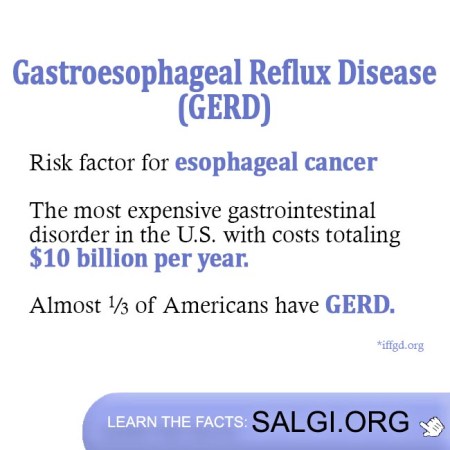
Millions of Americans suffer from heartburn each year. Unfortunately, many of those Americans are experiencing chronic heartburn, which occurs more than twice a week. Heartburn is one of the most common symptoms of Gastroesophageal Reflux Disease. This disease is known more commonly as GERD and is a major risk factor for esophageal cancer.
Heartburn is often ignored, disregarded and poorly managed. Many heartburn suffers try to self-medicate through the use of antacids or acid reducing medications. Typically, these medications do not work long-term for those whose heartburn symptoms caused by GERD.
GERD affects almost 1/3 of all Americans and is the most expensive gastrointestinal disorder in the United States, with direct and indirect costs totaling approximately $10 billion dollars each year.
The National Cancer Institute defines GERD as the backward flow of stomach acid contents into the esophagus (the tube that connects the mouth to the stomach). It is also known as esophageal reflux and gastric reflux.
This back flow is caused by a weakened lower esophageal sphincter, which is a ring of muscle that opens and closes the opening between the esophagus and the stomach. The LES can’t contain the stomach contents from entering back up into the esophagus.
Overtime, this reflux of stomach acids damages the lining of the esophageal wall and can cause the cells to become abnormal and potentially lead to esophageal cancer. This change in the cells, which line the lower part of the esophageal wall, is known as Barrett’s esophagus, a sometimes precancerous condition.
Taking medications, whether they are over-the-counter or prescribed by a doctor, does not repair the LES. These medications only treat the symptoms of the disease while the damage can continue to occur. Also, these medications are intended for temporary relief and are not to be taken for an extended period of time.
As we mentioned, GERD is one of the risks associated with esophageal cancer, along with other factors, such as being overweight or Barrett’s esophagus. Having one of these risk factors does not mean that cancer will result. However, having one of these risk factors and not being proactive can significantly further the risk of esophageal cancer.
The earlier esophageal cancer is detected, the better. Unfortunately, there are currently no standard or routine screenings to detect esophageal cancer in its earliest stages.
It is imperative that patients suffering from chronic and frequent heartburn to be proactive. Talk to your doctor about lifestyle changes to help reduce GERD symptoms. Also, discuss the various tests used to detect esophageal cancer. Click here for more information regarding methods used to detect esophageal cancer.
Visit us on Facebook and tell us if you or someone you know suffers from chronic heartburn. We’re here to help! Facebook.com/SalgiFoundation
Sources:
refluxmd.com
cancer.gov
iffgd.org
The Salgi Esophageal Cancer Research Foundation is a 501 (c) (3) non profit organization as recognized by the Internal Revenue Service.
Content found on Salgi.org is for informational purposes only. The Content is not intended to be a substitute for professional medical advice, diagnosis, or treatment. Seek the advice of your physician or other qualified health provider with any questions you may have regarding a medical condition.
Leave a Comment » | The Salgi Foundation - Esophageal Cancer Awareness, Early Detection & Research | Tagged: acid, acid reflux, acid reflux disease, acid reflux drugs, acid reflux medication, awareness, barrett's, barrett's esophagus, cancer, cancer health, cancer news, cancer of the esophagus, cancer research, cancer research funding, cancer run, cancer walk, charity, diet, disease, drugs, esophageal, esophageal cancer, esophageal cancer awareness, esophageal cancer research, esophagus, exercise, fit, fitness, food, gastroenterology, gerd, health news, health tips, healthy., heartburn, heartburn medication, heartburn sufferer, heartburn symptoms, lifestyle, lpr, medication, news, nutrition, obesity, oncology, ppi, reflux disease, research, research funding, rhode island, ri, silent reflux | Permalink
Posted by salgiblogs
June 30, 2014
We are excited to announce that we’ve received a legislative grant from the State of Rhode Island, which was obtained through the suggestion of Rhode Island Representative Patricia Serpa. The grant will allow the our charity to raise awareness, encourage early detection and to fund research of esophageal cancer.
The Salgi Esophageal Cancer Research Foundation was founded on November 21, 2011, in memory of our President’s father, who passed away from esophageal cancer. In less than three years, 12 medical research facilities from across the United States have sought funding for their research of esophageal cancer.
President of The Salgi Foundation said “esophageal cancer research is extremely underfunded and does not receive the research money it deserves from the government or other charities.”
In fact, the National Cancer Institute (NCI) decreased its investment in research of esophageal cancer by 15% in 2012; esophageal cancer receives a mere $28.0 million out of NCI’s total $5.07 billion budget; that’s approximately half of one percent.
While The American Cancer Society currently funds 1,165 cancer research projects, only 8 of those funded projects are for esophageal cancer research.
Esophageal cancer diagnosis has increased over 600% in the past decades. “We feel this can be attributed to three things: a lack of public knowledge of the risk factors associated with esophageal cancer (such as chronic heartburn), absolutely no standard or routine screenings to detect esophageal cancer in its earliest stages, when it can be treated and this major lack of research funding.”
“The Salgi Esophageal Cancer Research Foundation is very close to issuing our own grant for esophageal research” but stresses the importance of support. “As a nonprofit, we rely on the generosity of the public and our community to support this mission and, most importantly, get these research facilities the funding they deserve.”
“We are very thankful to Representative Serpa for all of her support,” our President continued, “since the very beginning, she believed in this mission and in our abilities to fulfill these goals.” Representative Serpa has also worked with The Salgi Foundation to have April proclaimed Esophageal Cancer Awareness month in Rhode Island for the past three years.
For more information or to make a tax-deductible donation, please visit: salgi.org/donate

Photo: RI Representatives. Rhode Island Representative Patricia Serpa, second from left, welcomes guests from The Salgi Esophageal Cancer Research Foundation to the House of Representatives on April 9, 2014 to witness the proclamation naming April ‘Esophageal Cancer Awareness Month’ in the State of Rhode Island. Joining Rep. Serpa from left are President, Vice President and Secretary.
Leave a Comment » | The Salgi Foundation - Esophageal Cancer Awareness, Early Detection & Research | Tagged: acid, acid reflux, acid reflux disease, acid reflux drugs, acid reflux medication, awareness, barrett's, barrett's esophagus, cancer, cancer of the esophagus, cancer run, cancer walk, charity, diet, disease, drugs, esophageal, esophageal cancer, esophageal cancer awareness, esophageal cancer research, esophagus, exercise, fit, fitness, food, gastroenterology, Gastroesophageal Reflux Disease, gerd, health, health news, healthy., heartburn, heartburn medication, heartburn sufferer, heartburn symptoms, lifestyle, medication, news, nutrition, obesity, ppi, reflux disease, rhode island, ri, silent reflux | Permalink
Posted by salgiblogs


 The Salgi Esophageal Cancer Research Foundation