June 2, 2015
The Salgi Esophageal Cancer Research Foundation would like to congratulate our Vice President for receiving a Rising Star Award from NonProfit PRO’s 2015 Nonprofit Professionals of the Year.
This achievement was featured in NonProfit PRO’s May 2015 issue which featured the 2015 Nonprofit Professionals of the Year Awards. Below is an excerpt from the magazine.
“Due to our Vice President’s social media and Internet optimization efforts, we have been able to connect with people across the United States, Canada, Australia, Philippines, India, Egypt and the United Kingdom. As a newer nonprofit with very limited funds, she has utilized low to no-cost marketing avenues to bring our message to the masses. Through social media, Google Ad Grants, our website, email newsletters, blogs, print, mailings and so much more, we have been fortunate enough to not only survive these hard times in our first years, but thrive with the promise of better times.”
– President, The Salgi Esophageal Cancer Research Foundation
 Leave a Comment » |
  The Salgi Foundation - Esophageal Cancer Awareness, Early Detection & Research | Tagged: 501c3, acid, acid reflux, acid reflux disease, acid reflux drugs, acid reflux medication, award, awareness, barrett's, barrett's esophagus, cancer, cancer of the esophagus, cancer run, cancer walk, charity, diet, disease, esophageal, esophageal cancer, esophageal cancer advocacy, esophageal cancer research, esophagus, exercise, fit, fitness, food, fundraising, fundraising success, gastroenterology, Gastroesophageal Reflux Disease, gerd, health, health news, healthy., heartburn, heartburn medication, heartburn sufferer, heartburn symptoms, lifestyle, medication, news, nonprofit, nonprofit award, nonprofit pro, nonprofit pro award, nutrition, obesity, ppi, reflux disease, rhode island, ri, silent reflux |
  Permalink
 Posted by salgiblogs
May 29, 2015
Today, May 29, 2015, is World Digestive Health Day (#WDHD2015)
As advocates for improving esophageal health and preventing esophageal cancer, The Salgi Esophageal Cancer Research Foundation understands the importance of awareness and education of the important role that the esophagus plays in the digestive system.
Esophageal cancer is considered the fastest growing cancer in the United States, according to the National Cancer Institute and is also considered one of the deadliest cancers. Esophageal cancer research is extremely underfunded and there are no routine or standard tests to diagnose esophageal cancer in earlier stages to improve early detection and survival rates.

The esophagus is the first channel in the digestive tube and plays a simple yet significant part in the human digestive system. The esophagus is a muscular tube through which food passes from the throat to the stomach. This takes place when we swallow and food or liquids are pushed from the mouth, down and into the esophagus and empty into the stomach. The lower esophageal sphincter is located at the base of the esophagus and is responsible for controlling the passage of food and liquid between the esophagus and stomach.
The LES is a ring-shaped muscle which relaxes to allow food and liquid into the stomach. Once the food and liquid pass through the relaxed sphincter, it closes back up, thus keeping the food and liquid in the stomach.
Problems arise when the LES weakens and does not close properly. When this happens, stomach contents escape the stomach and flow back up into the esophagus. This backflow of stomach content is called reflux. For those who experience reflux symptoms (heartburn included) more than twice a week may have Gastroesophageal Reflux Disease (GERD).
Sometimes Heartburn Isn’t Just An Inconvenience™
Heartburn is the most common symptom of acid reflux disease. Other GERD symptoms include, but are not limited to, burning sensation in chest, regurgitation, chest pain and difficulty swallowing.
Some symptoms of acid reflux disease could also be indicators of something more serious. For instance, RefluxMD states on their website that “although mild difficulty swallowing is often a common symptom of GERD, more severe difficulty swallowing could be a symptom of [esophageal] cancer and should be promptly evaluated.
Many people rely on medications, both over-the-counter and from a prescription, to help control their acid reflux symptoms. Unfortunately, these medications only work to treat the symptoms of the disease, but do not stop the disease from progressing (getting worse) and do not stop damage from occurring to the esophagus.
Dr. Jamie Koufman, a physician in New York who specializes in voice disorders and acid reflux, explains in a New York Times article that a Danish study “concluded that there were no cancer-protective effects from using the common anti-reflux medications, called proton pump inhibitors and that regular long-term use was actually associated with an increased risk of developing esophageal cancer.”
Over time, the back-flow of stomach contents and acids irritate the esophagus and can cause serious damage to the esophagus, including Barrett’s esophagus (a sometimes pre-esophageal cancer condition) and can increase the risk of developing esophageal cancer. Even if you are taking medications and not experiencing any symptoms, damage could still be occurring to the esophagus.
It is important to discuss any medical conditions or concerns with your doctor. While the information provided here is intended for educational purposes, always speak to your doctor about your health.
If you or someone you know has GERD, RefluxMD has put together an eBook that is a must-read! To download a FREE copy of “I Have GERD, Now What?” click here.
The Salgi Esophageal Cancer Research Foundation asks that you join us in raising awareness of the importance of esophageal health today and everyday!
The following are some additional links to articles from our website and others for further reading on this important topic:
The Lower Esophageal Sphincter, An Important Muscle You Didn’t Know You Had
“I Have GERD, Now What” Free eBook provided by, RefluxMD
I have esophageal cancer after 12 years of taking antireflux medication, RefluxMD
How do I find a GERD expert?, RefluxMD
The Dangers of Eating Late at Night, Dr. Jamie Koufman
How is Heartburn Linked To Esophageal Cancer?
Join The Salgi Esophageal Cancer Research Foundation in raising awareness of the important role that the esophagus plays in the digestive system and spreading the word about esophageal cancer online.
Like and share with us on Facebook, follow and re-tweet us on Twitter, pin us on Pinterest and follow and re-post on Instagram! You can find links to all of our social media sites below.
The Salgi Esophageal Cancer Research Foundation is a 501 (c) (3) non profit organization as recognized by the Internal Revenue Service.
Content found on Salgi.org is for informational purposes only. The Content is not intended to be a substitute for professional medical advice, diagnosis, or treatment. Seek the advice of your physician or other qualified health provider with any questions you may have regarding a medical condition.
Leave a Comment » | The Salgi Foundation - Esophageal Cancer Awareness, Early Detection & Research | Tagged: acid, acid reflux, acid reflux disease, acid reflux drugs, acid reflux medication, awareness, barrett's, barrett's esophagus, cancer, cancer of the esophagus, cancer run, cancer walk, charity, diet, disease, drugs, esophageal, esophageal cancer, esophageal cancer awareness, esophageal cancer research, esophagus, exercise, fit, fitness, food, gastroenterology, Gastroesophageal Reflux Disease, gerd, health, health news, healthy., heartburn, heartburn medication, heartburn sufferer, heartburn symptoms, lifestyle, medication, news, nutrition, obesity, ppi, reflux disease, rhode island, ri, silent reflux | Permalink
Posted by salgiblogs
May 26, 2015
New research by scientists at the University of Maryland School of Medicine has found that esophageal cancer patients treated with proton therapy experienced significantly less toxic side effects than patients treated with older radiation therapies.
Working with colleagues at the Mayo Clinic in Rochester, Minnesota and the MD Anderson Cancer Center in Dallas, Texas, Michael Chuong, MD, an assistant professor of radiation oncology at the school, compared two kinds of X-ray radiation with proton therapy, an innovative, precise approach that targets tumors while minimizing harm to surrounding tissues.
The researchers looked at nearly 600 patients and found that proton therapy resulted in a significantly lower number of side effects, including nausea, blood abnormalities and loss of appetite. The results were presented on May 22 at the annual conference of the Particle Therapy Cooperative Group, held in San Diego.
“This evidence underscores the precision of proton therapy, and how it can really make a difference in cancer patients’ lives,” said Dr. Chuong.
Patients with esophageal cancer can suffer a range of side effects, including nausea, fatigue, lack of appetite, blood abnormalities and lung and heart problems. Proton therapy did not make a difference in all of these side effects, but had significant effects on several.
The results have particular relevance for the University of Maryland School of Medicine; this fall the school will open the Maryland Proton Treatment Center (MPTC). The center will provide one of the newest and highly precise forms of radiation therapy available, pencil beam scanning (PBS), which targets tumors while significantly decreasing radiation doses to healthy tissue. This technique can precisely direct radiation to the most difficult-to-reach tumors.
Proton therapy is just one of several new methods for treating cancer. Others include:
- Selective Internal Radiation Therapy, a precision modality for treating patients with particularly difficult-to-remove tumors involving the liver such as those from colorectal cancers;
- Gammapod, a new, high-precision, noninvasive method of treating early-stage breast cancer;
- Thermal Therapies, the use of “heat” in treating a broad spectrum of malignancies.
The treatment works well for many kinds of tumors, including those found in the brain, esophagus, lung, head and neck, prostate, liver, spinal cord and gastrointestinal system. It is also an important option for children with cancer and is expected to become an important option for some types of breast cancer. While most cancer patients are well served with today’s state-of-the-art radiation therapy technology, up to 30 percent are expected to have a greater benefit from the new form of targeted proton beam therapy.
This post is based on information provided by University of Maryland.
The Salgi Esophageal Cancer Research Foundation is a 501 (c) (3) non profit organization as recognized by the Internal Revenue Service.
Content found on Salgi.org is for informational purposes only. The Content is not intended to be a substitute for professional medical advice, diagnosis, or treatment. Seek the advice of your physician or other qualified health provider with any questions you may have regarding a medical condition.
Leave a Comment » | The Salgi Foundation - Esophageal Cancer Awareness, Early Detection & Research | Tagged: acid, acid reflux, acid reflux disease, acid reflux drugs, acid reflux medication, awareness, barrett's, barrett's esophagus, cancer, Cancer Center, cancer of the esophagus, cancer research, cancer run, cancer therapy, cancer treatment, Cancer Treatments, cancer walk, charity, Chemo, Chemo radiation, Chemotherapy, Chemotherapy radiation, diet, disease, drugs, esophageal, esophageal cancer, esophageal cancer awareness, esophageal cancer charity, esophageal cancer nonprofit, esophageal cancer research, esophageal cancer research news, esophagus, esophagus cancer research, exercise, fit, fitness, food, gastroenterology, Gastroesophageal Reflux Disease, gerd, health, health news, healthy., heartburn, heartburn medication, heartburn sufferer, heartburn symptoms, lifestyle, Mayo Clinic, MD Anderson, MD Anderson Cancer Center, medication, medicine, news, nonprofit, nutrition, obesity, ppi, proton therapy, Radiation, Radiation therapy, reflux disease, research, research news, rhode island, ri, silent reflux, therapy, treatment for cancer, University of Maryland | Permalink
Posted by salgiblogs
April 16, 2015
Portsmouth High School Senior Lanse Mitchell hosted a dodgeball tournament yesterday to help generate awareness of esophageal cancer, while raising money for The Salgi Esophageal Cancer Research Foundation.
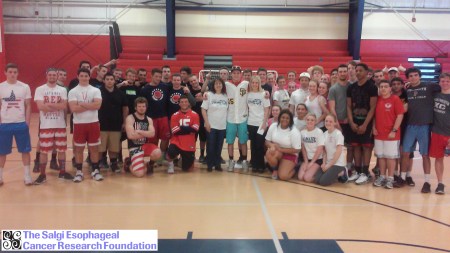
Lanse decided to host the dodgeball tournament to fulfill his Senior project requirement and wanted to make a difference by helping a local charity. President of The Salgi Esophageal Cancer Research Foundation was honored to have worked with Lanse on this project and both she and Vice President were invited to speak to the students about The Salgi Esophageal Cancer Research Foundation’s mission to raise awareness, encourage early detection and to fund research of esophageal cancer.

After months of preparation and planning, Lanse and a large group of students from Portsmouth High School played several rounds of dodgeball on what marked the mid-point of April, which is Esophageal Cancer Awareness Month. Please join us in thanking Lanse for a job well done!

If you would like to host a fundraiser to benefit The Salgi Esophageal Cancer Research Foundation, please click here to learn more!
The Salgi Esophageal Cancer Research Foundation is a 501 (c) (3) non profit organization as recognized by the Internal Revenue Service.
Content found on Salgi.org is for informational purposes only. The Content is not intended to be a substitute for professional medical advice, diagnosis, or treatment. Seek the advice of your physician or other qualified health provider with any questions you may have regarding a medical condition.
Leave a Comment » | The Salgi Foundation - Esophageal Cancer Awareness, Early Detection & Research | Tagged: acid, acid reflux, acid reflux disease, acid reflux drugs, acid reflux medication, awareness, barrett's, barrett's esophagus, cancer, cancer of the esophagus, cancer run, cancer walk, charity, diet, disease, drugs, esophageal, esophageal cancer, esophageal cancer awareness, esophageal cancer research, esophagus, exercise, fit, fitness, food, gastroenterology, Gastroesophageal Reflux Disease, gerd, health, health news, healthy., heartburn, heartburn medication, heartburn sufferer, heartburn symptoms, lifestyle, medication, news, nutrition, obesity, reflux disease, rhode island, ri, silent reflux | Permalink
Posted by salgiblogs
March 26, 2015
By Liz Janetschek | The ASCO Post. March 25, 2015, Volume 6, Issue 5
The information contained in this Clinical Trials Resource Guide includes actively recruiting observational, interventional, phase I, phase II, and phase III clinical studies for patients with newly diagnosed or recurrent esophageal cancer. All of the studies are listed on the National Institutes of Health website at ClinicalTrials.gov.
Read the full article, “Clinical Trials Actively Recruiting Patients With Esophageal Cancer,” The ASCO Post.
The Salgi Esophageal Cancer Research Foundation is a 501 (c) (3) non profit organization as recognized by the Internal Revenue Service.
Content found on Salgi.org is for informational purposes only. The Content is not intended to be a substitute for professional medical advice, diagnosis, or treatment. Seek the advice of your physician or other qualified health provider with any questions you may have regarding a medical condition.
Leave a Comment » | The Salgi Foundation - Esophageal Cancer Awareness, Early Detection & Research | Tagged: acid, acid reflux, acid reflux disease, acid reflux drugs, acid reflux medication, awareness, barrett's, barrett's esophagus, cancer, cancer awareness, cancer charity, cancer of the esophagus, cancer run, cancer walk, charity, clinical trials, diet, disease, drugs, esophageal, esophageal cancer, esophageal cancer awareness, esophageal cancer charity, esophageal cancer research, esophageal cancer research charity, esophagus, exercise, fit, fitness, food, gastroenterology, Gastroesophageal Reflux Disease, gerd, GI health, GI news, GI research, health, health news, healthy., heartburn, heartburn medication, heartburn sufferer, heartburn symptoms, lifestyle, medication, news, nonprofit, nutrition, obesity, ppi, reflux disease, research news, rhode island, ri, silent reflux | Permalink
Posted by salgiblogs
February 12, 2015
Are you eating at least five fruits and vegetables every day?
A new study published in the British Journal of Cancer suggests that some compounds found largely in fruits and vegetables called “flavonoids may reduce incidence and improve survival” for some cancers.
It is well-known that a diet rich in fruits and vegetables is beneficial to one’s health and well-being. What is particularly exciting about this research is that it specifically focused on the two common types of esophageal cancer and gastric cancer.
The study is titled “Dietary intake of flavonoids and oesophageal and gastric cancer: incidence and survival in the United States of America (USA).”
Researchers interviewed patients that were diagnosed with esophageal cancer, both adenocarcinoma and squamous cell carcinoma and gastric cancer (adenocarcinoma).
Esophageal adenocarcinoma is the most common type of esophageal cancer in the western world and is the fastest growing cancer in the United States.*
Also one of the deadliest cancers, esophageal cancer shows extremely poor survival rates, as the cancer is extremely aggressive and is typically caught in later, advanced stages. Currently, there are no routine or standard screenings to detect esophageal cancer in earlier stages. The overall five-year survival rate is less than 18%.
According to the published abstract found on British Journal’s website, the researchers linked patients’ responses from food frequency questionnaires with USDA Flavonoid Databases and available literature for six flavonoid classes and lignans (chemical compound found in plants).
The abstract details that “flavonoids have experimentally demonstrated chemopreventive effects against esophageal and gastric cancers,” but there have been few studies which examine “flavonoid intake and incidence of these cancers and none have considered survival.”
While fruits and vegetables are the main sources of flavonoids, tea and red wine also contain the compound.
Certain fruits and vegetables can cause symptoms of Gastroesophageal Reflux Disease (GERD). Therefore, acid reflux sufferers should be careful about consuming certain spicy, citrus and/or acidic food and drinks and should limit or completely avoid drinking wine. It is important to speak to your doctor before making any changes to your health.
“Our findings, if confirmed, suggest that increased dietary anthocyanidin intake may reduce incidence and improve survival for these cancers,” researchers stated. To read the full abstract, please click here.
Sources:
British Journal of Cancer, 10 February 2015; doi:10.1038/bjc.2015.25 bjcancer.com
“Esophageal Cancer On The Rise,” WebMD
The Salgi Esophageal Cancer Research Foundation is a 501 (c) (3) non profit organization as recognized by the Internal Revenue Service.
Content found on Salgi.org is for informational purposes only. The Content is not intended to be a substitute for professional medical advice, diagnosis, or treatment. Seek the advice of your physician or other qualified health provider with any questions you may have regarding a medical condition.
Leave a Comment » | The Salgi Foundation - Esophageal Cancer Awareness, Early Detection & Research | Tagged: acid, acid reflux, acid reflux disease, acid reflux drugs, acid reflux medication, awareness, barrett's, barrett's esophagus, British Journal of Cancer, cancer, cancer of the esophagus, cancer risk, charity, diet, disease, drugs, esophageal, esophageal cancer, esophageal cancer awareness, esophageal cancer research, esophageal diseases, esophagus, exercise, fit, fitness, food, fruits, fruits and vegetables, gastroenterology, Gastroesophageal Reflux Disease, gastrointestinal tract, gerd, gerd awareness, health, health news, healthy., heartburn, heartburn medication, heartburn sufferer, heartburn symptoms, lifestyle, medication, medicine, news, nutrition, obesity, oesophageal cancer, overweight children, ppi, prevention, proton pump inhibitors, reflux disease, silent reflux | Permalink
Posted by salgiblogs
February 10, 2015
“Overweight children may be at higher risk of esophageal cancer when they grow up than their slimmer friends, according to research published this week in the British Journal of Cancer
Researchers* studied the health records of more than 255,000 Danish school children, born between 1930 and 1971, whose height and weight was measured every year between the ages of 7 and 13**. The researchers used this to go back and calculate their Body Mass Index (BMI).
BMI looks at weight compared to height and is a simple way of assessing whether people are a healthy weight.
More than 250 of the children went on to develop esophageal cancer over the age of 40. By matching these middle-aged patients with their school records, researchers found that children aged 9-13 with a higher BMI, who were more likely to be overweight or obese, appeared to be at greater risk of developing this type of cancer in later life.
Using their results from the 1930s to the 1970s, they calculated that 2.1 per cent of all oesophageal cases in adult men in Denmark could be attributed to boys being overweight or obese at the age of 13.
But they estimate that this figure could go up to around 17.5 per cent of all these male esophageal cancer cases in the future due to the rise in childhood obesity levels.
Dr Jennifer Baker, associate professor at The Institute of Preventive Medicine in Denmark and the University of Copenhagen, said: “Our results suggest that the increase in the number of overweight and obese children might lead to a significant rise in future cases of esophageal cancer.
“It may be that being overweight as a child is directly linked to a higher risk of developing this cancer in later life. Or it might be that overweight children are more likely to become overweight adults, and we know that being above a healthy weight as an adult is a risk factor for many cancers, including oesophageal.
More research is needed, but however the link works, our results underline how important it is for children to be a healthy weight – particularly as there is some evidence that overweight children could be at higher risk of other cancers later in life.”
Esophageal cancer – sometimes called cancer of the food pipe or gullet – is the 13th most common cancer in adults, with around 8,300 cases diagnosed each year in the UK.
In the United States, esophageal cancer is the fastest growing cancer with over a 600% increase in the past decades.
A previous Cancer Research UK study estimated that being overweight or obese causes more than one in four esophageal cancers in men and around one in 10 in women. This may be because people who are obese are more likely to suffer from acid reflux – when acid coming back up from the stomach can irritate the lining of the esophagus – which is a risk factor for esophageal cancer. A higher BMI is also associated with gastroesophageal reflux disease in children.
The Danish research did not take into account any social or lifestyle factors that might contribute to a person’s risk of developing cancer, but researchers say there was little evidence that these might have affected their results.
Dr Julie Sharp, head of health information at Cancer Research UK, said: “This research suggests that being overweight as a child could have effects on your health even decades later. It highlights how important it is to ensure that children eat healthily and are active, as this gives them the best possible start in life and could help to prevent them from developing diseases such as cancer in the future.”
This post is based on information provided by British Journal of Cancer.
Other sources: “Esophageal Cancer On The Rise,” WebMD
The Salgi Esophageal Cancer Research Foundation is a 501 (c) (3) non profit organization as recognized by the Internal Revenue Service.
Content found on Salgi.org is for informational purposes only. The Content is not intended to be a substitute for professional medical advice, diagnosis, or treatment. Seek the advice of your physician or other qualified health provider with any questions you may have regarding a medical condition.
Leave a Comment » | The Salgi Foundation - Esophageal Cancer Awareness, Early Detection & Research | Tagged: acid, acid reflux, acid reflux disease, acid reflux drugs, acid reflux medication, awareness, barrett's, barrett's esophagus, cancer, cancer of the esophagus, cancer risk, charity, diet, disease, drugs, esophageal, esophageal cancer, esophageal cancer awareness, esophageal cancer research, esophageal diseases, esophagus, exercise, fit, fitness, food, gastroenterology, Gastroesophageal Reflux Disease, gastrointestinal tract, gerd, gerd awareness, health, health news, healthy., heartburn, heartburn medication, heartburn sufferer, heartburn symptoms, John Hopkins School of Medicine, lifestyle, medication, news, nutrition, obesity, oesophageal cancer, overweight children, ppi, prevention, proton pump inhibitors, reflux disease, silent reflux | Permalink
Posted by salgiblogs
January 22, 2015
“Transoral fundoplication is an effective treatment for patients with gastroesophageal reflux disease (GERD), especially for patients with persistent regurgitation despite proton pump inhibitor (PPI) therapy, according to a new study published in Gastroenterology, the official journal of the American Gastroenterological Association.
The most common symptom of GERD is heartburn. Also known as acid reflux disease, GERD is one of the major risk factor associated with esophageal cancer, the fastest growing cancer in the United States.
“Despite therapy, patients with GERD often suffer from troublesome regurgitation, which impairs their quality of life,” said lead study author John G. Hunter, MD, from Oregon Health & Science University. “This study offers evidence that transoral fundoplication is effective in eliminating troublesome GERD symptoms, especially regurgitation, with a low failure rate and good safety profile for six months.”
Researchers performed a prospective, sham-controlled trial to determine if transoral fundoplication provided GERD patients with better relief of troublesome regurgitation, or the sensation of acid backing up into a patient’s throat or mouth, when compared to PPI therapy. The researchers randomly assigned 129 patients with troublesome regurgitation despite daily PPI use to transoral fundoplication using the EsophyX-2 device and six months of placebo, or a sham surgery and six months of once or twice daily omeprazole. Patients were then evaluated for six months.
The primary endpoint in this study, elimination of troublesome regurgitation, was achieved in a greater proportion of patients treated with transoral fundoplication than with omeprazole: 67 percent versus 45 percent. Further, a larger proportion of controls demonstrated no response at three months (36 percent) than patients who underwent transoral fundoplication (11 percent). Subjects from both groups who completed the protocol had similar reductions in GERD symptom scores. Severe complications were rare.
GERD remains one of the most common conditions for which Americans take daily medication, and PPI use has more than doubled in the last decade. Despite this, up to 40 percent of PPI-dependent GERD patients have troublesome symptoms of GERD.
Transoral fundoplication — an incisionless procedure that allows physicians to reshape the anti-reflux valve that prevents stomach acid and contents from flowing up into the esophagus — may offer a new treatment option for these patients.
This study provides evidence of transoral fundoplication’s efficacy, and will likely lead to more widespread use of the procedure in clinical practice.. To help health-care decision makers make informed decisions regarding this technology, the AGA Center for GI Innovation and Technology has partnered with EndoGastric Solutions® to establish the STAR Registry (Laparoscopic Nissen Fundoplication (LNF) Surgery Versus Transoral Incisionless Fundoplication (TIF®): Anti-Reflux Treatment Registry). The STAR Registry will provide the first real-world data observing patient outcomes following laparoscopic surgery and transoral fundoplication with the EsophyX® device. Learn more about this endeavor here.”
Learn more about GERD in the AGA patient brochure.
This post is based on information provided by The American Gastroenterological Association.
Other sources: “Esophageal Cancer On The Rise,” WebMD
The Salgi Esophageal Cancer Research Foundation is a 501 (c) (3) non profit organization as recognized by the Internal Revenue Service.
Content found on Salgi.org is for informational purposes only. The Content is not intended to be a substitute for professional medical advice, diagnosis, or treatment. Seek the advice of your physician or other qualified health provider with any questions you may have regarding a medical condition.
Leave a Comment » | The Salgi Foundation - Esophageal Cancer Awareness, Early Detection & Research | Tagged: acid, acid reflux, acid reflux disease, acid reflux drugs, acid reflux medication, awareness, barrett's, barrett's esophagus, cancer, cancer of the esophagus, cancer risk, charity, diet, disease, drugs, esophageal, esophageal cancer, esophageal cancer awareness, esophageal cancer research, esophageal diseases, esophagus, exercise, fit, fitness, food, gastroenterology, Gastroesophageal Reflux Disease, gastrointestinal tract, gerd, gerd awareness, GERD patients, GERD symptoms, health, health news, healthy., heartburn, heartburn medication, heartburn sufferer, heartburn symptoms, John Hopkins School of Medicine, lifestyle, medication, news, nutrition, obesity, oesophageal cancer, ppi, prevention, proton pump inhibitors, reflux disease, silent reflux | Permalink
Posted by salgiblogs
January 16, 2015
This post was originally published on January 1, 2015 on the website: “On a Brighter Note” by Lori Welbourne. Thank you Ms. Welbourne for allowing us to share this inspiring story.
FATHER’S CHERISHED GIFTS:
Two months ago my dad called and as soon as I heard the sound of his voice I knew something was wrong.
“Hi, Honey,” he said softly. “Do you have a couple of minutes?” Instinctively my eyes welled up with tears and I could feel my throat constrict.
“Yes,” I said, bracing myself for the news he was about to deliver. His voice uncharacteristically cracked with emotion as he told me he had esophageal cancer. Feeling the quick onset of a throbbing headache and a shortness of breath I failed to stop myself from crying out loud.
“I don’t want you to worry,” he said. “I’ll be going for tests and we’ll find out what can be done. I’ll keep you informed. Just think positive thoughts, okay? There’s nothing we can’t handle.”
After our conversation ended and I hung up the phone I no longer tried to control my sorrow and allowed myself to weep with abandon.
Ken White was only 67 years old and had just retired in May. He was full of life and excited about the future. He’d been diagnosed with skin cancer and a slow-growing leukemia not long ago – both of which he’d downplayed as nothing to be concerned about. But this new discovery of a life-threatening tumor in his lower esophagus was alarming.
I spent the rest of the afternoon and evening in a haze. I tried to only think optimistically as he requested, but I found myself emotionally raw and physically drained, breaking down in tears several times over the next few days. After our mother’s death less than a year prior I’d convinced myself that our healthy father would live to be at least 100 years old.
Over the next couple of weeks, as he went for tests and we waited for results I got better at carrying out his wishes to only think positively, and when he called with an update I fully expected him to tell me the cancer was treatable. When my hopes were met I cried again, but this time with tears of joy.
“We’re going to fight this aggressively, Kiddo,” my dad said, detailing the weekly chemotherapy and daily radiation treatments for the entire month of December. “Hopefully the tumor will decrease in size and the surgeon will be able to remove it in the new year.”
As promised, Dad kept us updated with his progress, even sending smiling pictures of himself hooked up to an IV getting his chemo.
Since he was advised to avoid crowds and public places so his weakened immune system wouldn’t be challenged, we weren’t sure if we’d have the opportunity to see him at Christmas. Fortunately his doctors approved a visit from us providing we were in good health.
My children, husband, brothers, sister-in-law, nephews, uncle, grandma and I arrived at Dad’s place on Boxing Day at 11 am at his request. When we got to the door his wife said he was resting and summoned us into the living room. We visited quietly for awhile until we were suddenly interrupted by a jolly good bellowing of “Ho Ho Ho! Merry Christmas!”
Looking up in surprise, I watched my father enter the room wearing a Santa outfit and beard, ringing a bell and handing out gift cards to everyone.
Again I felt my eyes well up with tears of joy.
It was one of those moments I’ll never forget. Not because it caught us off guard in such a sweet and wonderful way, but because it so completely captured the essence of this man who always seems to react to everything with an optimistic frame of mind.
“My cup is never half empty,” he’s often said over the years. And from a lifetime of observing how he’s chosen to think, his cup isn’t just half full, it’s running over.
Dad’s jovial outlook has been an incredible blessing to our family. But the gift we cherish most is his unconditional love and support – something we adoringly give right back.
Would you like to share your personal experiences with esophageal cancer? Learn more about how your story can make a difference: Share Your Story

Leave a Comment » | The Salgi Foundation - Esophageal Cancer Awareness, Early Detection & Research | Tagged: acid, acid reflux, acid reflux disease, acid reflux drugs, acid reflux medication, awareness, barrett's, barrett's esophagus, cancer, cancer of the esophagus, cancer risk, charity, diet, disease, drugs, esophageal, esophageal cancer, esophageal cancer awareness, esophageal cancer research, esophageal diseases, esophagus, exercise, fit, fitness, food, gastroenterology, Gastroesophageal Reflux Disease, gastrointestinal tract, gerd, gerd awareness, health, health news, healthy., heartburn, heartburn medication, heartburn sufferer, heartburn symptoms, John Hopkins School of Medicine, lifestyle, medication, news, nutrition, obesity, oesophageal cancer, ppi, prevention, proton pump inhibitors, reflux disease, silent reflux | Permalink
Posted by salgiblogs
January 13, 2015
Earlier this year, Johns Hopkins School of Medicine published a new study in which they claim and have been reported by the news media as claiming that the majority of cancers are due to “bad luck.” They have more recently come back to address the concerns and questions that generated due to their initial statements.
Esophageal cancer was included in the study of 31 cancer types and was also mentioned in a diagram that came with the press release from Johns Hopkins.
At first look, we became quite alarmed.
For years, we have explained the dangerous risk factors associated with esophageal cancer and the importance of early detection to improve the chances of survival; which are currently grim.
There is substantial research which proves that factors including, but not limited to: chronic heartburn, obesity, tobacco use, poor nutrition and excessive drinking can increase the risk of developing esophageal cancer.
Unfortunately, this new research from John Hopkins and subsequent media reports seems to imply otherwise.
Esophageal cancer should not be categorized as “bad luck.”
These statements have the potential to bring us leaps and bounds backwards in this mission to raise awareness of the dangerous and deadly risk factors associated with esophageal cancer.
Especially chronic heartburn, which is one of the most common symptoms of the primary risk factor associated with esophageal cancer. Barrett’s esophagus is a potentially precancerous condition which is caused only by the reflux of stomach acids and contents upwards into the esophagus.
Raising awareness of risk factors associated with esophageal cancer can help to reduce incidence of esophageal cancer diagnosis; just as encouraging those who are at an elevated risk to speak with their doctors about getting screened as early as possible will improve the chances of survival if esophageal cancer is detected.
This research does shed light on an important aspect of esophageal cancer.
There are cases of esophageal cancer which occur in people who do not have any of these risk factors. These people never had acid reflux or had mild, occasional heartburn; never smoked or used any tobacco products; exercised regularly; ate a well-balance and nutritious diet; maintained a healthy weight and did not use alcohol in excess.
How will we encourage these people to get screened for a cancer that they show no risk for?
How can they reduce their risk of esophageal cancer if they are already considered not to be at risk?
The takeaway from these new claims from John Hopkins should be that there is still a dire need for funding of esophageal cancer research. Researchers need to explore the fundamental reasons behind esophageal cancer, especially in those who show no risk.
Would you like to support these efforts and to fund esophageal cancer research? Please click here to make a contribution in support of our mission.
The Salgi Esophageal Cancer Research Foundation is a 501 (c) (3) non profit organization as recognized by the Internal Revenue Service.
Content found on Salgi.org is for informational purposes only. The Content is not intended to be a substitute for professional medical advice, diagnosis, or treatment. Seek the advice of your physician or other qualified health provider with any questions you may have regarding a medical condition.
Leave a Comment » | The Salgi Foundation - Esophageal Cancer Awareness, Early Detection & Research | Tagged: acid, acid reflux, acid reflux disease, acid reflux drugs, acid reflux medication, awareness, barrett's, barrett's esophagus, cancer, cancer of the esophagus, cancer risk, charity, diet, disease, drugs, esophageal, esophageal cancer, esophageal cancer awareness, esophageal cancer research, esophageal diseases, esophagus, exercise, fit, fitness, food, gastroenterology, Gastroesophageal Reflux Disease, gastrointestinal tract, gerd, gerd awareness, health, health news, healthy., heartburn, heartburn medication, heartburn sufferer, heartburn symptoms, John Hopkins School of Medicine, lifestyle, medication, news, nutrition, obesity, oesophageal cancer, ppi, prevention, proton pump inhibitors, reflux disease, silent reflux | Permalink
Posted by salgiblogs


 The Salgi Esophageal Cancer Research Foundation