November 23, 2016
The holidays are a wonderful time of year when family and friends can gather together, share thanks and enjoy an abundant feast filled with our favorite foods. Certain habits can cause some unwanted holiday heartburn. Learn how to enjoy the holidays and all of the delicious foods while managing your acid reflux symptoms.
Here are a few tips for you to take with you to the Thanksgiving dinner table:
1. Limit beverage consumption while eating. Sometimes fluids, especially carbonated beverages, can cause more gas in the stomach when combined with food intake. Try to drink slowly after you are done eating.
2. Monitor what you are eating and avoid foods that trigger acid reflux. Foods that have the worse effects on acid reflux are spicy, fatty, fried and citrus foods. Food and drinks that trigger GERD symptoms vary from person to person, so it is important to know your body and determine which are best for you.
3. Limit or avoid alcohol. There are some people, however, who should avoid all alcohol consumption, as even the smallest amounts can cause acid reflux. Alcohol increases the production of stomach acids. Alcohol also relaxes the lower esophageal sphincter (LES), the muscle that is in charge of keeping stomach contents from refluxing into the esophagus.
4. Don’t over-eat. Ask for a smaller plate, take a small sample from each dish and choose “safe” foods that you’ve predetermined do not flare up your acid reflux symptoms. When you’re feeling tempted to overindulge, ask yourself “Is having that second helping of pumpkin pie worth the hours of pain and misery due to the acid reflux afterwards?”
5. Chew slowly. Help your digestive system by chewing every bite slowly and thoroughly. Put your fork down in between bites to help remind yourself to go slow while eating.
6. Wear loose clothing. Clothing which is tight especially around the mid-section can put extra pressure on the abdomen and increase acid reflux symptoms.
7. Sit upright for several hours after you’ve eaten. Or better yet, take a leisurely family stroll around the neighborhood to help settle your stomach and aid digestion. Avoid any rigorous exercise, as it can upset the digestion process and cause reflux symptoms.
8. Pass on the after-dinner coffee. For some, coffee can increase acid reflux and cause symptoms to flare up. Both caffeinated and decaffeinated coffee have shown to aggravate GERD symptoms.
9. Ditch all tobacco products. Tobacco, including cigarettes, cigars, chewing tobacco and pipe tobacco not only worsens GERD symptoms, but it can cause people to develop GERD. Like alcohol, tobacco weakens the lower esophageal sphincter (LES) and increases stomach acids.
While occasional heartburn is not typically a cause for concern, as billions of Americans experience heartburn at some point in their lives, heartburn that occurs more than twice weekly should not be taken lightly, as it could be an indicator of GERD. GERD stands for Gastroesophageal Reflux Disease which is a disease of the digestive system.
Also known as acid reflux disease, GERD is a progressive disease, which means that it worsens overtime, especially if it is not properly treated. The reflux of acids from the stomach damages the lining of the esophagus and can cause major health problems, including an increased risk of esophageal cancer. Speak to your doctor if you are experiencing frequent or chronic heartburn or if your acid reflux symptoms are worsening.
If you, or someone you know, has GERD, RefluxMD has put together an eBook that is surely a must-read! To download a FREE copy of “I Have GERD, Now What?”, click here.
From all of your friends at The Salgi Esophageal Cancer Research Foundation, we wish you a happy, healthy and heartburn-free Thanksgiving!
Sources:
-
Dr. Peter Denk, Struggling with Heartburn? Find Your Trigger Foods, RefluxMD, www.refluxmd.com/learn/resources/2014-07-28/9996/struggling-heartburn-find-your-trigger-foods
-
8 Top Lifestyle Changes to Manage GERD Diana Rodriguez Medically reviewed by Lindsey Marcellin, MD, MPH, Everyday Health, Inc. www.everydayhealth.com/health-report/managing-gerd/lifestyle-changes-to-manage-gerd.aspx
-
Wendl, B., Pfeiffer, A., Pehl, C., Schmidt, T. and Kaess, H. 1994. Effect of decaffeination of coffee or tea on gastro-oesophageal reflux. Alimentary pharmacology & therapeutics. 8(3):283-7.
-
Factors that Contribute to GERD — Use of Tobacco Products, E-MedTV.com
The Salgi Esophageal Cancer Research Foundation is a 501 (c) (3) non profit organization as recognized by the Internal Revenue Service.
Content found on Salgi.org is for informational purposes only. The Content is not intended to be a substitute for professional medical advice, diagnosis, or treatment. Seek the advice of your physician or other qualified health provider with any questions you may have regarding a medical condition.
 Leave a Comment » |
  The Salgi Foundation - Esophageal Cancer Awareness, Early Detection & Research | Tagged: acid, acid reflux, acid reflux disease, acid reflux drugs, acid reflux medication, awareness, barrett's, barrett's esophagus, cancer, cancer of the esophagus, cancer of the oesophagus, cancer run, cancer walk, charity, diet, disease, drugs, esophageal, esophageal cancer, esophageal cancer advocacy, esophageal cancer advocate, esophageal cancer awareness, esophageal cancer charity, esophageal cancer nonprofit, esophageal cancer nutrition, esophageal cancer research, esophageal cancer research charity, esophageal cancer research foundation, esophageal cancer research news, esophageal cancer run, esophageal cancer walk, esophagus, exercise, fit, fitness, food, gastroenterology, Gastroesophageal Reflux Disease, Gatroesophageal Reflux Disease, gerd, gerd awareness, GERD Awareness Week, gerd diet, gerd nutrition, health, health news, healthy., heartburn, heartburn medication, heartburn sufferer, heartburn symptoms, lifestyle, medication, news, nutrition, obesity, oesophageal, oesophageal cancer, oesophageal cancer awareness, oesophageal cancer charity, oesophageal cancer nonprofit, oesophageal cancer research, ppi, reflux disease, rhode island, silent reflux, Thanksgiving |
  Permalink
 Posted by salgiblogs
November 17, 2016
“Chronic heartburn may be more than just a pain in the esophagus.”
That disease is Gastroesophageal Reflux Disease (GERD). Also known as acid reflux disease, GERD is a condition of the digestive system, which has increased significantly in recent decades. GERD is also a primary risk factor for esophageal cancer, one of the fastest growing and deadliest cancers in the United States.
Esophageal cancer, similar to GERD, has also increased significantly in past decades. In fact, incidence of esophageal cancer has risen over 600% and with an overall five-year survival rate of less than 18.5%.
The Salgi Esophageal Cancer Research Foundation, a nonprofit which awarded its first grant to esophageal cancer research last year, is once again bringing awareness of the dangerous link between GERD and esophageal cancer.
What can I do to help?
Spread the word on Social Media
–Share this message with your friends, family and social media pages:
Did you know that chronic heartburn can lead to esophageal cancer? Learn more about the dangerous link: salgi.org/GERD
–”Like” us on Facebook and Follow us on Instagram so that you can easily share life-saving information with your friends and family members who may be at risk.
Educating others allows them to make informed decisions about their health and decide if they should get screened. Remember, awareness of risk factors and symptoms along with early detection is the key to improving the chances of survival!
Post this graphic and tag us in your post @SalgiFoundation!
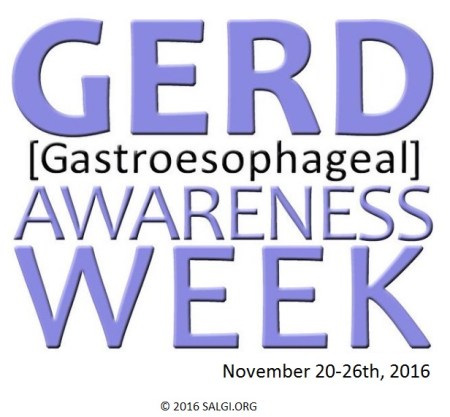
Donate:
When you make a donation to The Salgi Foundation, you are not only helping to spread the word about esophageal cancer and dangerous risk factors such as GERD; you are helping to raise money for research projects which are aimed at discovering methods of prevention, early detection and treatment. These research projects have one main goal: to save lives! Click here to make a one-time or recurring donation!
For more information and other ways to help make a difference, visit: SALGI.org/gerd
The Salgi Esophageal Cancer Research Foundation is a 501 (c) (3) non profit organization as recognized by the Internal Revenue Service.
Content found on Salgi.org is for informational purposes only. The Content is not intended to be a substitute for professional medical advice, diagnosis, or treatment. Seek the advice of your physician or other qualified health provider with any questions you may have regarding a medical condition.
Leave a Comment » | The Salgi Foundation - Esophageal Cancer Awareness, Early Detection & Research | Tagged: acid, acid reflux, acid reflux disease, acid reflux drugs, acid reflux medication, awareness, barrett's, barrett's esophagus, cancer, cancer of the esophagus, cancer of the oesophagus, cancer run, cancer walk, charity, diet, disease, drugs, esophageal, esophageal cancer, esophageal cancer advocacy, esophageal cancer advocate, esophageal cancer awareness, esophageal cancer charity, esophageal cancer nonprofit, esophageal cancer nutrition, esophageal cancer research, esophageal cancer research charity, esophageal cancer research foundation, esophageal cancer research news, esophageal cancer run, esophageal cancer walk, esophagus, exercise, fit, fitness, food, gastroenterology, Gastroesophageal Reflux Disease, Gatroesophageal Reflux Disease, gerd, gerd awareness, GERD Awareness Week, health, health news, healthy., heartburn, heartburn medication, heartburn sufferer, heartburn symptoms, lifestyle, medication, news, nutrition, obesity, oesophageal, oesophageal cancer, oesophageal cancer awareness, oesophageal cancer charity, oesophageal cancer nonprofit, oesophageal cancer research, ppi, reflux disease, rhode island, silent reflux | Permalink
Posted by salgiblogs
November 16, 2016
via medstargeorgetown.org
(Washington, D.C.) “Edward Eckenhoff recalls putting up with heartburn for many years. He says he would often take a few over-the-counter medications before a meal to ease his symptoms.
All of this caught up to him in February 2016 when, on vacation in Florida he suddenly had trouble swallowing.
“I said, ‘oh boy, I have a problem,’” recalls Eckenhoff. “So I went to a gastroenterologist in Florida who diagnosed me with esophageal cancer. Fifteen to 20 years of acid reflux resulted in a tumor at the base of my esophagus near my stomach.”
The National Cancer Institute reports that 16,910 new cases of esophageal cancer will be diagnosed in 2016; 15,690 people will die from the disease.
Figures from the American Society of Clinical Oncology say the five year survival rate, overall is around eighteen percent; forty percent if the disease is caught early and four percent if the cancer has spread to other parts of the body.
When Eckenhoff got back to Washington, D.C. he consulted with physicians at MedStar Georgetown University Hospital. He received chemotherapy and radiation. Next, the surgery to remove the cancerous portion of his esophagus.
At most centers, surgeons crack open a patient’s chest to gain access to the esophagus.
But MedStar Georgetown’s chief of Thoracic Surgery Blair Marshall, MD has pioneered a minimally invasive procedure to remove esophageal cancer that is easier on patients in several ways.
“Instead of a large incision that breaks the patient’s chest bone, I use tiny incisions and cameras that allow us to remove the esophagus with the cancer and then make a new one,” said Dr. Marshall. “Patients do not go to the Intensive Care Unit (ICU). They have less pain, blood loss and return to eating normally much sooner than with the standard approach. This is a procedure that is rarely performed by surgeons at other institutions. ”
Eckenhoff is a patient with a unique situation. He is paralyzed from the waist down due to an accident and uses crutches to get around. He is the founder of the MedStar National Rehabilitation Hospital which has helped patients to be empowered to overcome disabilities caused by disease or injury for more than 30 years.
“I’m 6’ 2” and a couple of hundred pounds,” says Eckenhoff. “The old way of removing my cancerous esophageal tumor would have destroyed the musculature I need to get around. In my case, the minimally invasive surgery meant I was back on my crutches weeks after hospital discharge and it allowed me to be back on the golf course in 22 days. Now I am back to independence and I’m on the golf course three to four times a week!”
James Pease Blair, a retired National Geographic photographer who has traveled the world covering stories got a similar diagnosis of esophageal cancer in September 2012 when he was in his early 80’s.
“I was having scallops for dinner one night at a restaurant and suddenly, they came right back up. I couldn’t swallow,” recalls Blair. “I don’t remember having recurrent heartburn but I ate a lot of funny food from all around the world because of my work and I know I ate a lot of antacids over the years.”
An upper endoscopy revealed an esophageal tumor measuring approximately four inches in size.
“I looked at it as just another assignment, but one that would take a lot longer than usual. I just had to get out there and get it done,” says the award winning photo journalist who is now retired and living in New England.
Blair had chemotherapy before his surgery, which was a minimally invasive esophagectomy performed by Dr. Marshall.
“At this point in time, we have operated on several patients in their early to mid 80’s with excellent results,” says Dr. Marshall.
“Dr. Marshall showed me beforehand what the surgery using cameras was going to be like, says Blair. As a photographer I could see precisely what she was talking about. It was a major operation and I was 82 years old! I don’t think I would have survived the old method of having the surgeon crack open my chest to get to the tumor.”
Blair recalls that he never stayed in the ICU after his surgery and while he wasn’t eating when he left the hospital, his recovery was not painful.
“I’m doing perfectly now. And this is really serious stuff because this surgery allowed me to continue exhibiting photography and to give public talks about my work. I’m having a fulfilling life and that’s really important to me. I appreciate that she not only did a good job as a surgeon but also felt concern for me as a patient.”
“Both of these gentlemen are examples of patients who can benefit from a surgical technique that might take longer in the operating room, but results in a quicker and easier recovery from a very serious cancer,” Dr. Marshall said.”
Story Source:
Materials above provided by Medstar Georgetown. Editor Note: Content may be edited.
The Salgi Esophageal Cancer Research Foundation is a 501 (c) (3) non profit organization as recognized by the Internal Revenue Service.
Content found on Salgi.org is for informational purposes only. The Content is not intended to be a substitute for professional medical advice, diagnosis, or treatment. Seek the advice of your physician or other qualified health provider with any questions you may have regarding a medical condition.
Leave a Comment » | The Salgi Foundation - Esophageal Cancer Awareness, Early Detection & Research | Tagged: acid, acid reflux, acid reflux disease, acid reflux drugs, acid reflux medication, awareness, barrett's, barrett's esophagus, cancer, cancer of the esophagus, cancer of the oesophagus, cancer run, cancer walk, charity, diet, disease, drugs, esophageal, esophageal cancer, esophageal cancer advocacy, esophageal cancer advocate, esophageal cancer awareness, esophageal cancer charity, esophageal cancer nonprofit, esophageal cancer nutrition, esophageal cancer research, esophageal cancer research charity, esophageal cancer research foundation, esophageal cancer research news, esophageal cancer run, esophageal cancer walk, esophagus, exercise, fit, fitness, food, gastroenterology, Gastroesophageal Reflux Disease, Gatroesophageal Reflux Disease, gerd, health, health news, healthy., heartburn, heartburn medication, heartburn sufferer, heartburn symptoms, lifestyle, medication, news, nutrition, obesity, oesophageal, oesophageal cancer, oesophageal cancer awareness, oesophageal cancer charity, oesophageal cancer nonprofit, oesophageal cancer research, ppi, reflux disease, rhode island, silent reflux | Permalink
Posted by salgiblogs
November 15, 2016
via cancerresearchuk.org
“Cancer Research UK-funded scientists have discovered that a ‘sponge on a string’ pill test can identify which people with a condition called Barrett’s esophagus have a low risk of developing esophageal cancer – sparing them uncomfortable endoscopies.
Researchers from the
University of Cambridge(link is external) gave 468 people who had Barrett’s esophagus a ‘sponge on a string’ (cytosponge) test. Barrett’s esophagus is a condition that can lead to esophageal cancer in a small number of people.
They found that the cytosponge test together with additional laboratory tests identified that 35 per cent (162) of people with Barrett’s in the study were at a low risk of developing esophageal cancer.
The results show that patients with Barrett’s could be given a cytosponge test by their local GP and monitored, to detect which patients were at low risk of developing cancer, rather than having regular endoscopies at hospital.
This could help save patients’ time, as well as reducing the anxiety and discomfort of having endoscopy tests. Endoscopies are expensive and involve putting a camera down the throat to collect a sample of the cells lining the oesophagus for analysis under a microscope.
The cytosponge is a small pill with a string attached that the patient swallows, which expands into a small sponge when it reaches the stomach. This is slowly pulled back up the throat using the string, collecting cells from the esophagus for analysis.
The researchers tested these cells for two specific genetic markers and changes in the cells that can be used to estimate an individual’s risk of developing esophageal cancer. These results, alongside other information including age and obesity, were used in a mathematical model to classify patients’ risk levels.
Barrett’s esophagus is caused by acid reflux. This can occur when acid travels back up the food pipe from the stomach causing symptoms such as heartburn. Cells in the esophagus can then become damaged over time, leading to Barrett’s esophagus. People with the condition are also monitored for early signs of cancer, which can sometimes be triggered by cell damage.
Lead researcher Professor Rebecca Fitzgerald, based at the MRC Cancer Unit at the University of Cambridge, said: “Most people who have Barrett’s esophagus will not go on to develop esophageal cancer, but at the moment there is no way of identifying who will and who won’t. Our study is the first step in using the cytosponge to answer this question.
“We’re assessing the cytosponge test in larger trials next year to understand more about how it can help diagnose esophageal cancer sooner. Compared with endoscopies performed in hospital, the cytosponge causes minimal discomfort and is a quick, simple test that can be done by your GP.”
Jessica Kirby, Cancer Research UK’s senior health information manager, said: “It would be good news for patients if the cytosponge test could be used to replace uncomfortable endoscopies for some people.
“Twelve per cent of people with esophageal cancer survive for at least 10 years, and part of the reason for the lower survival could be that the disease is often diagnosed at a late stage. Research like this helps us to understand more about the disease and could help doctors better predict who is at risk of esophageal cancer.”
The study is published in The Lancet Gastroenterology & Hepatology.
Materials above provided by Cancer Research UK.
The Salgi Esophageal Cancer Research Foundation is a 501 (c) (3) non profit organization as recognized by the Internal Revenue Service.
Content found on Salgi.org is for informational purposes only. The Content is not intended to be a substitute for professional medical advice, diagnosis, or treatment. Seek the advice of your physician or other qualified health provider with any questions you may have regarding a medical condition.
Leave a Comment » | The Salgi Foundation - Esophageal Cancer Awareness, Early Detection & Research | Tagged: acid, acid reflux, acid reflux disease, acid reflux drugs, acid reflux medication, awareness, barrett's, barrett's esophagus, cancer, cancer of the esophagus, cancer of the oesophagus, cancer run, cancer walk, charity, diet, disease, esophageal, esophageal cancer, esophageal cancer advocacy, esophageal cancer advocate, esophageal cancer awareness, esophageal cancer charity, esophageal cancer nonprofit, esophageal cancer nutrition, esophageal cancer research, esophageal cancer research charity, esophageal cancer research foundation, esophageal cancer research news, esophageal cancer run, esophageal cancer walk, esophagus, exercise, fitness, food, gastroenterology, Gastroesophageal Reflux Disease, Gatroesophageal Reflux Disease, gerd, health, health news, healthy., heartburn, heartburn medication, heartburn sufferer, heartburn symptoms, lifestyle, medication, news, nutrition, obesity, oesophageal, oesophageal cancer, oesophageal cancer awareness, oesophageal cancer charity, oesophageal cancer nonprofit, oesophageal cancer research, ppi, reflux disease, silent reflux | Permalink
Posted by salgiblogs
November 19, 2015
“Chronic heartburn may be more than just a pain in the esophagus.”
Thanksgiving is a time for family and friends to gather together, share thanks and enjoy a delicious feast. The week of Thanksgiving is also dedicated to bringing awareness to a growing disease which affects one out of five Americans.
That disease is Gastroesophageal Reflux Disease (GERD). Also known as acid reflux disease, GERD is a condition of the digestive system, which has increased significantly in recent decades.
GERD is also a primary risk factor for esophageal cancer, one of the fastest growing and deadliest cancers in the United States. Esophageal cancer, similar to GERD, has also increased significantly in past decades. In fact, incidence of esophageal cancer has risen over 600% and with an overall five-year survival rate of only 17.5%.
The Salgi Esophageal Cancer Research Foundation, a nonprofit which awarded its very first grant to esophageal cancer research earlier this year, is working to once again bring awareness of the dangerous link between GERD and esophageal cancer.
Heartburn, a common symptom of GERD, does not typically cause major concern, as billions of Americans experience it at some point in their lives. However, persistent heartburn, which occurs two or more times a week, should not be taken lightly as it could be a symptom of the disease.
President of The Salgi Foundation knows all too well the dangers of heartburn and acid reflux. “My father suffered from chronic heartburn for years and was never warned by doctors of the possible risks. We found out too late, once he started having difficulty swallowing, that his chronic reflux had led to esophageal cancer.” She continued, “My father passed away a little over a year after he was diagnosed and it was, and still is, devastating.”
Many chronic heartburn sufferers turn to antacids or other medications for relief. Some medications, known as Proton Pump Inhibitors (PPIs), work to reduce the amount of acid in the stomach. These medications treat the symptoms of GERD but not the disease.
A poll conducted by RefluxMD, a San Diego, CA, based Internet healthcare company, focused on helping people suffering from reflux, showed that the majority of patients who were prescribed PPIs by their doctors were never told the medications “only treated symptoms, but that reflux would continue and the disease could progress” and were also never told “there were potential negative side effects (e.g. osteoporosis, bacterial infections, etc.”).
According to RefluxMD, PPIs are overprescribed and although long-term use of PPIs daily may reduce or eliminate symptoms, they do not stop the flow of stomach contents into the esophagus. Consequently, GERD can progress and potentially lead to Barrett’s esophagus or esophageal cancer.”
Unfortunately, esophageal cancer has few, if any, early symptoms. Symptoms such as difficulty swallowing, chronic cough or hoarseness, food getting stuck or choking while eating often occur once the cancer has spread and reaches an advanced stage.
To make matters even worse, there are currently no routine or standard screenings to detect esophageal cancer in its earliest stages. The Salgi Esophageal Cancer Research Foundation encourages those who suffer from reflux to be proactive about their health, stating “never ignore frequent heartburn and never rely on medications alone. Talk to your doctor about all of your options, especially how you can get screened for any possible damage.”
Please join us in raising awareness of the dangerous link between Gastroesophageal Reflux Disease (GERD) and esophageal cancer!
Share this post and please feel free to share the images below on social media! The Salgi Esophageal Cancer Research Foundation is on Facebook, Twitter, Instagram, Pinterest, Google+ and YouTube.
The more awareness we raise about risk factors and symptoms of esophageal cancer and the importance of early detection, the more lives that can potentially be saved!
Content found on Salgi.org is for informational purposes only. The Content is not intended to be a substitute for professional medical advice, diagnosis, or treatment. Seek the advice of your physician or other qualified health provider with any questions you may have regarding a medical condition.
Copyright 2015 Salgi.org
Leave a Comment » | The Salgi Foundation - Esophageal Cancer Awareness, Early Detection & Research | Tagged: acid, acid reflux, acid reflux disease, acid reflux drugs, acid reflux medication, acid reflux remedies, aw, awareness, barrett's, barrett's esophagus, cancer, cancer of the esophagus, cancer of the oesophagus, cancer run, cancer walk, charity, diet, disease, drugs, esophageal, esophageal cancer, esophageal cancer advocacy, esophageal cancer advocate, esophageal cancer awareness, esophageal cancer charity, esophageal cancer nonprofit, esophageal cancer nutrition, esophageal cancer research, esophageal cancer research charity, esophageal cancer research foundation, esophageal cancer research news, esophageal cancer run, esophageal cancer walk, esophagus, exercise, fit, fitness, food, gastroenterology, Gastroesophageal Reflux Disease, gerd, health, health news, healthy., heartburn, heartburn medication, heartburn sufferer, heartburn symptoms, lifestyle, medication, news, nutrition, obesity, oesophageal cancer, oesophageal cancer awareness, oesophageal cancer charity, oesophageal cancer nonprofit, oesophageal cancer research, ppi, reflux disease, rhode island, ri, silent reflux | Permalink
Posted by salgiblogs
October 13, 2015
When Dustin Hass ran his first marathon, the Portland Half Marathon, with his wife on October 4, 2009, his mother, Diane Hass and her husband, John “Jack” Arnold, came to watch and cheer them on.
Now, four years later, Dustin ran the Portland Half Marathon again but this time, in honor of Jack Arnold, who passed away from complications related to esophageal cancer on July 31, 2015.
Dustin created an online fundraiser benefiting The Salgi Esophageal Cancer Research Foundation and writes on the site that he “chose to do a charity entry in his honor and to help raise awareness about esophageal cancer.”
On October 4, 2015, which also happens to be Diane’s birthday, Dustin ran a personal best of 1:40:05 and placed 10th in his division. He also surpassed his initial fundraising goal of $650, raising over $1,100.00 for The Salgi Esophageal Cancer Research Foundation, which will bring awareness to esophageal cancer and fund research.
Dustin writes of Jack: “He will be missed dearly by our family and many others. He did so much to help our family and he was a loving companion to my mother.” Diane, who planned a trip back to Portland to watch Dustin run the half-marathon this year, was there to celebrate with her son after the race.
On behalf of The Salgi Esophageal Cancer Research Foundation, we would like to thank Dustin for bringing awareness to esophageal cancer and raising much needed funds for awareness and research!
Join us on our Facebook page to congratulate Dustin on running his personal best and far exceeding his fundraising goal in honor of Jack Arnold. Thank you, Dustin!
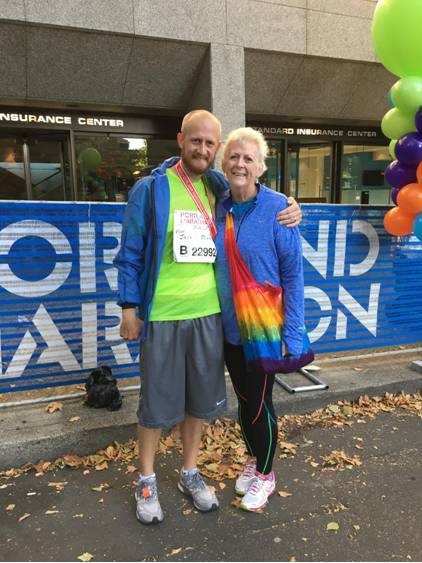
Dustin Hass and his mother, Diane Hass at the 2015 Portland Half Marathon. Raising awareness and research funding for esophageal cancer. Image courtesy of: Dustin Hass. All rights reserved.
For more information about esophageal cancer and how you can get involved and make a difference, visit the following:
–Facts & Information
–Ways To Help
–Make A Donation
Leave a Comment » | The Salgi Foundation - Esophageal Cancer Awareness, Early Detection & Research | Tagged: acid, acid reflux, acid reflux disease, acid reflux drugs, acid reflux medication, awareness, barrett's, barrett's esophagus, cancer, cancer of the esophagus, cancer of the gullet, cancer of the oesophagus, cancer run, cancer walk, charity, diet, disease, drugs, esophageal, esophageal cancer, esophageal cancer advocacy, esophageal cancer advocate, esophageal cancer awareness, esophageal cancer charity, esophageal cancer nonprofit, esophageal cancer nutrition, esophageal cancer research, esophageal cancer research charity, esophageal cancer research foundation, esophageal cancer research news, esophageal cancer run, esophageal cancer walk, esophagus, exercise, fit, fitness, food, fundraise, fundraising, gastroenterology, Gastroesophageal Reflux Disease, gerd, health, health news, healthy., heartburn, heartburn medication, heartburn sufferer, heartburn symptoms, lifestyle, medication, news, nutrition, obesity, oesophageal cancer, oesophageal cancer awareness, oesophageal cancer charity, oesophageal cancer nonprofit, oesophageal cancer research, portland, portland half marathon, portland marathon, ppi, reflux disease, silent reflux | Permalink
Posted by salgiblogs
September 14, 2015
Article via Oncologynurseadvisor.com | September 11, 2015
“A nurse-led walk-and-eat intervention is feasible and effective to preserve functional walking capacity and nutritional status in patients with esophageal cancer undergoing neoadjuvant chemoradiotherapy, according to a recent study published in the journal The Oncologist.
For the study, researchers at National Taiwan University in Taipei, Taiwan, sought to evaluate the impact of a walk-and-eat intervention in patients with locally advanced esophageal cancer stage 2B or higher receiving neoadjuvant chemotherapy and radiation. A total of 59 participants were randomly assigned to receive the intervention, which involved nurse-supervised walking 3 times per week and weekly nutritional advice, or usual care during 4 to 5 weeks of chemoradiotherapy.
Results showed that those who received the intervention had a 100-meter less decline in walk distance than control patients, 3-kg less decrease in hand-grip strength, and 2.7-kg less reduction in body weight. Researchers found that the patients’ age did not impact these endpoints.
The study also demonstrated that patients that received the walk-and-eat intervention had significantly lower rates of need for intravenous nutritional support and wheelchair use.”
Read the full article: http://www.oncologynurseadvisor.com
The Salgi Esophageal Cancer Research Foundation is a 501 (c) (3) non profit organization as recognized by the Internal Revenue Service.
Content found on Salgi.org is for informational purposes only. The Content is not intended to be a substitute for professional medical advice, diagnosis, or treatment. Seek the advice of your physician or other qualified health provider with any questions you may have regarding a medical condition.
Leave a Comment » | The Salgi Foundation - Esophageal Cancer Awareness, Early Detection & Research | Tagged: acid, acid reflux, acid reflux disease, acid reflux drugs, acid reflux medication, awareness, barrett's, barrett's esophagus, cancer, cancer news, cancer nutrition, cancer of the esophagus, charity, diet, disease, drugs, esophageal, esophageal cancer, esophageal cancer advocacy, esophageal cancer advocate, esophageal cancer awareness, esophageal cancer charity, esophageal cancer nonprofit, esophageal cancer nutrition, esophageal cancer research, esophageal cancer research charity, esophageal cancer research foundation, esophageal cancer research news, esophagus, esophagus cancer, esophagus cancer prevention, esophagus cancer research, esophagus nutrition, exercise, fit, fitness, food, gastroenterology, Gastroesophageal Reflux Disease, gerd, health, health news, healthy., heartburn, heartburn medication, heartburn sufferer, heartburn symptoms, lifestyle, medication, news, nutrition, nutrition cancer, obesity, oesophageal cancer, oesophageal cancer awareness, oesophageal cancer charity, oesophageal cancer nonprofit, oesophageal cancer research, oesophagus cancer, oesophagus cancer research, ppi, reflux disease, rhode island, Salgi Esophageal Cancer Research Foundation, silent reflux, the salgi esophageal cancer research foundation | Permalink
Posted by salgiblogs
July 28, 2015
The Salgi Esophageal Cancer Research Foundation has issued its first round of funding for esophageal cancer research earlier this month.
The foundation awarded program director, Dr. Carlos Minacapelli and Rutgers Robert Wood Johnston Medical School grant funding.
In 2011, The Salgi Esophageal Cancer Research Foundation was established to raise awareness, encourage early detection and to fund research of esophageal cancer. Since 2011, the foundation has both raised awareness and encouraged the importance of earliest possible detection throughout New England, across the United States and internationally.
“The Salgi Esophageal Cancer Research Foundation is excited to be a part of Dr. Minacapelli’s and Rutger’s research efforts in honor of all the brave men and women who were affected by esophageal cancer and to hopefully reduce incidence and improve outcomes for individuals in the future” President of the foundation stated.
The Salgi Esophageal Cancer Research Foundation would like to thank all of our supporters and donors who believe in this mission and who make these accomplishments possible. However, this is just the beginning. We received many other research requests that we were unable to fund at this time. We need to continue our efforts to fundraise so that we may continue to fund research.
Gastroesophageal Reflux Disease, also known as GERD or acid reflux disease, of which the most common symptom is chronic heartburn, is one of the primary risk factors associated with esophageal cancer. Other risk factors include obesity, poor nutrition and smoking. With over a 600% increase in the past decades, esophageal cancer is among the fastest growing and deadliest cancers in the United States and western world.
Currently, there are no standard or routine screenings to detect esophageal cancer in earlier stages. Symptoms, such as difficulty swallowing, typically appear once the cancer has become advanced and the overall five-year survival rate is only 17.5%. Despite its rapid increase and poor prognosis, esophageal cancer receives very little awareness and research funding.
To make a tax-deductible donation to The Salgi Esophageal Cancer Research Foundation, please visit: SALGI.org/donate.
Leave a Comment » | The Salgi Foundation - Esophageal Cancer Awareness, Early Detection & Research | Tagged: acid, acid reflux, acid reflux disease, acid reflux drugs, acid reflux medication, advocacy, awareness, barrett's, barrett's esophagus, cancer, cancer advocacy, cancer charity, cancer foundation, cancer nonprofit, cancer of the esophagus, cancer research, cancer research charity, cancer research foundation, cancer run, cancer walk, charity, diet, disease, drugs, esophageal, esophageal cancer, esophageal cancer advocacy, esophageal cancer advocate, esophageal cancer awareness, esophageal cancer charity, esophageal cancer nonprofit, esophageal cancer research, esophageal cancer research charity, esophageal cancer research foundation, esophageal cancer research news, esophagus, exercise, fit, fitness, food, Funding, gastroenterology, Gastroesophageal Reflux Disease, gerd, health, health news, healthy., heartburn, heartburn medication, heartburn sufferer, heartburn symptoms, lifestyle, medical, medical research, medication, new jersey, news, nonprofit, nutrition, obesity, oesophageal cancer, oesophageal cancer awareness, oesophageal cancer charity, oesophageal cancer nonprofit, oesophageal cancer research, ppi, reflux disease, research, research funding, rhode island, ri, Rutgers, Rutgers Robert Wood Johnston Medical School, Salgi Esophageal Cancer Research Foundation, silent reflux | Permalink
Posted by salgiblogs
July 21, 2015
“A ‘pill on a string’ developed by researchers at the University of Cambridge could help doctors detect esophageal cancer at an early stage, helping them overcome the problem of wide variation between biopsies, suggests research published today in the journal Nature Genetics.
The ‘Cytosponge’ sits within a pill which, when swallowed, dissolves to reveal a sponge that scrapes off cells when withdrawn up the esophagus. It allows doctors to collect cells from all along the esophagus, whereas standard biopsies take individual point samples.
Esophageal cancer is often preceded by Barrett’s esophagus, a condition in which cells within the lining of the esophagus begin to change shape and can grow abnormally. The cellular changes are cause by acid and bile reflux – when the stomach juices come back up the esophagus. Between one and five people in every 100 with Barrett’s esophagus go on to develop esophageal cancer in their life-time, a form of cancer that can be difficult to treat, particularly if not caught early enough.
At present, Barrett’s esophagus and esophageal cancer are diagnosed using biopsies, which look for signs of dysplasia, the proliferation of abnormal cancer cells. This is a subjective process, requiring a trained scientist to identify abnormalities. Understanding how esophageal cancer develops and the genetic mutations involved could help doctors catch the disease earlier, offering better treatment options for the patient.
An alternative way of spotting very early signs of esophageal cancer would be to look for important genetic changes. However, researchers from the University of Cambridge have shown that variations in mutations across the esophagus mean that standard biopsies may miss cells with important mutations. A sample was more likely to pick up key mutations if taken using the Cytosponge, developed by Professor Rebecca Fitzgerald at the Medical Research Council Cancer Unit at the University of Cambridge.
“The trouble with Barrett’s esophagus is that it looks bland and might span over 10cm,” explains Professor Fitzgerald. “We created a map of mutations in a patient with the condition and found that within this stretch, there is a great deal of variation amongst cells. Some might carry an important mutation, but many will not. If you’re taking a biopsy, this relies on your hitting the right spot. Using the Cytosponge appears to remove some of this game of chance.”
Professor Fitzgerald and colleagues carried out whole genome sequencing to analyse paired Barrett’s esophagus and esophageal cancer samples taken at one point in time from 23 patients, as well as 73 samples taken over a three-year period from one patient with Barrett’s esophagus.
The researchers found patterns of mutations in the genome – where one ‘letter’ of DNA might change to another, for example from a C to a T – that provided a ‘fingerprint’ of the causes of the cancer. Similar work has been done previously in lung cancer, where it was shown that cigarettes leave fingerprints in an individual’s DNA. The Cambridge team found fingerprints which they believe are likely to be due to the damage caused to the lining of the esophagus by stomach acid splashing onto its walls; the same fingerprints could be seen in both Barrett’s esophagus and esophageal cancer, suggest that these changes occur very early on the process.
Even in areas of Barrett’s esophagus without cancer, the researchers found a large number of mutations in their tissue – on average 12,000 per person (compared to an average of 18,000 mutations within the cancer). Many of these are likely to have been ‘bystanders’, genetic mutations that occurred along the way but that were not actually implicated in cancer.
The researchers found that there appeared to be a tipping point, where a patient would go from having lots of individual mutations, but no cancer, to a situation where large pieces of genetic information were being transferred not just between genes but between chromosomes.
Co-author Dr Caryn Ross-Innes adds: “We know very little about how you go from pre-cancer to cancer – and this is particularly the case in esophageal cancer. Barrett’s esophagus and the cancer share many mutations, but we are now a step closer to understanding which are the important mutations that tip the condition over into a potentially deadly form of cancer.”
Source: University of Cambridge
Reference: Ross-Innes, CS et al. Whole-genome sequencing provides new insights into the clonal architecture of Barrett’s esophagus and esophageal adenocarcinoma. Nature Genetics; 20 July 2015
The Salgi Esophageal Cancer Research Foundation is a 501 (c) (3) non profit organization as recognized by the Internal Revenue Service.
Content found on Salgi.org is for informational purposes only. The Content is not intended to be a substitute for professional medical advice, diagnosis, or treatment. Seek the advice of your physician or other qualified health provider with any questions you may have regarding a medical condition.
Leave a Comment » | The Salgi Foundation - Esophageal Cancer Awareness, Early Detection & Research | Tagged: acid, acid reflux, acid reflux disease, acid reflux drugs, acid reflux medication, awareness, barrett's, barrett's esophagus, cancer, cancer of the esophagus, cancer run, cancer walk, charity, diet, disease, drugs, esophageal, esophageal cancer, esophageal cancer awareness, esophageal cancer research, esophagus, exercise, fit, fitness, food, gastroenterology, Gastroesophageal Reflux Disease, gerd, health, health news, healthy., heartburn, heartburn medication, heartburn sufferer, heartburn symptoms, lifestyle, medication, news, nutrition, obesity, ppi, reflux disease, rhode island, ri, silent reflux | Permalink
Posted by salgiblogs
July 17, 2015
GASTROENTEROLOGY & ENDOSCOPY NEWS
“The incidence of Barrett’s esophagus (BE) among relatively young people has surged in recent years, an analysis of a large health care database has found.
The study, of 50 million unique patient records between 2008 and 2013, showed that while the absolute incidence remains low among people younger than age 55 years, the share of cases in that group climbed sharply over the five-year period. Meanwhile, cases of BE among people over age 55 fell, suggesting a demographic shift in the disease with potentially important implications for screening, according to the researchers. As a precancerous condition, BE may be more dangerous in younger patients because of the longer time for the abnormal cells to progress to malignancy.
“The increase in the rate of BE was particularly high in the age group of 25 to 34 years,” said Sasan Sakiani, MD, of the Division of Gastroenterology at MetroHealth Medical Center, in Cleveland, and a study co-author.
Ronnie Fass, MD, director of the Division of Gastroenterology and Hepatology at MetroHealth, who helped conduct the study, said more research is needed to identify the underlying basis for the trend.
“The impetus behind the study was the growing number of younger patients with GERD [gastroesophageal reflux disease]-related symptoms who were diagnosed with Barrett’s esophagus in our clinic,” Dr. Fass said. “It was important for us to further assess this trend because of the important impact it will likely have on our current guidelines for BE screening.”
Dr. Sakiani’s group presented the findings at Digestive Disease Week 2015 (abstract SA1881). The researchers analyzed the Explorys database, which includes data from 317,000 providers admitting patients to 360 hospitals in the United States. The database was initially surveyed by the International Classification of Diseases, 9th edition code for GERD, symptoms of heartburn and other risk factors for BE. The researchers conducted additional analyses to find patients who underwent endoscopy and received a diagnosis of BE between 2008 and 2013, to establish an annual incidence by patient age, sex and race.
“There was a steady increase in both the number of endoscopic procedures performed each year and the incidence of BE,” Dr. Sakiani said. By 2013, the number of endoscopies had risen to 201,140 from 79,040 in 2008, while the incidence of BE increased from 1,970 to 4,269 over that period.”
Read the full article, here.
Bosworth, Ted. “Barrett’s Esophagus Appears To Be Spiking in Younger Patients.” Gastroenterology & Endoscopy News – Web. 17 July 2015.
The Salgi Esophageal Cancer Research Foundation is a 501 (c) (3) non profit organization as recognized by the Internal Revenue Service.
Content found on Salgi.org is for informational purposes only. The Content is not intended to be a substitute for professional medical advice, diagnosis, or treatment. Seek the advice of your physician or other qualified health provider with any questions you may have regarding a medical condition.
Leave a Comment » | The Salgi Foundation - Esophageal Cancer Awareness, Early Detection & Research | Tagged: acid, acid reflux, acid reflux disease, acid reflux drugs, acid reflux medication, awareness, barrett's, barrett's esophagus, cancer, cancer of the esophagus, cancer run, cancer walk, charity, diet, digestive, Digestive Disease, disease, Diseases, drugs, esophageal, esophageal cancer, esophageal cancer awareness, esophageal cancer research, esophageal diseases, esophagus, exercise, fit, fitness, food, gastroenterology, Gastroesophageal Reflux Disease, gerd, health, health news, healthy., heartburn, heartburn medication, heartburn sufferer, heartburn symptoms, incidence, lifestyle, medical, medication, MetroHealth Medical Center, news, nutrition, obesity, ppi, reflux disease, research, rhode island, ri, silent reflux | Permalink
Posted by salgiblogs


 The Salgi Esophageal Cancer Research Foundation