“Evolution describes how all living forms cope with challenges in their environment, as they struggle to persevere against formidable odds. Mutation and selective pressure—cornerstones of Darwin’s theory—are the means by which organisms gain an advantageous foothold or pass into oblivion.
In a new study, researchers at Arizona State University’s Biodesign Institute led an international team to explore how evolutionary processes guide the pathways of cells. Their results, which appear in the advanced online edition of the journal Nature Communications, point to influences leading some cells to remain stable over time while driving others to become cancerous and expand without limit.
The new research focuses on a condition known as Barrett’s Esophagus (BE). The disease, which affects over three million Americans, causes cells lining the [esophagus] to change shape from their normal form (known as squamous epithelia) to a pathological cell type (known as columnar epithelia).
A small number of BE patients—just .2 percent per year—will go on to develop a highly lethal, treatment-resistant cancer, known as Esophageal Adenocarcinoma (EAC). Despite advances in therapy, prospects for EAC patients remain bleak—fewer than 15 percent survive beyond 5 years. (While the incidence of EAC in the United States has remained low, it has risen alarmingly in recent years.)
Understanding why most BE patients avoid this fate and some don’t has been a challenge for the medical community. Evolutionary oncologists like Carlo Maley, a researcher at the Biodesign Center for Personalized Diagnostics and a senior author of the new study, believe a better understanding of the evolutionary dynamics of this process may hold the key. The study examines these dynamics over at least 6 years of surveillance. Of the 8 BE patients examined, 4 remain stable and 4 progress to cancer.
“By taking a host of minute samples across the surface of the esophagus, and across many years while these patients were under surveillance to detect cancer, we had an unprecedented view of the dynamics of carcinogenesis,” Maley says.
Sensing the threat
BE presents a conundrum for clinicians. The condition is a risk factor for developing a deadly, highly intractable cancer but only a tiny proportion of BE patients will progress to cancer. Because no reliable means exist at present to distinguish progressors from non-progressors, the only cautionary measures available involve repeated surveillance of BE esophageal cells through endoscopy and biopsy to try to catch EAC-linked abnormalities at an early stage, or methods to burn away the lining of the esophagus.
Such invasive, expensive and often unnecessary screening and interventions result in over-diagnosis and over treatment, while surveillance of esophageal cells on a population-wide basis is impractical. Clearly, a more reliable approach is needed—one that can ferret out those BE patients most likely to advance to EAC.
As the authors note, better predictions will rely in part on testing BE samples at multiple points in time, and an examination of cells extracted from different locations in the esophageal tissue. One positive consequence of aggressive BE cell surveillance is that it has provided researchers with a rich library of data that can be mined using new methods in order to tease out critical factors governing progression vs non-progression to cancer.
Disease origins
Barrett’s Esophagus can develop over time when digestive acid backs up from the stomach into the esophagus, causing damage and growth of precancerous cells. To accurately assess the evolutionary dynamics involved in progression to cancer, researchers need more fine-grained analyses of BE cells, to tease out details that may not be detectable in whole biopsies containing millions of cells.
In BE, the columnar architecture of the epithelium is similar to that of the intestine. Here, well-like structures in the tissue known as crypts appear. At the base of those crypts are stem cells, which replenish the epithelium as older cells migrate up the sides of the crypts and then die off. The study represents the first genome-wide analysis of the evolutionary dynamics in BE at the level of individual crypts. (While crypts may contain more than a single stem cell, these cells tend to be genetically uniform. For this reason, crypt sampling is closely analogous to sampling single BE cells.)
Researchers would like to know why most cases of BE appear to be evolutionarily static over time. Either genetic alterations tend to be rare or, if they are common, cells carrying those alterations do not expand to levels detectable through conventional biopsy. The new study examines the genomes of single crypts in BE to take a closer look at when and where genetic variants arise and how the evolutionary process plays out.
Ominous progression
Advancement from BE to EAC is a process characterized by mounting genomic instability. Over time, BE patients can accumulate mutations in their esophageal lesions, altering the genetic makeup of these cells. Such genetic variation is regarded as a valuable predictor of progression to cancer, though the highly complex dynamics of this process are still being worked out.
The study focused on losses and gains of large regions of chromosomes in the BE cells. Aberrations in the chromosomes are high in those who go on to develop EAC, even 4 years before progression and remain low in non-progressors, pointing to the value of chromosomal diversity as a diagnostic indicator.
The study also examined a phenomenon known as genome doubling. This results from faulty cell division, which creates a cell with twice the normal number of chromosomes. Those likely to progress to EAC were also more likely to experience genome doubling, which is presaged by an increasing rate of accumulation of chromosomal aberrations.
The study examines genetic variation in BE crypts, comparing these with the variation found through examination of biopsies. Multiple biopsies and crypt samples were examined from 8 BE patients at two different time points. Four of these patients progressed to EAC and 4 did not.
Results comparing biopsy and single crypt information show that genetic alterations are indeed rare, even at the crypt level, and that Barrett’s lesions tend to arise from a single ancestral cell gone awry. Further, the study selects cells from different regions of the esophagus and finds that genetic alterations were more common in samples taken near the base of the esophagus, known as the gastro-esophageal junction.
New findings
The study addresses five previously unanswered questions concerning BE. As the authors stress, the results offer new insights into the general process of cell progression to cancer, which may be applicable across many, if not all forms of the disease.
Results indicate that
a) BE tissue in most cases arises from a single altered ancestral cell
b) expansion of cancerous clones (identical cells of common ancestry) is rare
c) cells sampled near the gastro-esophageal junction accumulate more genomic alterations than those found in other regions of the esophagus, making them better targets for diagnosis
d) there are dramatic changes in mutation rate during progression and these may occur early in the process of cancer progression and
e) genetic diversity as measured through biopsy in Barrett’s patients is comparable to that observes in individual crypts, indicating that biopsy analysis is adequate for assessing the evolutionary characteristics of BE cells and their likelihood of progression.
Continued work in this area promises to untangle the complex network of evolutionary factors at play when cells are directed away from their normal course and toward the fateful path of cancer.
The Salgi Esophageal Cancer Research Foundation is a 501 (c) (3) non profit organization as recognized by the Internal Revenue Service.
Content found on Salgi.org is for informational purposes only. The Content is not intended to be a substitute for professional medical advice, diagnosis, or treatment. Seek the advice of your physician or other qualified health provider with any questions you may have regarding a medical condition.
Esophageal cancer is one of the fastest growing and deadliest cancers in the United States. There are no routine screenings to detect esophageal cancer in earlier stages and symptoms (such as difficulty swallowing, choking sensation, etc…) often occur once the cancer spreads and becomes more difficult (if not impossible) to treat. There is a misconception that esophageal cancer “typically” affects older males. However, due to the fact that esophageal cancer is rapidly increasing, it is also rapidly affecting both men and women of all ages.
When we received a donation and the story that we are about to share with you, we were heartbroken. There are truly no words to express how horrific esophageal cancer is and each time we receive donations in memory of loved ones, our hearts break. However, as we told her beloved friends, with Karen, an Ironman triathlete, who was diagnosed just six weeks before she passed away, it seems that not even esophageal cancer could dim her spirit and it will most certainly not touch her legacy.
The Salgi Esophageal Cancer Research Foundation is honored to carry out this mission in memory of Karen and we are very appreciative to her family and friends for donating in her name.
Photo via: Kate Z.
The story of our Karen is a story of adventure, love, passion, inspiration and courage. (by Katie M.)
Diagnosed at thanksgiving (2017) and passed about 6 weeks later, (January 2018.)
In a cramped, plain waiting room in UM hospital, a crowd grows steadily from morning ‘til night. These are the close friends, closer friends, family, crazy swimmers, drinking buddies and running buddies of a woman who has lived a full and intense life, a woman who made everyone she met feel important and accomplished, included.
Karen is only 49, but has crammed at least 100 years of living into that time. She often seems both more youthful than her age and also wiser than her years. And so, the people who fill the waiting room and share their favorite memories of Karen on this private Facebook group come from a range of decades, backgrounds and locales. But we are equally enamored of her for her spirit, kindness, energy, forgiveness, optimism and endless passion.
Karen is an Ironman triathlete (yes, she’s qualified and raced Kona, we say when we brag about her) and a multiple-time Boston Marathon qualifier and finisher. She really is cool. This past year, she has cared tirelessly and lovingly for her mother. She always talks adoringly to anyone who will listen about her amazing, brilliant, successful brother and sister; they are royalty. It is clear from listening to her talk, that she has found a kind companion in Pat. She is devoted to that running dog, Buddy. In fact, Karen only knows amazing people and animals, rock stars; this is because, by knowing Karen, you are thereby elevated. To know Karen is to be instantly inspired and mesmerized. It is also to be loved. She would drive hours for a short visit, a long run, to be supportive, to cheer on a friend’s athletic endeavor, to try a new lake or join in on a fun race. Karen is passion, strength and love incarnate. She doesn’t do small.
So it shouldn’t have surprised her loved ones (aka: admirers, aka: us), the hundreds of people wanting to make the pilgrimage to UM hospital, the friends on each coast and multiple continents, that she would also finish dramatically. We were all able to Google esophageal cancer and see what the prognosis is. But this is Karen, she never does things the average way. She is strong and amazing. She baffles people routinely with her astounding feats. I can’t be the only one who really believed she would pull off a miracle. But I really did believe it.
Photo via: Kate Z.
Our Karen is a big personality in a strong and wiry little frame. A bundle of energy, like a hummingbird and a cheetah all at once, with a whole lot of lovey dog for good measure. She is full of and surrounded by love. A soul with the amazing gift of taking in the fuel of love from others and multiplying and reflecting it out tenfold. Even as she is suffering the cruel effects and pain of this disease, she is easing the discomfort and pain of others, making US feel better.
She finished Ironman Maryland strong, healthy and passionate on Oct. 7. She started a new job she was excited to throw herself into with the same passion soon after. She doesn’t do small, even with cancer. She is bigger than life and that fed the disease too fast. Her courage, passion and energy once again serving as incredible fuel, but this time for her undoing.
Now the 100s, probably thousands of us made to feel part of the elite who know her, stream (physically and virtually) into Ann Arbor for another hug, kiss, cry, laugh, story. We all desire one more chance to love her up, one more chance to tell her how important she is in our lives, one more fix of Karen, who makes everyone a star when they reflect her brilliance.
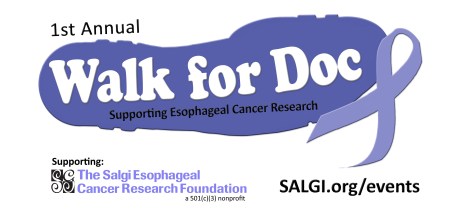
The 1st Annual Walk for Doc- Supporting Esophageal Cancer Research will be held on Saturday, June 16, 2018, 11:30 AM EST at E.P. “Tom” Sawyer Park, 3000 Freys Hill Rd. Louisville, KY 40241. The event aims to raise awareness, encourage early detection and to fund research for esophageal cancer.
Tickets are $20 in advance by Thursday, June 14, 2018, at 3:00 EST.
$25 day of the event. Cash and check are the only forms of payment accepted the day of the event.
Bring your family, friends, co-workers and dogs, too! E.P. “Tom” Sawyer Park is pet friendly!
Children 12 and under are admitted FREE!*
About the event:
The 1st Annual Walk for Doc- Supporting Esophageal Cancer Research will benefit The Salgi Esophageal Cancer Research Foundation, a 501(c)(3) nonprofit charity working to raise awareness, encourage early detection and fund research of esophageal cancer…in hopes of a cure.™
The path at Tom Sawyer Park is approximately 3.5 miles and guests are encouraged to walk at their own pace.
Guests are asked to park in the big parking in between the play- ground and the indoor/outdoor pool. The event starts at 11:30 AM.
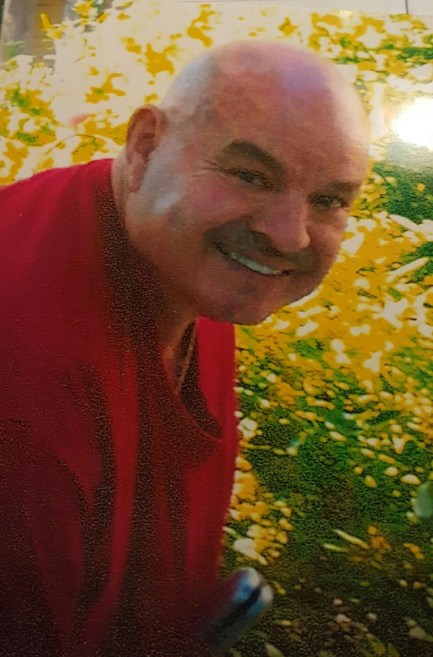
Meryl Levine is the lead coordinator of this event and lost her father to esophageal cancer.
Photo via: Meryl Levine
“Esophageal Cancer is a preventable, treatable disease if caught early. My dad was a physician, tasked with taking care of people’s feet. He was strong, generous, and smart….a force to be reckoned with before cancer brought him and us to our knees. I won’t go into how my brother had to clean the blood off the bathroom floor, as he lay in a hospital bed. I won’t tell you how difficult it was to see my once proud father have trouble just getting out of bed. I also won’t tell you how it wasn’t cancer that killed my dad…it was the treatment that, in the end, got him. We need to find a better way of treating and battling cancer. Chemo is toxic and kills not only cancer cells but healthy cells as well. Through research, we may one day win this fight. If I can help prevent one family from having to experience the pain and degradation my family went through, then my father’s fight to live was worthwhile. And the fight that was his is now mine. I gladly accept this challenge.”
In 2015, The Salgi Esophageal Cancer Research Foundation awarded esophageal cancer research funding for the very first time! Since then over 20 requests have been made for esophageal cancer research funding. With your support and generosity, the charity hopes to again fund research again. The Salgi Esophageal Cancer Research Foundation also raised national AND international awareness. Your continued support directly impacts and sustains this mission!
Ready to make an even bigger impact?
When you register for the event, you will be asked if you’d like to create your own fundraising page. This is a great way to help raise more awareness of esophageal cancer and funding for this life-saving mission.
Registration is NOT required to make a custom fundraising page. To learn more and get started, click here.
Can’t make it? Here are other ways to get involved:
If you are unable to attend the event, there are many other ways in which you can make a difference and support this mission!
Donate: Support a team or individual fundraiser, click here.
Fundraise: Create your own custom fundraising page, click here.
Give: Make a one-time or recurring donation, visit: salgi.org/donate.
Sponsor: Learn about sponsorship opportunities for the event, click here.
In-Kind Donation: Fill out our in-kind donation form, click here.
Learn the facts about esophageal cancer
-Esophageal cancer has increased over 600% and is considered one of the fastest growing cancer in the US.
-As one of the deadliest cancers, esophageal cancer has an overall 5 year survival rate of only 18.8%.
-There are no routine or standard screenings to improve early detection of esophageal cancer.
-Symptoms often arise late, once the cancer is considered advanced or “distant” (spread to lymph nodes and other organs.)
-Stage IV esophageal cancer has a survival rate of only 4.6%.
-Despite these facts, esophageal cancer research is extremely underfunded.
Make a difference!
Join The Salgi Esophageal Cancer Research Foundation to help make a difference against esophageal cancer. Whether you walk, volunteer, sponsor or donate, your involvement will directly support this life-saving mission. Thank you!
The Salgi Esophageal Cancer Research Foundation is a 501 (c) (3) non profit organization as recognized by the Internal Revenue Service.
Content found on Salgi.org is for informational purposes only. The Content is not intended to be a substitute for professional medical advice, diagnosis, or treatment. Seek the advice of your physician or other qualified health provider with any questions you may have regarding a medical condition.
There is no question that those who are diagnosed with esophageal cancer face a long and arduous road ahead of them. Often times, those who are diagnosed with esophageal cancer are given bleak outcomes. A search online will portray terrifying odds.
While we have an obligation to post information and statistics concerning esophageal cancer incidence and survival rates on this website, we always strive to encourage those who are affected not to focus on the figures and rates and instead focus on treatment, receiving support from family and friends and taking each moment as it comes.
While the diagnosis may be similar, each person has his or her own individual journey. Positivity and hope play a large role in treatment.
Know that there are men and women who have not only survived esophageal cancer but have lived for decades after their initial diagnosis.
Recently, we came across a story online of a daughter whose father was given the same bleak outcome that so many others have faced. This man not only survived esophageal cancer, but is thriving.
We are honored to share this story and ask that you join us in wishing this survivor many, many, many more years of health, happiness and the ability to share his HOPE with others!
Sheri, in honor of her father, Bill:
“I vividly remember the day my father was diagnosed with this horrible disease. I was 8 months pregnant with my 2nd child. The doctor told him he should start making arrangements because, he would not be alive in a year. It was almost a year before we even heard of someone who had survived for more than 3 years. That was 21 years ago this coming April.
Today, my father placed 3rd in the Masters division at the Southern Erg Sprints indoor rowing championships. He was coxed by my son, who was born 4 ½ years after my dad’s diagnosis. For all of you out there who are feeling defeated by this disease, there is hope. People don’t just survive this disease they can thrive after it.”
Sheri went on to say that her “dad was not doing well until my mom found a 10 year survivor. That little bit of hope changed his outlook and made all the difference.”
We hope that this story inspires others who may be experiencing a similar situation. Thank you, Sheri for allowing us to share your father’s story. Please use the sharing links below to help us share this story of hope!
Do not copy or reproduce this story, whether in its entirety or any part of it or any story found on our website.
The Salgi Esophageal Cancer Research Foundation is a 501 (c) (3) non profit organization as recognized by the Internal Revenue Service.
Content found on Salgi.org is for informational purposes only. The Content is not intended to be a substitute for professional medical advice, diagnosis, or treatment. Seek the advice of your physician or other qualified health provider with any questions you may have regarding a medical condition.
“I am honored to be writing this blog post, to have fundraised for Salgi Esophageal Cancer Research Foundation, and last but not least to honor my Dad, Richard “Pete” Smith who died on February 2, 2017 of Stage IV Recurrent Metastatic Esophageal Carcinoma.
My name is Sarah Elizabeth Smith. I am from Toms River, New Jersey and prior to December, 2016, I honestly knew Esophageal Cancer existed but had no idea how devastating it is. You are probably wondering a little more about me. Well, I am in my 30s. I work in Environmental Health and Safety and I am an Emergency Medical Services Provider. I have a wonderful Mom, Kathy Smith and wonderful siblings, Jen, who is married to Kurt and they have two daughters, Annalisa and Isabella, Rick who is married to Lisa and they have two sons, Brandon and Justin. I have a Shih Tzu named Barnaby and a cat named Tyson. I love to travel, read, wander around Target, and live life as it comes. I am very involved in my church, Christ Episcopal Church in Toms River, NJ. Overall, I am just your regular person who happens to have been impacted by Esophageal Cancer.
For a few months prior to December, 2016, my Dad began experiencing swallowing difficulties, felt tired, and generally a little different than usual but did not really make a big deal of it. On December 24, 2016, my Mom, Kathleen, Dad, Cousin/Godbrother John, and Aunt/Godmother Vickie went out to dinner for Christmas Eve as the family usually does. At dinner, my Dad could not get anything down and from there, things quickly progressed.
Shortly after Christmas, my Dad made an appointment with a Gastroenterologist at the practice that I use and the Doctor ordered and scheduled an Endoscopy. My Mom and Dad went to the Surgery Center the day of the Endoscopy and received the news that the Doctor had found a mass and that he had biopsied it and sent a tissue sample out to the lab for evaluation and testing. We waited for what felt like an eternity for the results. Shortly after January 1, 2016, we received the devastating news that my Dad had Esophageal Carcinoma.
Shortly after receiving the diagnosis, my Dad had a more in-depth Endoscopy and a PET Scan. Ultimately, he had Stage III Esophageal Carcinoma upon initial diagnosis in January, 2016. The treatment plan was weekly chemotherapy and daily radiation, followed by a period off and then an Esophagectomy would follow some weeks later.
Initially Dad did so well with the Chemotherapy and Radiation. He had retired due to a long commute to and from work and because he wanted to be able to focus on getting better but he believed had he lived closer to work he would have been able to continue working to some extent. Dad really remained quite active and positive during this time. He had few side effects and really felt an improvement in his swallowing, as the mass reduced in size. With the Doctors and family, Dad had decided it was best to have a feeding tube inserted so that he could receive the complete nutrition he needed and to keep his weight up. We were all amazed and so proud of him. We were thankful for the Doctors and all the medical providers that he was being treated by.
Dad was a deeply religious and spiritual man. Each day he would pray the Rosary and he said he really felt God would take care of him. He thanked God each day for the treatments available and having his family and friends by his side supporting him.
During the break from treatment, Dad and the rest of the family enjoyed time together and he remained active and really made sure he was in the best shape possible for his upcoming Esophagectomy. In reality, the entire family was making sure we were in the best shape possible to support and care for Dad. It was honestly the calm before the storm.
Monday, May, 16, 2016, would be the big day. Dad would have his Esophagectomy done. We would finally be done with this whirlwind of chemotherapy, radiation, scans, blood work, etc.
The night before surgery, my Mom and Dad went to a hotel close to the Capital Health Medical Center Hopewell Campus in Pennington, NJ, and my Mom reported that my Dad ate a little from many local eating establishments close to the hospital and prior to the midnight pre-operative cut off time. I was glad they had this time together. My Mom would be staying in the hotel for at least one week after my Dad’s surgery so, like the caring guy he was, he made sure Mom was settled in for the week.
I barely slept that night and apparently I was not alone. My siblings reported they had difficulty sleeping, as did my parents. The surgery was scheduled for very early in the morning so I woke up very early and made the hour drive to the hospital where I was met by my sister Jen, brother-in-law Kurt, Mom Kathy, and Dad.
Dad was quickly taken to the pre-op area and a lot of things happened. We all got to be with him until he was taken into surgery. Then the waiting began. It was a long wait. Finally, Dr. Rosato came out to speak with the family. He said that he was unable to approach the surgery from Dad’s chest due to radiation damage and that he had performed the procedure via an approach through his neck. He was concerned about recovery but said that we should remain positive and that should his concerns become reality, we would all discuss them then. He assured us that the procedure went well and that we would be able to see Dad soon. What a relief.
We were taken to a family waiting room close to the Intensive Care Unit where we would wait for a while and then the Nurse came to get us to bring us to see Dad.
I honestly was completely relieved upon seeing him. We had been prepared for a plethora of possibilities, including Dad being on a ventilator for some time after surgery. There was no ventilator and we were dealing with the best case scenario. What a relief.
My Dad was aware of our presence and he took the breathing mask/non rebreather off his face and stated, in a Darth Vader voice, “I’m alive” and then went to sleep. We all laughed hysterically. That was so something Dad would do. Always trying to be a comedian and make people laugh.
The days in ICU were difficult for everyone BUT each day Dad made progress and we did as caregivers as well. Pretty soon after Dad was moved to a private room in a regular medical surgical unit. He continued to make progress. We were excited and incredibly impressed at the progress and how well he was doing mentally and physically.
Soon after he was discharged home. At home it was hard at times for everyone but he continued to make progress and was doing well. I finally saw the light at the end of the tunnel. I felt like maybe we would look back at this years later and be proud of Dad and the entire family for getting through this horrible time and that it would help bring us closer together.
Dad did incredibly well throughout the summer and early fall. He walked miles around the mall. He went out as he could. He even began driving short distances and started participating in family events and things really looked great for him and the whole family.
The fall came and he started experiencing aches and pains and overall did not feel well. In what still feels like a blur, Dad had a hernia operation and then had an emergency surgery for a complication of that operation. He also was losing weight so he made the decision to have the feeding tube reinserted.
In December, 2016, after another PET scan and some other testing, we received the news that Dad’s cancer had returned and this time it was a Stage IV. This was not at all what we anticipated hearing or dealing with this holiday season but we got into the mental and physical space that we would deal with this as best possible. Dad began chemotherapy immediately and did well the first round. He was albeit weak but in good spirits.
The second round of chemotherapy was the beginning of the end. He began experiencing side effects and was uncomfortable and in a lot of pain. He was very weak. The Emergency Room visits began. Eventually he was hospitalized because his immune system was in very bad shape from the chemotherapy and cancer. He spent many days in the hospital this time. Eventually it became apparent that these were Dad’s last days. Eventually he insisted on coming home. Hospice entered the picture and they made it happen for him and for us. I had no idea what an invaluable blessing hospice would be for the family.
Dad came home and the family never left his side. As each day passed, Dad became less and less mentally present until he was bedbound and completely unable to speak and was unresponsive to us. I knew he was still there and would sit and talk with him but I felt this unimaginable pain. I knew that this was the end. Hospice made this whole process much easier. They gave me a sense of peace and I felt loved by people I had just met.
On February 2, 2017, I administered Dad’s medications at around midnight and a half an hour later, he had died.
I felt this strange mix of emotions. I felt relief that he was not suffering anymore and that we could finally start to pick up whatever pieces were salvageable and try to make sense of this loss and time and begin to heal while grieving. I felt sad, which is an obvious emotion when one’s Dad dies. I was angry that my Dad was gone. Angry that he had suffered so much and that he would not be around to call and spend time with.
The next week or so was a blur. We had Dad cremated and had a Celebration of Life. We took care of the things that needed immediate attention and we took care of each other.
In the year since, we have dealt with a plethora of emotions and events. We have gotten through them even though sometimes it’s a fight to do so. I feel like this year has concurrently been the slowest and fastest of my life.
I decided on my birthday on December 26 that I would do a Facebook fundraiser for this wonderful organization. I set a goal of $300 since I am in my 30s. I ended up raising $335! I have some seriously generous and awesome friends.
Shortly after I sent a Facebook message informing the administrator that the fundraiser was in progress and they invited me to write this post. I am truly honored. It is honestly the least I can do to help others who are dealing with this horrible disease.
The only advice I can offer is to take it a day or even a second at a time and to love the person who has cancer and to love those in your caregiving group. Be patient with yourself and your loved one. And have hope even if they end up dying. Have hope that Esophageal Cancer will one day have a cure.”
Fundraising Spotlight: In Loving Memory of Richard Smith. Photo Courtesy of: Sarah Elizabeth Smith. All rights reserved. The Salgi Esophageal Cancer Research Foundation.
Today, Tuesday, November 28, 2017 is Giving Tuesday! The Salgi Esophageal Cancer Research Foundation is honored to participate in this annual event.
Giving Tuesday opens the giving season and with your help, we will raise funds to raise awareness, encourage early detection and fund research of esophageal cancer…in hopes of a cure.™
How can you help make Giving Tuesday a success?
Help us get the word out on social media by visiting and liking our pages: Facebook, Twitter and Instagram;
Donate to our charity: salorg/donate, as a 501(c)(3) charity, all donations are tax-deductible;
Share photos of your loved ones who have been affected by esophageal cancer on social media. Tag us in the photos @SalgiFoundation and we’ll re-post them on our pages;
Invite your co-workers, family members and friends to contribute by using the message below via social media or email:
“I am supporting The Salgi Esophageal Cancer Research Foundation today on Giving Tuesday and I hope you will, too! [Optional: Insert personal story/reason for helping.] Did you know esophageal cancer is the fastest growing cancer in the US, according to the National Cancer Institute? You can support awareness and research efforts by making a tax-deductible donating online: SALGI.org/donate, and by sharing this information with your friends, family and colleagues by email or on Facebook and/or Twitter. Thank you in advance!“
Don’t forget! You can donate to our charity as a holiday gift!
When you give the gift of a donation to The Salgi Esophageal Cancer Research Foundation, you will be giving a gift that lasts long after the holiday season is over. Donation gifts can be made for anyone- your family, friend, co-worker or an acquaintance. Just make the donation and let us know who and where to send acknowledgment to!
Thank You!
Giving Tuesday helps to unite us in the spirit of giving and to bring a spotlight to esophageal cancer, a cause that needs desperate attention. Let’s make this Giving Tuesday a great success! Thank you in advance for helping to make a difference today and every day.
The holidays are in full swing and that means that the giving season has also arrived. Before you donate a single penny this giving season, please consider the following tips so that you can ensure that your donation is well spent.
Do Your Homework, For Free!
Create a free account with trustworthy websites like Charity Navigator to help ensure that the charity you intended to support is “efficient, ethical and effective.” Once you create your account you will have access to financial data and other information to help you make an informed decision on where to donate your hard-earned money.
How Will Your Donation Be Spent?
Find out exactly how the charity spends donation by viewing their IRS Form 990. Websites like Charity Navigator lists charities IRS Form 990s. The IRS Form 990 “is the reporting form that many federally tax-exempt organizations must file with the IRS each year. This form allows the IRS and the general public to evaluate a nonprofit’s operations; it includes information on the nonprofit’s mission, programs, and finances.”
It is important to note that smaller nonprofits with gross receipts of less than $50,000 do not have to file a 990 form.*
In the 990 form you will see exactly how much a nonprofit spent within the reporting year. You will be able to see how much money goes towards the actual mission and how much is spent on other expenses such as salary and travel.
You might be surprised to see what you find out!
Make Sure Your Donation is Tax Deductible.
While it is truly always better to give than to receive, charitable donations allow donors to give and receive at the same time. Before you donate, make sure that your donation is actually tax deductible.
It may sound shocking but while most charitable organizations do qualify for charitable deduction, not all do. There are certain organizations listed by the IRS that although they are exempt from income tax, your gift(s) to that organization will not be not tax-deductible for you.
We hope these tips help you make an informed decision on what charity to give to this holiday season. To view our 2016 Annual Report, please click here. Happy Holidays and happy giving to you!
*Smaller nonprofits with gross receipts of less than $50,000 file Form 990-N.
The Salgi Esophageal Cancer Research Foundation is a 501 (c) (3) non profit organization as recognized by the Internal Revenue Service.
Content found on Salgi.org is for informational purposes only. The Content is not intended to be a substitute for professional medical advice, diagnosis, or treatment. Seek the advice of your physician or other qualified health provider with any questions you may have regarding a medical condition.
It has been exactly six years since The Salgi Esophageal Cancer Research Foundation was incorporated.
Our members have been fortunate to have met wonderful supporters and volunteers who, in one way or another, have been affected by esophageal cancer.
Some supporters have been with us from the very beginning, many have joined along the way, but all are blazing with determination to make a difference.
When The Salgi Esophageal Cancer Research Foundation first “opened its doors”, the heartache from losing our beloved father and grandfather still painfully stung almost 13 years after his passing. While the heartache from losing him has somewhat been eased knowing that this mission, which started in his memory, has undoubtedly helped others, we now feel the heartache in a greater and deeper sense.
That heartache deepens each and every time we learn one of our supporters has passed away, after an arduous and painful battle with esophageal cancer and the subsequent health effects.
The heartache deepens when we speak to loved ones of those who have passed away from esophageal cancer and they detail the struggles that they faced and the pain and sense of loss that the families are left with.
The heartache deepens when contributions are made in memory of a family member, friend or co-worker who is missed terribly. The heartache further deepens whenever we read the tear-stained letters from the families of those who passed away and they want to make a difference in their loved ones memory, after witnessing the dreadfulness of esophageal cancer.
The heartache also deepens when we speak to someone who has been diagnosed or are going through treatments due to esophageal cancer or when we speak to their loved ones.
While the heartache is now deeper than it was before, it does not cause us to waver or to lose hope.
It is said that to be successful, a nonprofit must run as a business and as such, be carried out efficiently, with a clear plan and focus on the long and short-term goals. We’ve been told that it is important to try and separate feelings from the business of running a nonprofit and to not let the heartache affect us.
To that we say: thanks, but no thanks.
The heartache that we’ve mentioned is our catalyst and part of the driving force utilize each day to press forward and continue this life-saving mission.
Esophageal cancer has taken too many people: men and women of all ages and ethnicities. These are your people and now they are our people. We love, treasure, honor and remember all of them each time any work for this mission is carried out.
The Salgi Esophageal Cancer Research Foundation has made a tremendous impact as a smaller charity with limited resources towards raising awareness, promoting early detection and funding research. While we are proud of these accomplishments, our focus is to continue to move forward.
Esophageal cancer, we were coming for you in 2011 and we still are.
We’re just stronger now.
With the help of our supporters and volunteers, we will continue to get stronger until one day, no one will have to be affected by the brutality of esophageal cancer.
Until then, we will continue to carry out this mission with vigor in honor of all who have been affected.
“My patient, “Mr D”, presented with esophageal cancer. He was a robust man who looked much younger than his 64 years and had remained active after retirement. He had served in the military for many years and was a classic Southern gentleman with a strong faith who attended church regularly. He had enjoyed good health until the preceding months, when he developed progressive dysphagia. Otherwise, Mr D had felt well enough to travel to the Grand Canyon during the summer and had delayed seeing his physician.
When Mr D returned home, his primary care physician initially reassured him that there was nothing to be overly concerned about. However, a routine endoscopy revealed a large esophageal mass that proved to be adenocarcinoma.
When I first sat down with Mr D and his wife, it was clear that they were both overwhelmed by their current situation. In a frenetic way, they had sought out several opinions regarding treatment prior to meeting with me and my colleagues. First, they sought out advice from a local oncologist. Then, they traveled and were evaluated at Memorial Sloan Kettering Cancer Center (MSK). Following their visit to MSK, they sought advice at Mayo Clinic. Although exhausted, Mr D and his wife travelled to Cleveland Clinic before making any final decisions.
I was faced with providing Mr D and his wife with news that they had heard before. I explained that his esophageal tumor appeared to be unresectable and that upfront systemic chemotherapy would be the best approach for treatment. Although he showed no evidence of metastatic disease on staging scans, it was clear that there was only a limited chance of cure. Advanced esophageal cancer is a highly lethal malignancy and often spreads despite aggressive therapy. I discussed that treatment would be palliative in an attempt to reduce the esophageal mass and prevent additional side effect from his cancer; treatment would not eradicate the disease. When confronted with this information, Mr. D appeared defeated and weary. He was emphatic as he looked straight into my eyes and said, “I know you can cure me. I am going to beat this.”
As a young oncology fellow, I struggled to respond to this statement. How could I be realistic about his diagnosis without taking away his hope? In the eld of oncology, trainees are taught to be honest when delivering a cancer prognosis, yet to always leave some room for hope. When predicting when a patient may succumb to a malignancy, we cite historic precedent. But there are the rare patients who survive many months, even years, longer than initially assumed. I often remind patients that there are outliers—cancer treatment super responders who defy any traditional trajectory that could be predicted based on disease staging. And so, I suggested to Mr D that although there was no guarantee that his tumor would respond, enrolling in a clinical trial with induction chemotherapy followed by surgical resection, if there was dramatic tumor shrinkage, would be his best course of action.
Mr D subsequently enrolled in a trial and received 4 cycles of leucovorin, uorouracil, and oxaliplatin (FOLFOX) combination therapy. At each follow-up visit, Mr D appeared to be tolerating treatment extremely well; his dysphagia resolved entirely. His excitement grew, as did mine, as he completed 4 rounds of chemotherapy. We therefore took the next step of scheduling his surgery for the following month. Then, during his final visit before restaging scans were to be obtained, Mr D appeared concerned. He mentioned that he had developed some vague abdominal pain in the preceding days.
Given his clinical course, I reassured him that it was likely nothing. I, too, held the same hope that he had responded to treatment. Unfortunately, the results of a computed tomography (CT) scan of his abdomen delivered on the following day revealed small, but undeniable, peritoneal nodules that raised suspicion of carcinomatosis. A subsequent CT-guided biopsy of 1 of these nodules demonstrated adenocarcinoma.
I called Mr D later that day to inform him of the bad news. He now had metastatic disease and would not be a candidate for surgery. Instead, we would have to proceed with second-line systemic chemotherapy. I told him I was concerned that his cancer had progressed in a short period of time.
To this news, he simply responded with, “I believe in the power of hope,” which astonished me. Mr D went on to receive several cycles of treatment, followed by a course of palliative radiotherapy after his esophageal tumor grew in size again. He then enrolled in hospice care, but passed away only a few months later.
Mr D’s case left a lasting impression on me and my approach to practicing medicine. While his story may not be unique, it does remind me what a tremendous privilege it is to be an oncologist and to dispense hope to my patients. Hope is a powerful tool. To hope is to be human—undoubtedly an evolutionary behavior that has allowed humanity to overcome incredible adversity throughout the centuries. As an oncologist, I witness humans facing extreme challenges every day. Mr. D’s story is reminder of why I maintain hope for all of my patients and their families.”
This post contains information shared from another website and does not necessarily reflect the views or opinions of The Salgi Esophageal Cancer Research Foundation who cannot be held responsible for the accuracy of the information or opinions shared.
The Salgi Esophageal Cancer Research Foundation is a 501 (c) (3) non profit organization as recognized by the Internal Revenue Service.
Content found on Salgi.org is for informational purposes only. The Content is not intended to be a substitute for professional medical advice, diagnosis, or treatment. Seek the advice of your physician or other qualified health provider with any questions you may have regarding a medical condition.
“Zinc supplements can significantly inhibit the proliferation of esophageal cancer cells, according to a new study co-authored by a University of Texas at Arlington researcher.
Previous studies had shown that zinc is essential for maintaining human health and protects the esophagus from cancer. However, it has never been fully understood why zinc has the ability to prevent cancer in the esophagus. In this study, a team led by Zui Pan, an associate professor of nursing at UTA’s College of Nursing and Health Innovation and a noted esophageal cancer researcher, discovered that zinc selectively halts the growth of cancer cells but not normal esophageal epithelial cells. The finding was published this month in The FASEB Journal, the official journal of the Federation of American Societies for Experimental Biology.
Esophageal cancer is the sixth leading cause of human cancer deaths around the world, according to the National Cancer Institute. The institute estimates that there were almost 16,000 esophageal cancer deaths in the United States in 2016. The average five-year survival rate is less than 20 percent.
Pan said this study could provide a pathway for better esophageal cancer prevention and treatment.
“Zinc deficiency has been found in many cancer patients,” said Pan, whose study was funded in part by a research grant from the National Institutes of Health – National Cancer Institute. “Both clinical data and animal studies have shown that this mineral is very important for overall body health and for cancer prevention.”
Zinc is an important element in many proteins and many enzymes and the absence of zinc makes it impossible for cells to function, she added.
“But previously we didn’t know why the same physiological concentrations of zinc inhibit cancer cell growth but not normal cells. Our study, for the first time to our knowledge, reveals that zinc impedes overactive calcium signals in cancer cells, which is absent in normal cells, and thus zinc selectively inhibits cancer cell growth.” said Pan. “It now appears that zinc and calcium can have a cross talk, meaning that they can be linked.”
An insufficient amount of zinc can lead to the development of cancers and other diseases, Pan said.
“That’s why it is important to have a good diet,” she said.
Zinc enriched foods include spinach, flax seeds, beef, pumpkin seeds and seafood like shrimp and oysters.
Pan said that in the future they will study these two signals link, how they impact each other and how researchers can take advantage of what they know. Such a step will guide them in developing a better prevention and treatment strategy, she said.”
Story Source:
Materials above provided by University of Texas at Arlington.
Editor Note: Content may be edited.
Disclaimer
This post contains information provided by a press release from authors of the highlighted abstracts and reflects the content of those abstracts. It does not necessarily reflect the views or opinions of The Salgi Esophageal Cancer Research Foundation who cannot be held responsible for the accuracy of the data.
To read more esophageal cancer news, please visit: SALGI.org/news
The Salgi Esophageal Cancer Research Foundation is a 501 (c) (3) non profit organization as recognized by the Internal Revenue Service.
Content found on Salgi.org is for informational purposes only. The Content is not intended to be a substitute for professional medical advice, diagnosis, or treatment. Seek the advice of your physician or other qualified health provider with any questions you may have regarding a medical condition.
The Salgi Esophageal Cancer Research Foundation is a 501 (c) (3) non profit organization as recognized by the Internal Revenue Service.
Content found on Salgi.org is for informational purposes only. The Content is not intended to be a substitute for professional medical advice, diagnosis, or treatment. Seek the advice of your physician or other qualified health provider with any questions you may have regarding a medical condition.


 Posted by salgiblogs






 The Salgi Esophageal Cancer Research Foundation